
Natural Hot Spring
Þeistareykir
north-iceland
Þeistareykir is a captivating geothermal area in North Iceland, showcasing the raw power of the Earth. Here, you'll find bubbling mud pots, vigorous steam vents, and vibrant mineral-stained landscapes, all connected to an active central volcano. It's a prime example of Iceland's high-temperature geothermal regions.
Experience the dramatic, untamed geothermal activity and unique volcanic landscapes of North Iceland.
Story
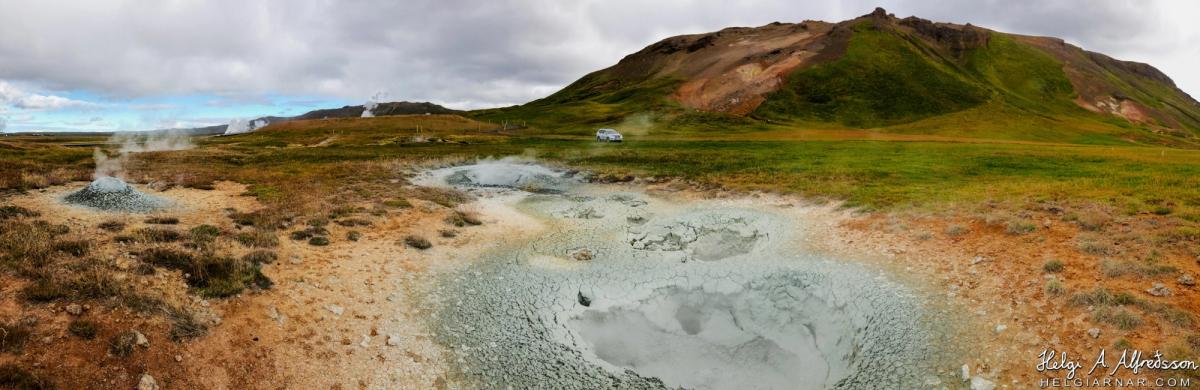
Imagine stepping onto this otherworldly landscape, the air thick with the scent of sulfur and the rhythmic plop of bubbling mud. The ground, a tapestry of reds, browns, and pale greens, hums with unseen energy. Steam rises in ghostly tendrils from conical mounds of grey earth and cracked, simmering pools, painting a dramatic contrast against the vibrant green slopes of the distant mountains. A lone white SUV, a tiny speck against the vastness, underscores the wild, untouched nature of Þeistareykir. This isn't just a place to observe; it's a place to feel the pulse of a living planet, a testament to Iceland's fiery origins and ongoing geological drama. The very ground beneath your feet whispers tales of ancient eruptions and the constant dance between fire and ice.
About Þeistareykir
Þeistareykir, a significant geothermal and volcanic area in North Iceland, offers a dramatic glimpse into the Earth's dynamic forces. Named after a nearby abandoned farm, this region is intrinsically linked to an active central volcano, driving the intense geothermal activity visible across the landscape. Visitors are greeted by a surreal panorama of bubbling mud pots, vigorous steam vents, and distinctive sulfur mounds, all classic hallmarks of a high-temperature geothermal field. Unlike some other areas, Þeistareykir is notable for its lack of water hot springs, focusing instead on the raw power of steam and mud. The vibrant colors of the landscape, from the reddish-brown earth around the steaming features to the rich green of the surrounding hills and the mineral-stained slopes of Bæjarfjall, create a photographer's dream. This area is designated a natural monument, recognized for its diverse geological formations, unique geothermal flora, and the impressive deposits found in the northern slopes of Bæjarfjall and near Bóndhól. A visit to Þeistareykir is an immersive experience, allowing you to walk amidst the visible breath of the planet, where the ground itself is a canvas of geological artistry.
History
Þeistareykir's history is primarily geological, rooted in its position within Iceland's active volcanic zone. The area is part of a major central volcano and is characterized by a prominent fissure system, approximately 4-5 km wide, that runs almost north-south, extending from the Mývatn region in the south all the way north to the sea in the western part of Kelduhverfi. This extensive system is responsible for the intense heat and pressure that manifest as the geothermal features seen today. The surface geothermal features at Þeistareykir are typical of a high-temperature area. Evidence of this powerful subterranean activity is abundant, with bubbling mud pots (leirhverir), steam vents (gufuaugu), sulfur mounds (brennisteinsþúfur), and widespread alteration of the ground (ummyndun) being common sights. The area's significance is further underscored by its inclusion in the natural monument registry of Northeast Iceland. This designation is due to its diverse geological formations, the unique steam and mud pots, the distinctive mineral deposits found on the northern slopes of Bæjarfjall and by Bóndhól, and the presence of specialized geothermal plants that thrive in these harsh conditions.
Did You Know?
- Iceland sits on the Mid-Atlantic Ridge, creating intense geothermal activity
- Þeistareykir is fed by geothermal heat from deep underground
- Geothermal springs have been used by Icelanders for bathing and relaxation for centuries
Did You Know?
Þeistareykir is part of a 4-5 km wide fissure system stretching from Mývatn to the coast, making it a significant part of Iceland's active volcanic heart.