Natural Hot Spring
Geysir Geothermal Area
south-iceland
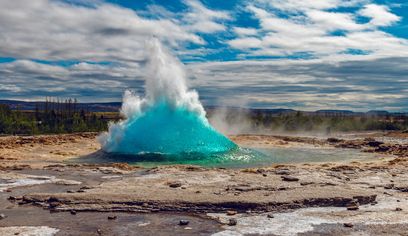
The Geysir geothermal area in Haukadalur contains hot springs, steaming ground and geysers including Strokkur and the historic Great Geysir. Strokkur is currently the area's most regularly erupting feature.
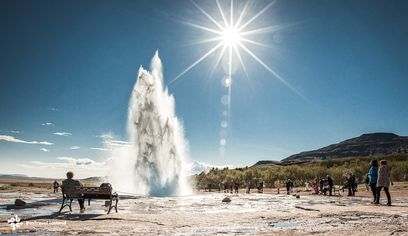
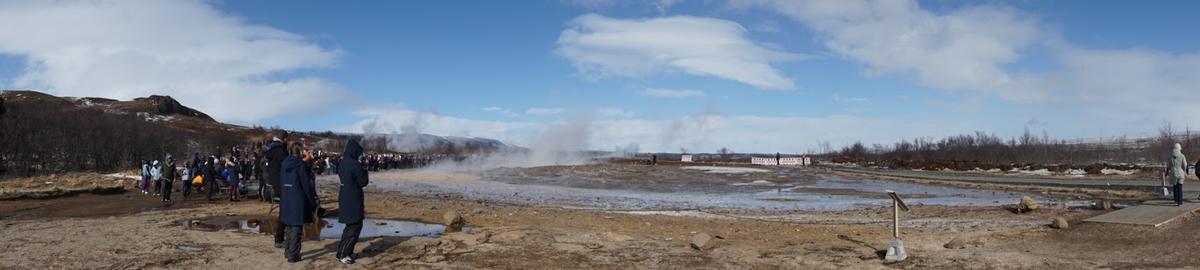
Experience the awe-inspiring spectacle of Strokkur geyser's powerful eruptions against a vibrant landscape.
Story
Standing on the rugged, dark earth of the Haukadalur valley, beneath a vast, cloud-dotted blue sky, you can almost feel the pulse of the earth beneath your feet. A hush falls over the crowd gathered around the Strokkur geyser, a collective anticipation building. Then, a rumble, a bubble, and with a mighty roar, a towering column of boiling water and steam erupts dramatically into the air, reaching heights of 15-30 meters. The spray glistens in the sunlight before dissipating into a misty cloud. This isn't just a spectacle; it's a primal display of Iceland's raw power, a reminder of the volcanic forces that sculpt this unique island. Beyond Strokkur, the area teems with smaller hot springs, bubbling mud pots, and vibrant mineral deposits painting the landscape in hues of red, orange, and green, all breathing steam into the cool air, creating an otherworldly atmosphere that captivates every visitor.
About Geysir Geothermal Area
The Geysir geothermal area is one of the main stops on the Golden Circle. Great Geysir gave the international word 'geyser' its name, although it now erupts only rarely. Nearby Strokkur is much more active and typically erupts at intervals of several minutes. The area also contains hot pools, steaming vents and mineral-stained ground. Marked walking routes continue beyond the main geothermal field into Haukadalur and the surrounding low hills. Visitors must stay on marked paths because water and soil temperatures can be dangerously high and should avoid private or fenced land.
History
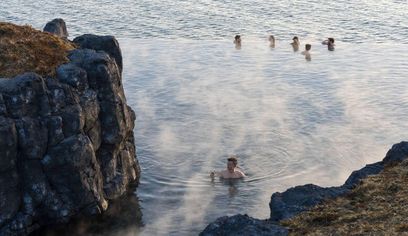
Geysir Geothermal Area in South Iceland sits atop one of Iceland's many geothermal hotspots, a testament to the volcanic forces that continue to shape this island. Geothermal activity has been central to Icelandic life since the earliest settlers arrived in the 9th century. The Norse settlers quickly learned to harness hot springs for bathing, cooking, and washing. The famous Snorralaug (Snorri's Pool), built in the 13th century, demonstrates how deeply geothermal bathing is embedded in Icelandic culture. In the 20th century, Iceland pioneered the use of geothermal energy for district heating, and today about 90% of Icelandic homes are heated by geothermal water. Sites like Geysir Geothermal Area represent both the ancient and modern relationship between Icelanders and their geothermal landscape. The original Geysir, from which the English word 'geyser' derives, has been active for centuries, though its eruptions are now infrequent. Its neighbor, Strokkur, has become the star, providing consistent, powerful eruptions that continue to draw visitors from around the world to witness this natural wonder.
Did You Know?
- Great Geysir gave the international word 'geyser' its name.
- Strokkur is the most regularly erupting geyser in the area.
- The geothermal field contains hot pools, steam vents and mineral deposits.
- Marked walking routes continue beyond the main geothermal viewing area into Haukadalur.
- Visitors should remain on marked paths because geothermal ground can be dangerously hot.
Did You Know?
The word 'geyser' comes from the Icelandic word 'geysa' (to gush), originating from the Great Geysir itself. Iceland heats 90% of its homes geothermally!