Historic Church Site · South Iceland, Iceland
Villingaholt
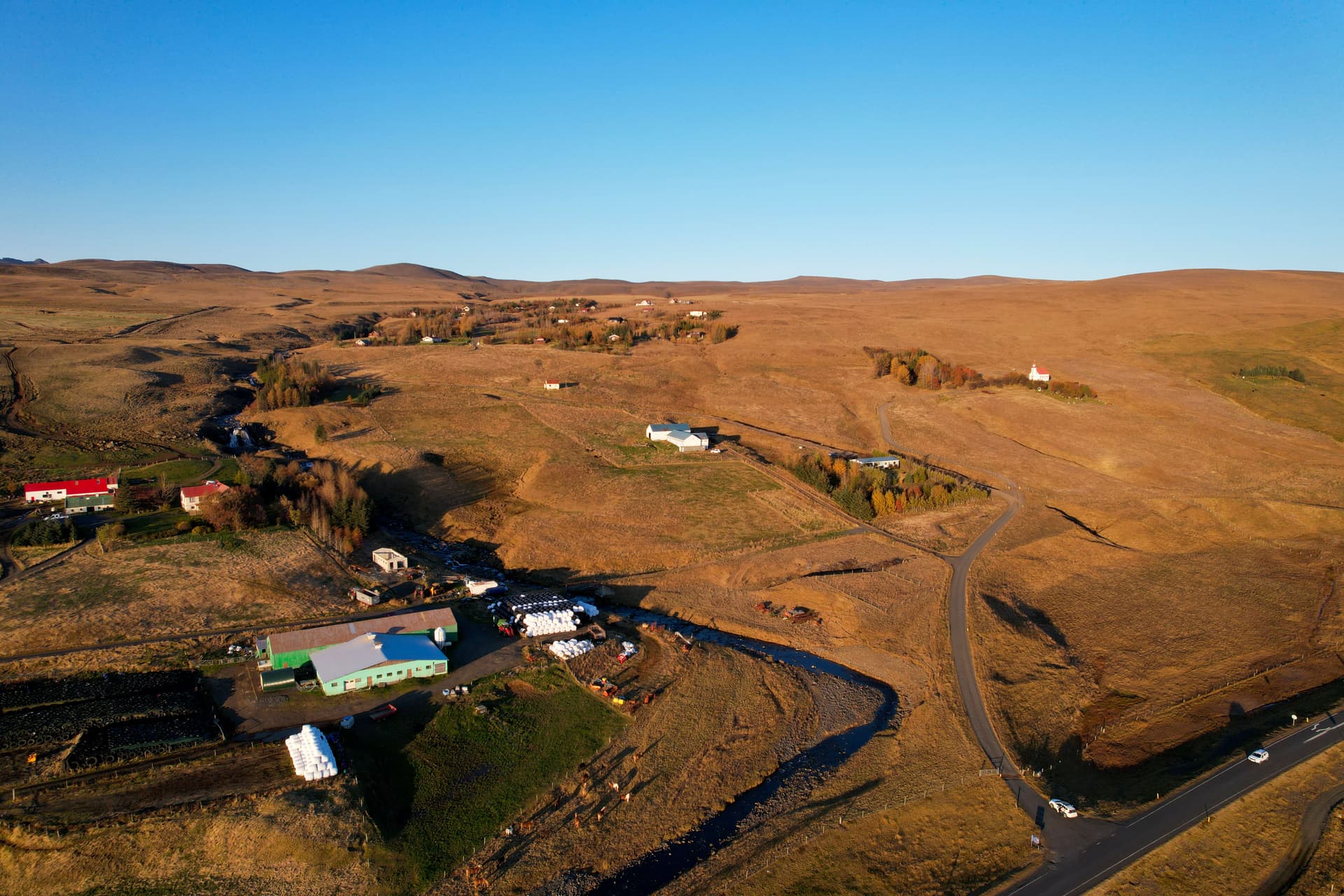
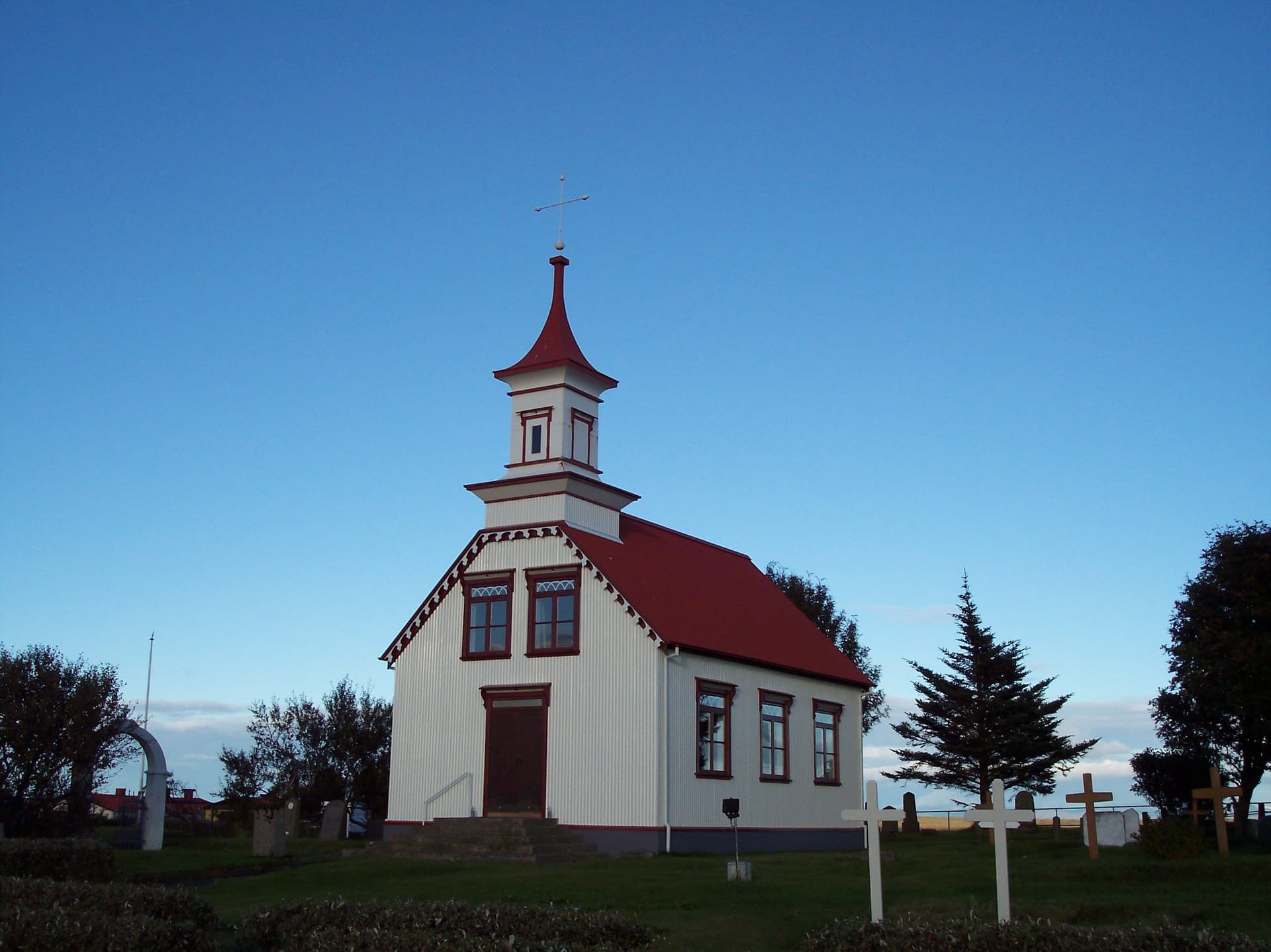
Villingaholt is a standing 1910–1911 timber church in the Flói farming district of South Iceland, in an area now part of Flóahreppur.
Photo: Jóna Þórunn · CC BY 3.0
More Photos
Overview
Villingaholtskirkja is a standing, in-use church in the former Villingaholtshreppur district (now part of Flóahreppur) in South Iceland's Flói area. The current building — iron-clad timber on a stone foundation, seating around 100 — was constructed in 1910–1911.
History
Villingaholt lies in the former Villingaholtshreppur, a rural district in eastern Flói bordering the Þjórsá river, where residents historically farmed or traveled to nearby Selfoss for work. The district merged with Gaulverjabæjarhreppur and Hraungerðishreppur in 2006 to form Flóahreppur. The present church building dates to 1910–1911, built of iron-clad timber on a stone foundation.
What Remains Today
The church stands intact and appears well maintained in photographs, its iron-clad timber construction and stone foundation still in place — a standing building, not a ruin.
Visiting & Preservation
Access Not Yet Verified
Villingaholt is in the Flói farming district (now Flóahreppur) of South Iceland. Public access to this site has not been independently verified. Do not assume a trail, parking, or landowner permission exists.
Preservation Notice
This dataset does not include a Minjastofnun (Cultural Heritage Agency) survey record for this site, but the source photograph is categorized among "Protected buildings in Suðurland," suggesting some form of protected-building status separate from archaeological listing — this has not been independently verified here.
Location
Why Visit
Villingaholtskirkja's 1910–1911 building is grouped among Iceland's protected historic buildings in its Wikimedia Commons categorization, though this has not been independently confirmed against the Cultural Heritage Agency's own records.
Did You Know?
The church seats around 100 people — a sizeable capacity for what was a small farming district with a population of only 185 as of late 2005.
Guided Tours
Explore South Iceland on a Guided Tour
See the wider region with a guided tour — many pass near historic sites like this one.
 10 hours 30 minutes
South Coast Tour - Black Sand Beach, Plane wreck, Skogafoss, Seljalandsfoss guided in Chinese冰岛南岸黑沙滩飞机残骸中文一日团
Magic Iceland Travel
From
18,480 ISK
 8 hours
DT 322 Private Superjeep South Coast & Eyjafjallajökull Volcano Sights
Superjeep
From
264,500 ISK
 10 hours
South Coast Waterfalls, Glacier & Black Sand Beach Tour
BusTravel Iceland
From
15,990 ISK