
east iceland
Stuðlagil Canyon
About Stuðlagil Canyon
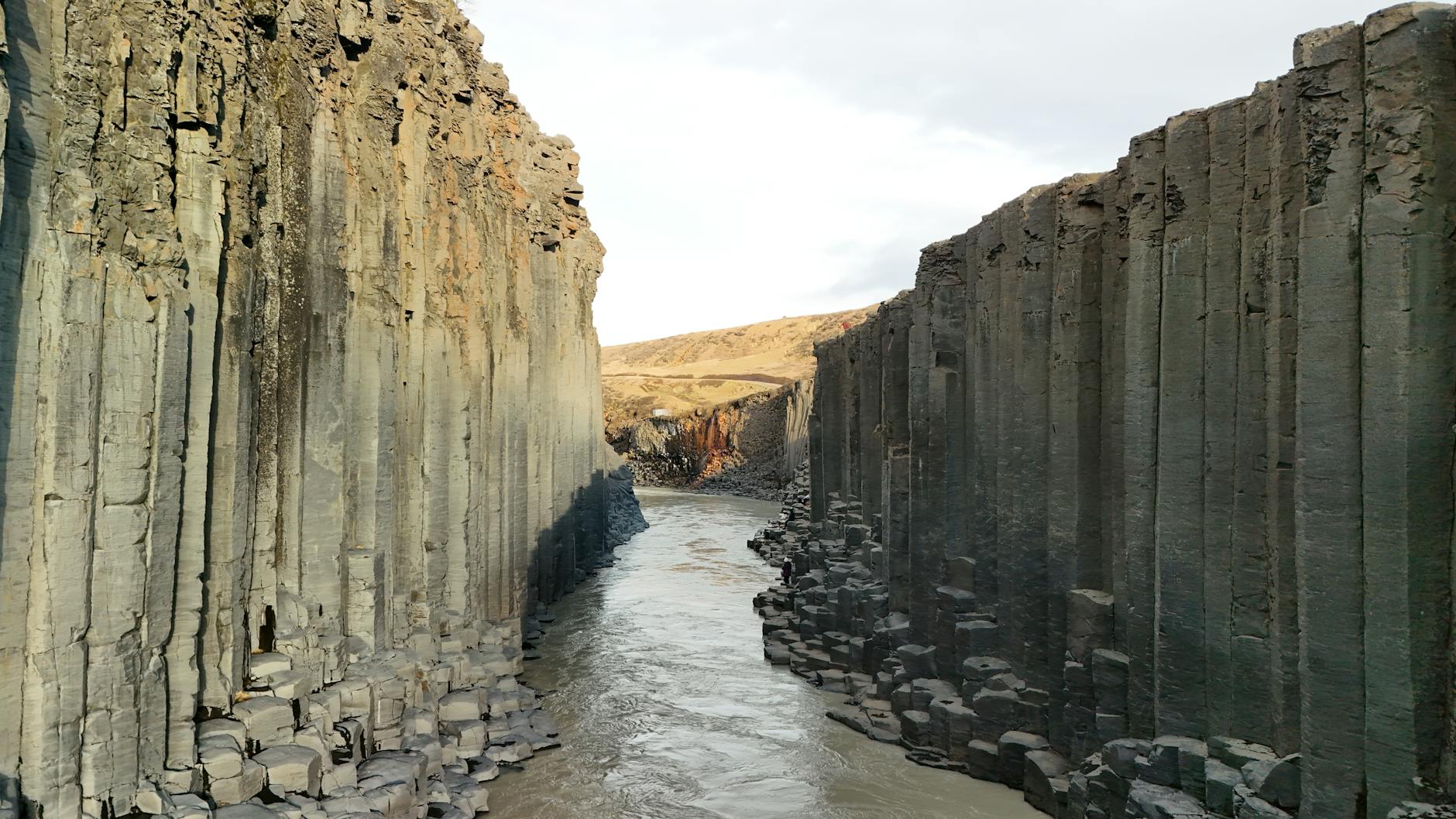
Stuðlagil is a breathtaking canyon in East Iceland, famous for its extraordinary hexagonal basalt columns rising on both sides of the vivid blue-green Jökla river. The canyon became accessible to wider attention around 2018 after a dam upstream reduced glacial sediment, revealing the columns and transforming the water color. There are two approaches: the east side offers a shorter but steeper trail directly into the canyon (1 hour round trip), while the west side from Gljúfrastofa parking provides views from above (4 hour round trip). This has quickly become one of Iceland's most photographed locations.
🐉 Legends of Stuðlagil Canyon
Stuðlagil Canyon has been part of Icelandic folklore for generations. Local tales speak of hidden people (huldufólk) and other supernatural beings who inhabit the area. According to tradition, this place deserves respect and visitors should be mindful of the ancient spirits who call it home.
📖 History of Stuðlagil Canyon
The canyon was largely hidden beneath the glacial Jökulsá á Dal river until the Kárahnjúkar hydroelectric project (completed 2009) dramatically lowered the water level. As the river receded, it revealed the extraordinary basalt columns that had been submerged for centuries. Stuðlagil only became widely known around 2017 when aerial drone photographs spread across social media. It has since become one of Iceland's most sought-after photography destinations.
✈️ Why Visit
Recently revealed after dam reduced glacial sediment
💡 Did You Know?
Became visible to wider public around 2018
Key Facts
Basalt columns up to 20 meters high
Revealed when the Kárahnjúkar dam lowered the river in 2009
Only widely discovered around 2017
Vivid turquoise glacial water
Located in Jökuldalur valley, East Iceland
💎 Hidden Gems
Lava Formations Close-Up
Look carefully at the lava formations near Stuðlagil Canyon — each tells a story of how it cooled.
Rope lava, pillow lava, and columnar basalt each formed under different conditions, creating a geological textbook in stone.
Moss & Lichens
The moss and lichen growing on the volcanic rock are some of the first life to colonize new lava fields.
Some of these organisms grow less than 1cm per year, meaning the patches you see may be decades or centuries old.
Sunset Colors
The volcanic rock takes on incredible red and gold hues during sunset.
The iron-rich minerals in the lava glow in warm light, creating a photographer's paradise.
🕐 Best Time
June–September for bluest water (before glacial melt peaks)
🚗 Access
East Iceland, two approaches: east side (shorter walk) via Route 923, or west side from Gljúfrastofa. 4WD recommended for east side.
⏱ Duration
1–3 hours
Frequently Asked Questions
Is it safe to visit volcanic sites in Iceland?▾
Most volcanic sites are safe when you stay on marked trails. Always check SafeTravel.is for current volcanic activity alerts.
Do I need a guide to visit this site?▾
Many volcanic sites can be visited independently, but guided tours offer valuable geological insight and enhanced safety.
Can I visit in winter?▾
Access depends on the specific site and road conditions. Check road.is for current conditions before your visit.
📍 GPS Location
Book a Tour to Stuðlagil Canyon
Find guided tours, day trips and activities. Compare prices and book instantly with free cancellation.
🌌 See the Northern Lights
Track real-time aurora activity and plan your Northern Lights trip with AuroraVision.