Reynisfjara Black Sand Beach
Iceland's most famous black sand beach, featuring basalt columns, sea stacks, and dangerous sneaker waves.
About
About Reynisfjara Black Sand Beach
Iceland's most famous black sand beach, featuring basalt columns, sea stacks, and dangerous sneaker waves.
Experience Iceland's most famous black sand beach with its unique geology and dramatic coastal scenery.
Photos
Photo Gallery
Background
History & Background
Reynisfjara Black Sand Beach, located in South Iceland, has long been a significant natural landmark. Its unique geological features, including the distinctive black sand, towering basalt columns, and dramatic sea stacks, are testament to Iceland's powerful volcanic forces that have shaped the island over millennia. In modern times, Reynisfjara has transcended its geological origins to become a globally renowned natural wonder. Its striking beauty and dramatic landscapes have cemented its status as Iceland's most famous black sand beach, attracting countless visitors eager to experience its raw, untamed allure and photograph its iconic features.
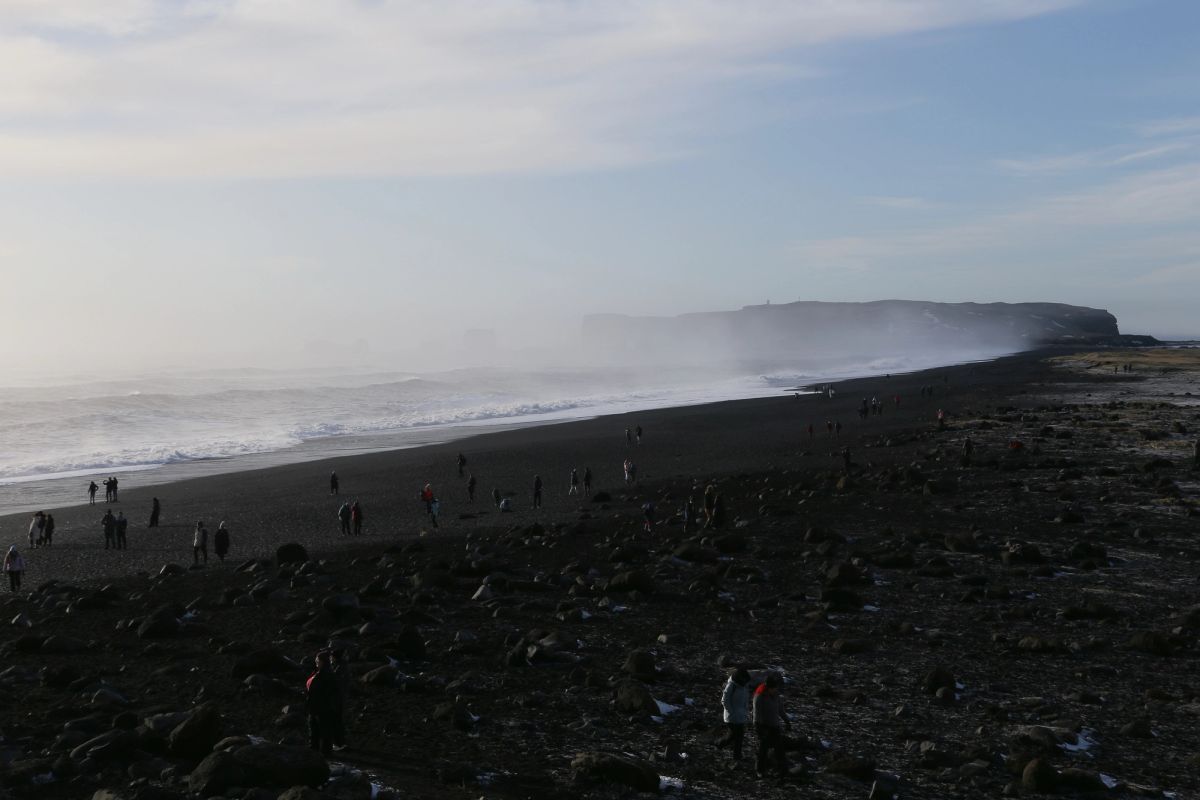
Nestled along the rugged coastline of South Iceland, near the picturesque village of Vík í Mýrdal, lies Reynisfjara Black Sand Beach – a globally renowned natural wonder and arguably Iceland's most iconic stretch of shoreline. This captivating destination draws visitors from across the globe, eager to witness its unique geological formations and dramatic coastal scenery. The most striking feature of Reynisfjara is its distinctive black sand, a result of volcanic activity that has shaped much of Iceland's landscape. This dark, pebble-like sand creates a stark and beautiful contrast against the white foam of the Atlantic waves, offering photographers and nature enthusiasts unparalleled vistas. Adding to the beach's mystique are the formidable basalt columns. These hexagonal pillars rise majestically from the cliff face, formed by cooling lava contracting and cracking. Visitors can explore the area at the base of these columns, though caution is always advised. Offshore, the dramatic sea stacks pierce the horizon. These towering basalt formations add to the powerful atmosphere of the beach. While Reynisfjara's beauty is undeniable, its powerful nature demands respect. The beach is infamous for its dangerous sneaker waves, which can appear suddenly and pull unsuspecting visitors into the frigid ocean. Safety warnings are prominent, and visitors are strongly advised to keep a safe distance from the water's edge and never turn their backs on the sea. Despite the inherent dangers, a visit to Reynisfjara offers an unforgettable experience, a profound connection with Iceland's raw, untamed natural beauty.
Folklore
Story & Folklore
Picture a crisp Icelandic morning, the air alive with the scent of salt and the roar of the Atlantic. You stand on Reynisfjara, a globally renowned natural wonder near Vík í Mýrdal. The sand beneath your feet is not golden, but a deep, volcanic black, stretching to meet the powerful waves. Before you, a dramatic tableau unfolds: towering basalt columns, sculpted by ancient forces, rise majestically, while offshore, formidable sea stacks stand sentinel. This is Iceland's most famous black sand beach, a place of raw, untamed beauty. Yet, its allure comes with a vital warning: the ocean here is unpredictable, with dangerous sneaker waves that demand constant vigilance. Every visit is a powerful encounter with nature's grandeur and its formidable power.
💡 Did You Know?
Reynisfjara is not only Iceland's most famous black sand beach but also a globally renowned natural wonder.
Culture
Stories & Legends
Icelandic sagas and folklore from this area
Arnarstakksheiði
Arnarstakksheiði is a historic location in Iceland mentioned in "Njáls saga", one of the ancient Íslendingasögur (Sagas of Icelanders). These medieval narratives preserve the history of Iceland's Viking Age settlement.
Dyrhólmar
Dyrhólmar is a historic location in Iceland mentioned in "Grettis saga", one of the ancient Íslendingasögur (Sagas of Icelanders). These medieval narratives preserve the history of Iceland's Viking Age settlement.
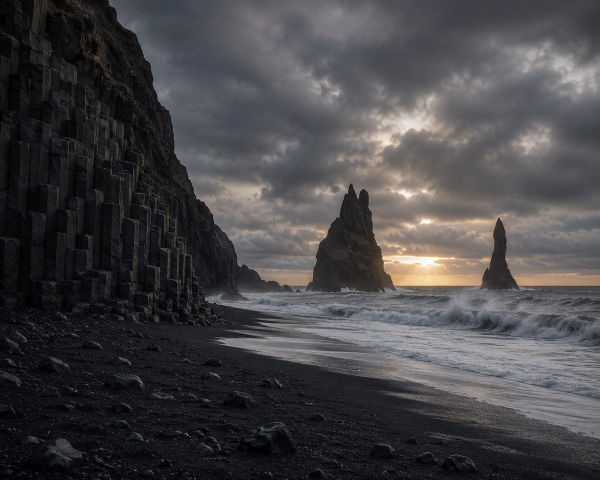
Reynisdrangar – Trolls Turned to Stone
The Reynisdrangar sea stacks off the coast of Iceland are said to be petrified trolls caught by the rising sun.
Explore
Hidden Gems Nearby
✦ Tidal Patterns
The black sand creates stunning patterns as the waves retreat, especially at low tide.
The interplay of water, sand texture, and reflected sky creates naturally artistic compositions that are constantly changing.
✦ Rock Formations
Explore the rock formations at the edges of the beach — many feature columnar basalt and small caves.
These geological features add variety to your beach visit and often shelter small tidal pools with marine life.
✦ Seabird Watching
Bring binoculars to spot seabirds nesting on nearby cliffs, especially during summer months.
In breeding season (May-August), you can often see puffins, fulmars, and guillemots from the beach.
Help
Frequently Asked Questions
Location
📍 Location
Discover
Explore Nearby
Places from our database within 1.0 km — all data from Sanity
Loading nearby places…
0 places found within 1.0 km
Plan full itinerary →Explore More