
Capital Region
Hofsstaðir
About Hofsstaðir
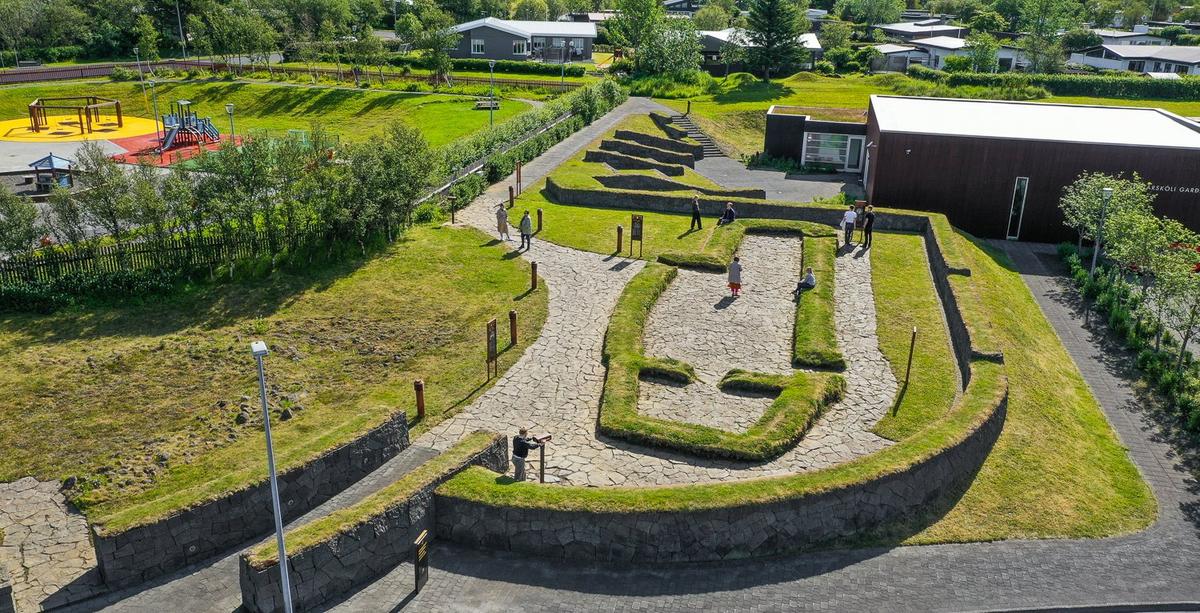
Hofsstaðir is a significant archaeological site located in Garðabær, within Iceland’s Capital Region. Dating back to the Settlement Age (around the 9th–10th centuries), it represents one of the largest and most important Viking Age farmsteads discovered in Iceland. Excavations at the site revealed the remains of a large longhouse, measuring over 30 meters in length, making it one of the largest structures of its kind in the country. The size and layout suggest that Hofsstaðir may have served not only as a residence but also as a social and possibly ceremonial center. Archaeological findings include animal bones—particularly cattle skulls—arranged in ways that indicate ritual activity. These discoveries have led researchers to believe that Hofsstaðir may have been used for communal feasts and religious practices before the spread of Christianity in Iceland. The site today is partially preserved and interpreted for visitors, with pathways and markers outlining the original structure. While the physical remains are subtle, the historical significance is substantial. Hofsstaðir offers a unique window into Iceland’s early society, where daily life, leadership, and belief systems were closely intertwined. It stands as a key example of how archaeology can bring the Viking Age to life.
🐉 The Feast That Never Ended
Local stories suggest that Hofsstaðir was once a place of great gatherings—feasts that brought together people from across the region. But some say that not all of those gatherings ever truly ended. On quiet evenings, a few visitors have described hearing faint echoes—like distant voices or the low murmur of conversation carried on the wind. Others have felt an unusual stillness when standing within the outline of the longhouse, as if the space is somehow still occupied. According to legend, the energy of those gatherings remains in the ground itself, lingering long after the fires have gone out.
📖 History of Hofsstaðir
Hofsstaðir dates back to Iceland’s early settlement period and is one of the most important archaeological sites in the Capital Region. Excavations have revealed a large Viking longhouse and evidence of social and ritual activities. The site provides insight into the structure of early Icelandic society, including leadership, communal gatherings, and religious practices before the adoption of Christianity. Today, it is preserved as a cultural heritage site and remains an important location for understanding Iceland’s Viking past.
✈️ Why Visit
A rare chance to stand where Viking settlers lived, worked, and possibly held ritual feasts.
💡 Did You Know?
Archaeologists discovered evidence at Hofsstaðir suggesting large-scale feasting and possible ritual animal sacrifices—hinting it may have been more than just a farm.
📍 GPS Location
Explore Tours Near Hofsstaðir
Find guided tours, day trips and activities. Compare prices and book instantly with free cancellation.