Hjörleifshöfði (Yodacave)
Explore Hjörleifshöfði, a dramatic 221m cliff and its iconic "Yodacave," rising from vast black sands.
About
About Hjörleifshöfði (Yodacave)
Explore Hjörleifshöfði, a dramatic 221m cliff and its iconic "Yodacave," rising from vast black sands.
Witness the dramatic "Yodacave" archway within a 221m cliff, surrounded by otherworldly black sands.
Photos
Photo Gallery
Background
History & Background
Hjörleifshöfði holds a unique place in both Iceland's geological and historical narrative. Geologically, this 221-meter (725 ft) high inselberg, or móbergshöfði, is a testament to the dynamic forces that have shaped Iceland. Originally an island, it has been gradually joined to the mainland by the relentless accumulation of black volcanic sands, or "sandur," deposited by powerful glacial rivers over thousands of years. This process continues to reshape the coastline, making the headland a living example of geological change and showcasing a solitary mountain remnant amidst the plains. Historically, Hjörleifshöfði is deeply embedded in the Icelandic settlement saga. It is named after Hjörleifur Hróðmarsson, the foster brother of Ingólfur Arnarson, who is widely considered to be the first permanent Norse settler of Iceland. According to the sagas, Hjörleifur settled in this area, but his life came to a tragic end here. His story is a poignant part of the island's early history, making Hjörleifshöfði not just a natural wonder but also a site of significant cultural and historical importance, connecting visitors directly to the dawn of Icelandic civilization. The "Yodacave" within the cliff adds another layer, a natural shelter and viewpoint that has likely witnessed centuries of this rich history unfold.
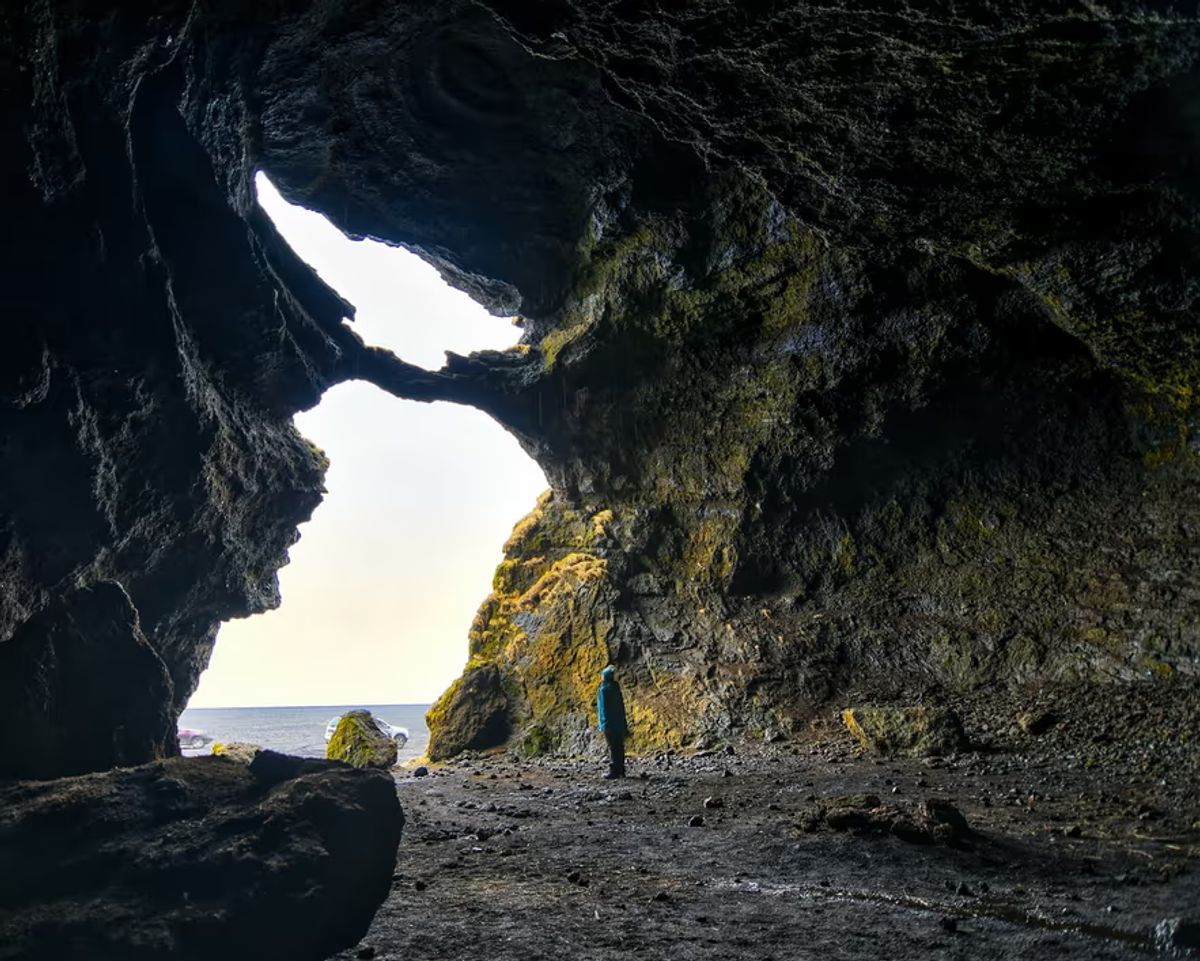
Hjörleifshöfði, a formidable 221-meter (725 ft) high inselberg or móbergshöfði, is a striking natural landmark in South Iceland, renowned for its dramatic geology and deep historical roots. Rising majestically from an expansive black sand plain, this ancient headland offers a profound glimpse into Iceland's geological processes and its foundational human history. Once an island, Hjörleifshöfði has been gradually connected to the mainland over centuries by the relentless deposition of black volcanic sands, primarily from glacial river outflows. The area surrounding the cliff is characterized by its stark, otherworldly beauty, with vast stretches of black sand stretching towards the horizon, framed by the wild Atlantic. Visitors are drawn not only to its impressive stature but also to its iconic "Yodacave," a natural archway carved into its base. As seen in the provided image, the cave's dark, rugged interior, often adorned with moss, opens dramatically to reveal the bright sky and distant ocean, creating a stunning photographic opportunity and a unique vantage point. Exploring the base of the cliff and walking on the black sands provides an immersive experience, allowing one to appreciate the sheer scale of this natural wonder and reflect on the island's ancient past, including its famous link to Hjörleifur Hróðmarsson, a figure from the Icelandic settlement saga. The "Yodacave" itself is a highlight, offering shelter and a unique perspective on the surrounding landscape.
Folklore
Story & Folklore
Imagine stepping into a colossal natural cathedral, where ancient forces sculpted the very rock around you. As you approach Hjörleifshöfði, this dramatic 221-meter (725 ft) móbergshöfði, its sheer face looms from the vast black sands, a sentinel against the wild Atlantic. But it's within its base that the magic truly unfolds: the "Yodacave." Peering out from its dark, moss-draped interior, as seen in the image, the bright opening of the cave perfectly frames the distant ocean and the endless black sand beach. A lone figure stands, dwarfed by the scale, gazing out, perhaps contemplating the saga of Hjörleifur Hróðmarsson, whose tragic end is woven into this very landscape. The cave's unique archway, with its rugged, dark rock contrasting with the bright sky, creates a breathtaking portal to a world shaped by both myth and geology, inviting you to connect with Iceland’s raw, untamed spirit.
💡 Did You Know?
Hjörleifshöfði is a 221-meter (725 ft) high inselberg or móbergshöfði, a solitary mountain remnant, famously housing the distinctive "Yodacave" within its dramatic form.
Local Legend
The Tragic Tale of Hjörleifur Hróðmarsson
Hjörleifshöfði is named after Hjörleifur Hróðmarsson, the foster brother of Iceland's first permanent settler, Ingólfur Arnarson. According to the sagas, Hjörleifur settled here but was tragically killed by his Irish slaves, who then fled to the Westman Islands. Ingólfur later avenged his foster brother's death.
Culture
Stories & Legends
Icelandic sagas and folklore from this area
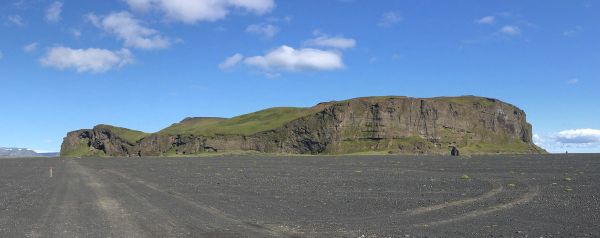
Hjörleifshöfði
Hjörleifshöfði is a historic location in Iceland mentioned in "Flóamanna saga", one of the ancient Íslendingasögur (Sagas of Icelanders). These medieval narratives preserve the history of Iceland's Viking Age settlement.
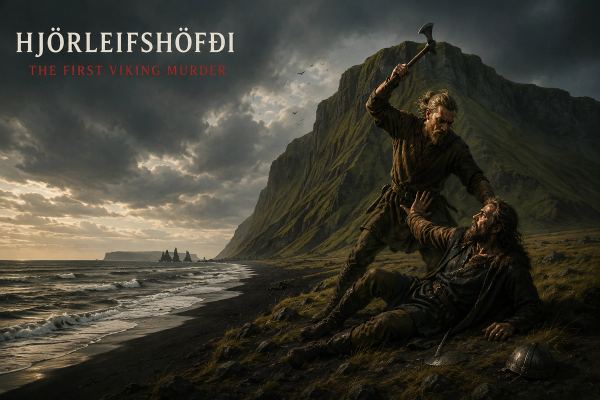
Hjörleifshöfði – The First Viking Murder
Hjörleifshöfði – The First Viking Murder
Explore
Hidden Gems Nearby
✦ Off-Peak Visit
Visit this attraction during shoulder season (May or September) for a perfect balance of access and solitude.
You'll experience the site without summer crowds while still having good weather and daylight.
✦ Local Flora
Look for the native Icelandic plants growing in the area — Arctic thyme, moss campion, and various lichens.
These resilient plants have adapted to survive harsh conditions and add subtle beauty to the landscape.
✦ Changing Light
this attraction looks dramatically different depending on the time of day and weather conditions.
Cloud shadows, rain showers, and low-angle sunlight can transform the landscape within minutes — Iceland's famous "four seasons in one day."
Help
Frequently Asked Questions
Location
📍 Location
Discover
Explore Nearby
Places from our database within 1.0 km — all data from Sanity
Loading nearby places…
0 places found within 1.0 km
Plan full itinerary →Explore More