
west iceland
Djúpalónssandur Black Pebble Beach
About Djúpalónssandur Black Pebble Beach
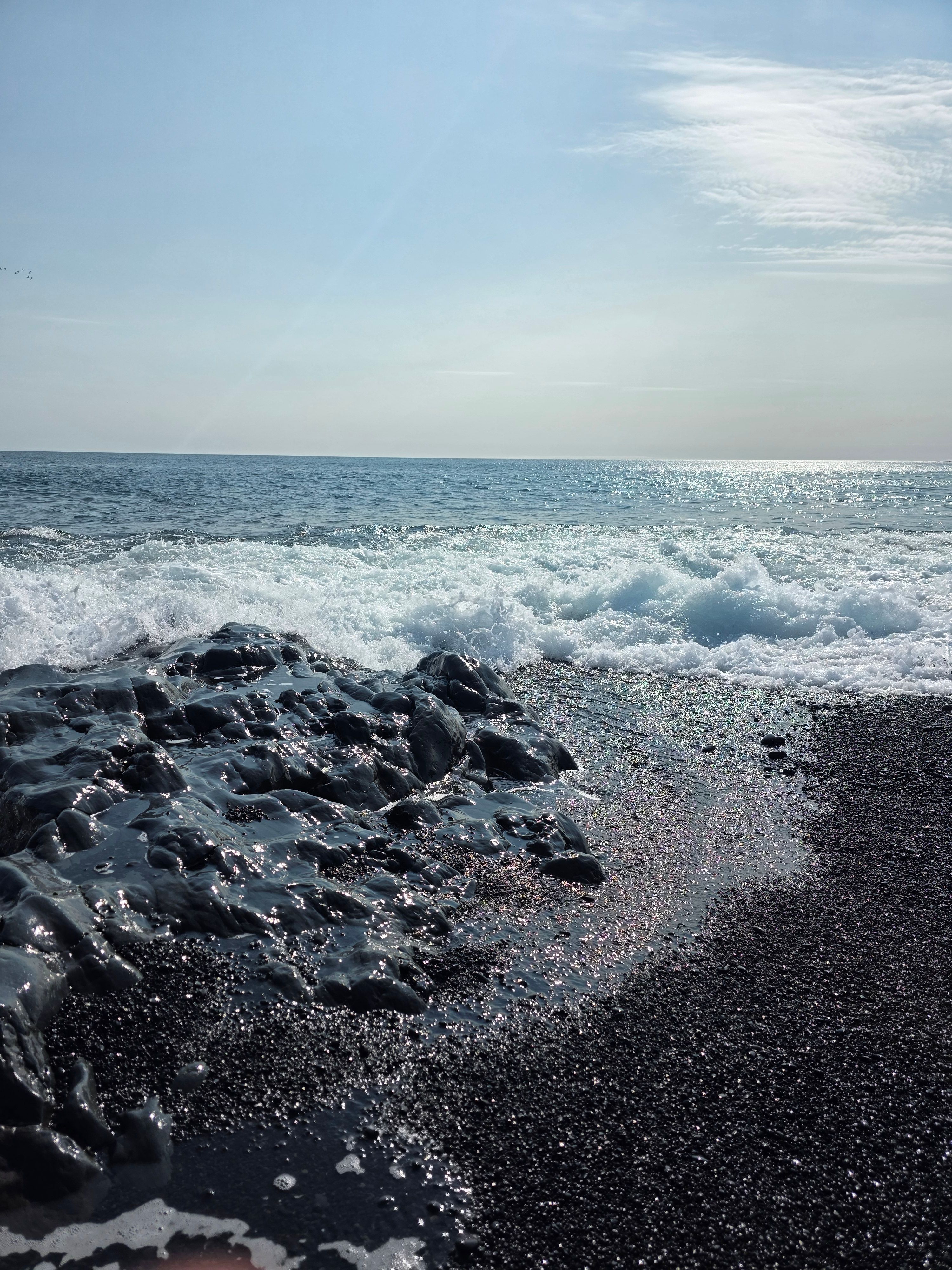
Djúpalónssandur is one of the most famous coastal stops within Snæfellsjökull National Park on the Snæfellsnes Peninsula. The beach is formed from smooth black volcanic pebbles rather than sand and is surrounded by lava formations created during historic eruptions from the Snæfellsjökull volcano. The area was once an important seasonal fishing station, and four traditional lifting stones remain on the beach. Fishermen were required to lift these stones to demonstrate their strength before being allowed to work on fishing boats. Visitors can also see remains of the British trawler Epine GY7, which wrecked offshore in 1948. Today the site is protected as part of the national park and is one of the most dramatic and culturally significant coastal landscapes in Iceland.
🐉 The Fishermen’s Strength Test
For centuries fishermen working at Djúpalónssandur tested their strength using lifting stones placed on the beach. Only those strong enough to lift the required stone were considered fit for work at sea.
📖 History of Djúpalónssandur Black Pebble Beach
Djúpalónssandur was once a seasonal fishing station where crews launched small boats from the shore into the Atlantic Ocean. Strength tests using lifting stones determined whether fishermen were capable of working in the demanding coastal environment. In 1948 the British trawler Epine GY7 wrecked offshore during severe weather. Remains of the wreck are still visible today and are protected as part of the historical landscape within Snæfellsjökull National Park.
✈️ Why Visit
Test your strength with ancient fisherman's lifting stones
💡 Did You Know?
Wreckage from the 1948 British trawler Epine is still visible
Key Facts
Location: Snæfellsjökull National Park
Beach type: Black pebble beach
Volcano nearby: Snæfellsjökull
Historic fishing site: Yes
Historic fishing site: Yes
Shipwreck remains: 1948 British trawler Epine GY7
National park location: Yes
Photography location: Yes
💎 Hidden Gems
Traditional lifting stones
Four historic lifting stones were used to test the strength of fishermen before joining fishing crews.
Four historic lifting stones were used to test the strength of fishermen before joining fishing crews.
Shipwreck remains
Metal fragments from a British trawler wrecked in 1948 remain scattered across the beach.
See one of Iceland’s preserved coastal shipwreck sites.
Lava formations from Snæfellsjökull
The beach is surrounded by dramatic lava formations shaped by eruptions from Snæfellsjökull volcano.
Experience one of the most scenic volcanic coastlines on Snæfellsnes.
🕐 Best Time
Best visited during daylight hours for coastal views and photography.
🚗 Access
Accessible via Snæfellsjökull National Park roads with a short walking trail from the parking area.
⏱ Duration
30–60 minutes
Frequently Asked Questions
Is it safe to swim at Icelandic beaches?▾
No, Icelandic beaches have extremely cold water and dangerous sneaker waves. Never turn your back on the ocean and keep a safe distance.
Why is the sand black?▾
The black sand comes from volcanic basalt rock that has been broken down by ocean waves over thousands of years.
Can I visit in winter?▾
Yes, but be extra careful of wave conditions. Winter storms can create especially dangerous sneaker waves.
📍 GPS Location
Book a Tour to Djúpalónssandur Black Pebble Beach
Find guided tours, day trips and activities. Compare prices and book instantly with free cancellation.
🌌 See the Northern Lights
Track real-time aurora activity and plan your Northern Lights trip with AuroraVision.