
Capital Region
Breiðholt
About Breiðholt
The rústir gamla Breiðholtsbæjarins are a protected historical site located in Breiðholt in Reykjavík. These ruins mark the original farmstead of Breiðholt, from which the entire district takes its name, and represent an important link to the area’s rural past before modern urban development. The farm Breiðholtsbær is first mentioned in written sources dating back to 1395, indicating that it was an established settlement during the late medieval period. Over the centuries, it functioned as a traditional Icelandic farm, supporting local families through agriculture and livestock. A church once stood nearby, along with a small churchyard, highlighting the role of the site as both a residential and spiritual center for the surrounding community. Today, the remains of the farm, church, and burial ground are preserved as an archaeological site. According to preservation records, the ruins are located approximately 15–30 meters north of the house at Grjótasel 21, with the church believed to have stood slightly above the main farm buildings. Historical accounts also refer to a stone-built bathing pool that was still visible until around the mid-20th century. The site was officially protected on July 28, 1981, recognizing its cultural and historical value. It now stands as a rare reminder of Reykjavík’s agricultural past, offering insight into how the landscape has transformed over time while preserving traces of earlier ways of life.
🐉 Historic farm and church ruins in Breiðholt, marking the origins of the area before it became part of modern Reykjavík.
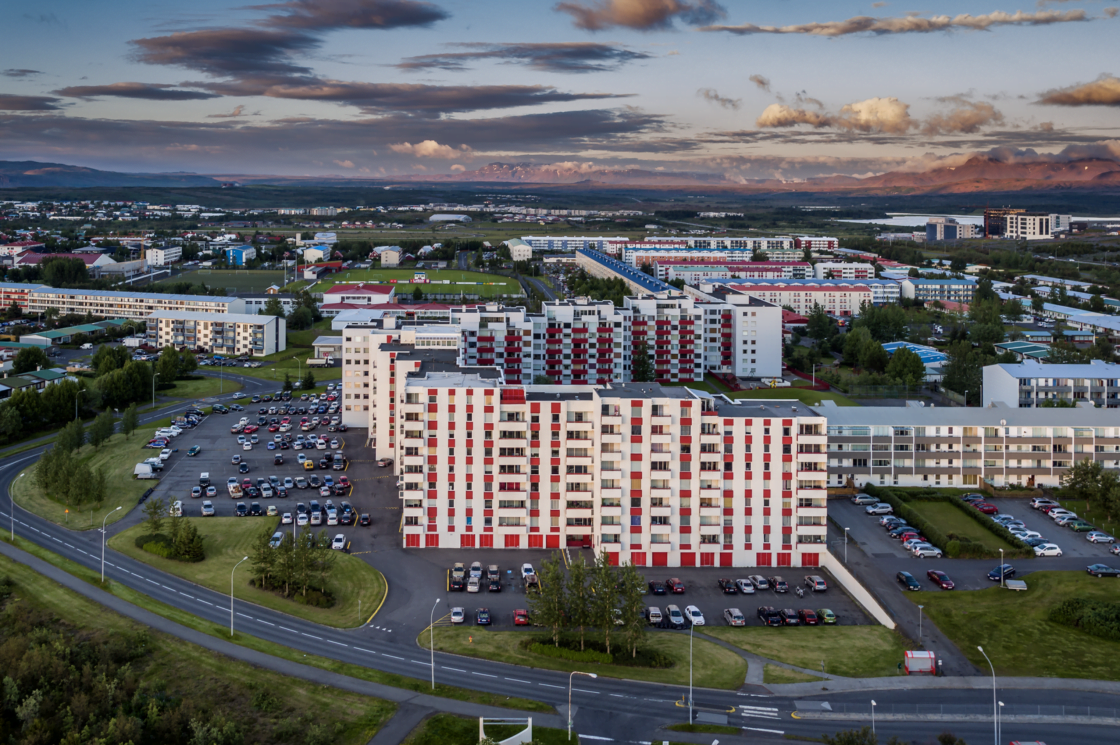
Before Breiðholt grew into one of Reykjavík’s largest residential districts, it was a quiet farming area centered around Breiðholtsbær. Families lived here for centuries, working the land and forming a close-knit rural community. A small church stood nearby, serving both spiritual and social roles, with a churchyard preserving the memory of generations who had lived there. As the city expanded in the 20th century, farmland gradually gave way to housing and infrastructure. The original buildings fell into ruin, but their historical importance was recognized, and the site was protected. Today, visitors can still sense the contrast between past and present, standing in a place where Reykjavík’s rural roots remain visible within the modern urban landscape.
📖 History of Breiðholt
The farm Breiðholtsbær is first recorded in written sources from 1395, indicating its long-standing presence in the area. Over time, it developed as a traditional Icelandic farm with an associated church and burial ground. The ruins of the farm, church, and churchyard were officially protected on July 28, 1981. Preservation records place the site approximately 15–30 meters north of Grjótasel 21, with the church believed to have stood slightly above the farmstead. Historical references also mention a stone-built bathing pool that remained visible until around 1950. Today, the site is recognized as an important cultural heritage location within Breiðholt.
✈️ Why Visit
Visit the rústir gamla Breiðholtsbæjarins in Breiðholt to connect with the origins of the area and experience a preserved piece of Reykjavík’s rural past within the modern city.
💡 Did You Know?
The farm Breiðholt is first mentioned in written records from 1395, making it one of the oldest documented sites in the area—and the place that gave the entire district its name.
Key Facts
Iceland was settled by Norse Vikings around 870 AD
The Icelandic sagas document the lives and exploits of early settlers
Breiðholt is part of Iceland's extensive Viking-age heritage
📍 GPS Location
Explore Tours Near Breiðholt
Find guided tours, day trips and activities. Compare prices and book instantly with free cancellation.