Víti
Gaze into Víti's dramatic volcanic crater and its ethereal milky-blue lake in North Iceland.
About
About Víti
Gaze into Víti's dramatic volcanic crater and its ethereal milky-blue lake in North Iceland.
Witness the stunning juxtaposition of dark volcanic earth and a vibrant, geothermally active crater lake.
Background
History & Background
Víti is a relatively young geological feature, born from the dramatic Krafla Fires, a series of volcanic eruptions that plagued the Krafla system between 1724 and 1729. This period of intense activity saw lava flows, fissures opening, and explosive eruptions that reshaped the landscape. The crater itself is an explosion crater, formed when rising magma encountered groundwater, leading to a violent phreatic eruption. The name 'Víti,' meaning 'hell' in Icelandic, was bestowed upon the crater by early settlers, reflecting the terrifying and destructive forces unleashed during its formation. The explosions created a massive pit, which, over time, filled with water, forming the distinctive geothermal lake seen today. While the Krafla system has seen subsequent periods of activity, notably the 'Krafla Mires' from 1975-1984, Víti itself has remained a tranquil, albeit geothermally active, lake since its initial fiery birth, serving as a powerful reminder of Iceland's raw geological power.
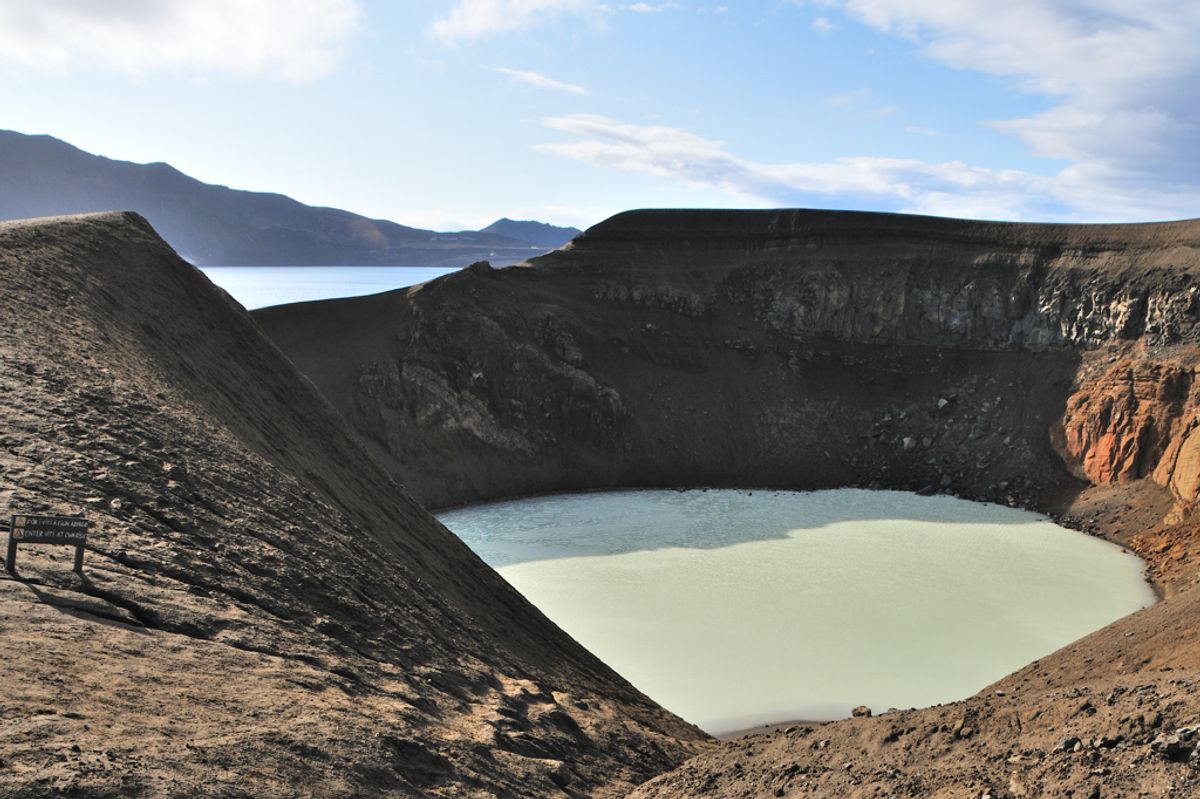
Víti, an iconic explosion crater nestled within the Krafla caldera in North Iceland, offers visitors a breathtaking glimpse into the island's dynamic geological activity. Formed during the explosive Krafla Fires (1724-1729), a period of intense volcanic activity, its name, meaning 'hell' in Icelandic, vividly recalls its fiery origins. Today, however, the crater presents a scene of serene beauty, dominated by a stunning, milky-blue geothermal lake that fills its depths. The water's vibrant hue is attributed to the presence of various minerals and geothermal activity. As you approach the rim, the stark beauty of the landscape unfolds. The crater's steep, dark, and rugged slopes, composed of volcanic ash and basalt, create a dramatic contrast with the ethereal color of the lake. On one side, exposed layers of reddish-orange rock add another dimension to the visual spectacle, showcasing the varied geological history of the area. A walk along the crater rim provides panoramic views of the Krafla area, including the distant Lake Mývatn and surrounding mountains, all under the vast Icelandic sky. Be sure to notice the wooden sign near the path, which cautions visitors with 'FOR YOUR OWN SAFETY ADVICE ENTER VITI AT OWN RISK,' emphasizing the importance of respecting this powerful natural site. The entire area is a testament to Iceland's position on the Mid-Atlantic Ridge, making it one of the most volcanically active regions on Earth.
Folklore
Story & Folklore
Step to the edge of Víti, and you're not just looking into a crater; you're peering into the raw, untamed heart of Iceland. Born from the violent Krafla Fires between 1724 and 1729, this explosion crater earned its name, 'Hell,' from the terrifying eruptions that once ripped through the landscape. Imagine the ground trembling, fire spewing, and molten rock carving out this very depression. Yet, today, a serene, milky-blue lake rests in its depths, a striking testament to nature's capacity for both destruction and rebirth. The dark, rugged slopes of the crater, sculpted by ancient forces, drop dramatically to the calm waters, while a distant sign on the path warns, 'FOR YOUR OWN SAFETY ADVICE ENTER VITI AT OWN RISK,' a modern echo of the awe and respect the Norse people held for such powerful lands. It’s a place where ancient geology, Norse heritage, and dramatic natural forces converge, inviting you to ponder the immense power beneath your feet.
💡 Did You Know?
Víti's name, meaning 'hell', refers to its fiery birth during the Krafla Fires of the 18th century, a stark contrast to its tranquil, milky-blue lake today.
Local Legend
Víti: The Gateway to Hell
Local lore suggests that Víti, meaning 'hell' in Icelandic, was named not just for its fiery birth but as a place where the earth truly opened up. Some tales whisper that it was a gateway to the underworld, or a place where trolls and hidden folk sought refuge during the great eruptions, guarding its secrets in the milky depths of the lake.
Experiences
Tours Near Víti
Best-rated Iceland experiences — book with free cancellation


Explore
Hidden Gems Nearby
✦ The Reddish Cliffs
Observe the distinctive reddish-orange rock layers exposed on one side of Víti's crater wall. These vibrant hues contrast dramatically with the dark volcanic soil and offer a unique geological insight.
They provide a striking visual contrast and reveal different layers of the area's volcanic history.
✦ Krafla Geothermal Power Station
Just a short drive from Víti, this impressive power station harnesses the immense geothermal energy of the Krafla area. Visitors can learn about Iceland's sustainable energy production.
It's a testament to Iceland's innovative use of its powerful natural resources and offers educational insights.
Help
Frequently Asked Questions
Location
📍 Location
Discover
Explore Nearby
Places from our database within 1.0 km — all data from Sanity
Loading nearby places…
0 places found within 1.0 km
Plan full itinerary →Explore More