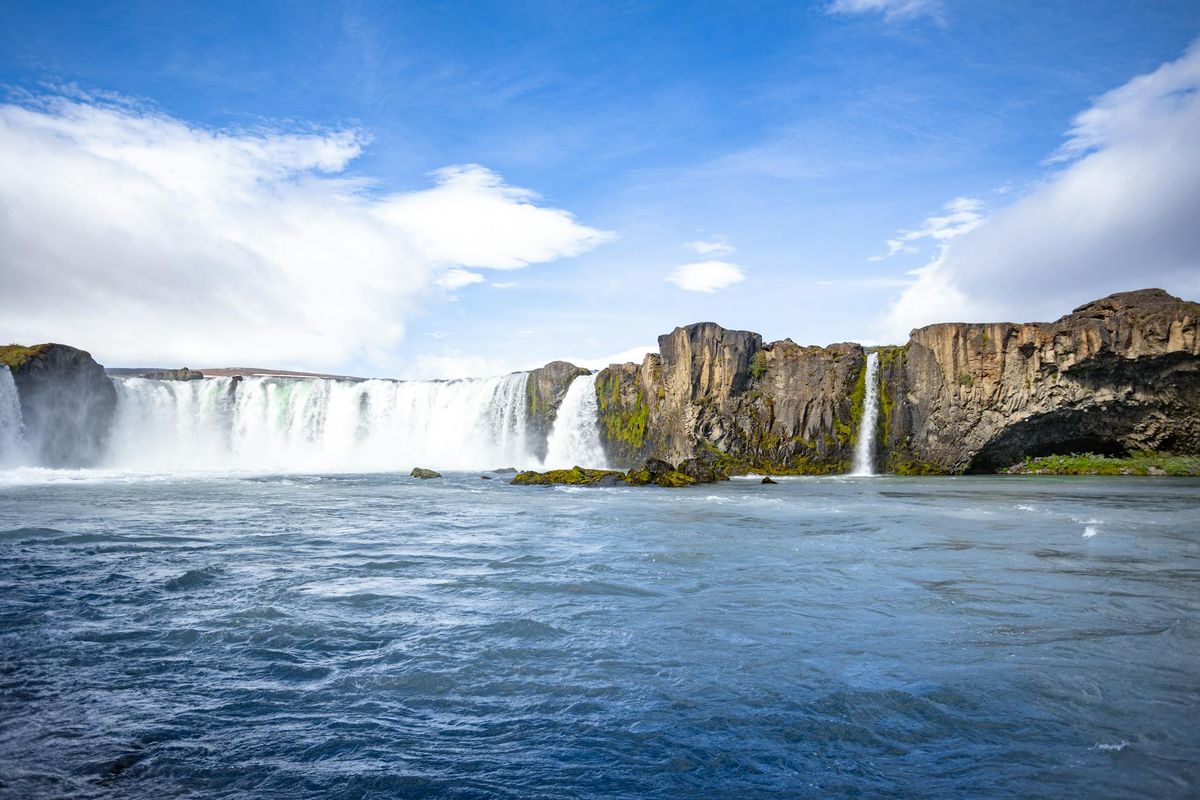
Goðafoss
Goðafoss — 'Waterfall of the Gods' — is one of Iceland's most spectacular waterfalls, where the Skjálfandafljót river plunges 12 meters in a wide arc. It is one…
About
About Goðafoss
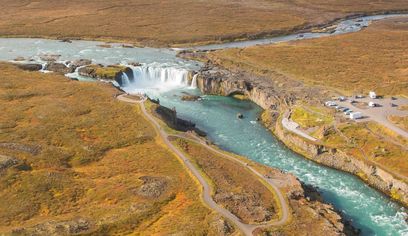
Goðafoss — 'Waterfall of the Gods' — is one of Iceland's most spectacular waterfalls, where the Skjálfandafljót river plunges 12 meters in a wide arc. It is one of the most historically significant natural sites in Iceland.
Experience the legendary beauty of Iceland's 'Waterfall of the Gods'.
Photos
Photo Gallery
Background
History & Background
In the year 1000 AD, Iceland's parliament voted to adopt Christianity. The lawspeaker Þorgeir Ljósvetningagoði, who had championed the decision after a night of meditation, rode home and threw his statues of the Norse gods into this waterfall — giving it the name 'Waterfall of the Gods'. This event marked Iceland's official conversion from Norse paganism to Christianity and is one of the defining moments in Icelandic history.
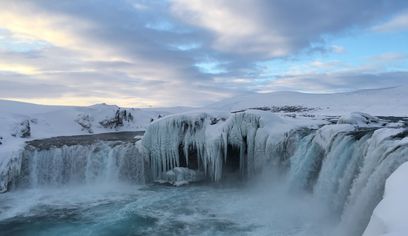
Goðafoss is one of North Iceland's most spectacular waterfalls, a horseshoe-shaped cascade 12 meters high and 30 meters wide on the Skjálfandafljót river. The falls can be viewed from both sides — the east bank offers a dramatic close-up view, while the west bank provides panoramic vistas. In winter, the falls partially freeze, creating extraordinary ice formations. The surrounding area is easily accessible from Route 1, making it a popular stop between Akureyri and Mývatn.
Folklore
Story & Folklore
Goðafoss — 'Waterfall of the Gods' — earned its name at one of the most pivotal moments in Icelandic history. In the year 1000 AD, the lawspeaker Þorgeir Ljósvetningagoði had the unenviable task of deciding whether Iceland would adopt Christianity or remain pagan. After meditating under a bearskin for a day and a night, he declared Iceland Christian. On his way home, he stopped at this waterfall and threw his wooden statues of the Norse gods into the water — a symbolic end to the old religion. The falls themselves are breathtaking: a horseshoe-shaped arc of turquoise water dropping 12 metres into a wide pool. They sit just 40 kilometres east of Akureyri on the Ring Road, making them easy to visit on any drive through North Iceland.
💡 Did You Know?
Legend says this waterfall was named after pagan gods were thrown into it upon Iceland's conversion to Christianity in the year 1000.
Local Legend
The Hidden Folk of Goðafoss
Local folklore tells of hidden people (huldufólk) who live in the cliffs surrounding Goðafoss. According to legend, these elves protect the waterfall and its surroundings. Travelers who show respect to nature may catch glimpses of mysterious lights near the falls at dusk, believed to be the hidden folk tending to their homes in the rocks.
Culture
Stories & Legends
Icelandic sagas and folklore from this area
Explore
Hidden Gems Nearby
✦ Early Morning Visit
Visit Goðafoss at sunrise or early morning for the most magical light and fewer crowds.
The morning light creates stunning rainbows in the mist, and you may have the waterfall entirely to yourself.
✦ Nearby Trails
Explore the lesser-known walking trails around Goðafoss that most tourists skip.
These trails offer unique perspectives of the waterfall and surrounding landscape that you won't find in guidebooks.
✦ Winter Transformation
Goðafoss takes on an entirely different character in winter when partially frozen.
The ice formations create a spectacular natural sculpture, and the contrast with the flowing water is breathtaking.
Help
Frequently Asked Questions
Location
📍 Location
Discover
Explore Nearby
Places from our database within 1.0 km — all data from Sanity
Loading nearby places…
0 places found within 1.0 km
Plan full itinerary →Explore More