Brúarjökull — Iceland's Most Accessible Highland Glacier
Vatnajökull outlet glacier accessible by 4WD — Highland glacier tongue with crevasses, ice caves, and volcano backdrop.
About
About Brúarjökull — Iceland's Most Accessible Highland Glacier
Vatnajökull outlet glacier accessible by 4WD — Highland glacier tongue with crevasses, ice caves, and volcano backdrop.
Highland glacier adventure — Vatnajökull outlet with crevasses and ice caves, 4WD access, dramatic volcanic setting.
Background
History & Background
This site in the Highlands is part of Iceland's glacial landscape that has shaped the island for millennia. During the last Ice Age (ending around 10,000 years ago), Iceland was almost entirely covered by glaciers. As the climate warmed, glaciers retreated but never fully disappeared — today they still cover about 11% of Iceland's surface. Vatnajökull, Europe's largest glacier, and other ice caps have profoundly influenced Iceland's geography, carving fjords, valleys, and depositing moraines. Historical records document significant glacial advances during the Little Ice Age (1300-1900), when glaciers destroyed farmland and forced communities to relocate. Climate change has accelerated glacial retreat in recent decades, making these frozen landscapes particularly precious.
Brúarjökull is in the eastern Highlands, northeast of Vatnajökull. Details: - Outlet glacier from Vatnajökull - Accessible via 4WD F-roads - Crevassed glacier surface - Seasonal ice caves - Glacial river outflow Access: - Route F910 from Route 1 - 4WD required (challenging) - Summer only (Jul-Aug) - River crossings (deep) - Guided tours recommended Activities: - Glacier viewing - Ice cave tours (seasonal, guided) - Photography - 4WD adventure Safety: Do NOT walk on glacier without guide Nearby: Herðubreið, Askja, Kverkf öll
Folklore
Story & Folklore
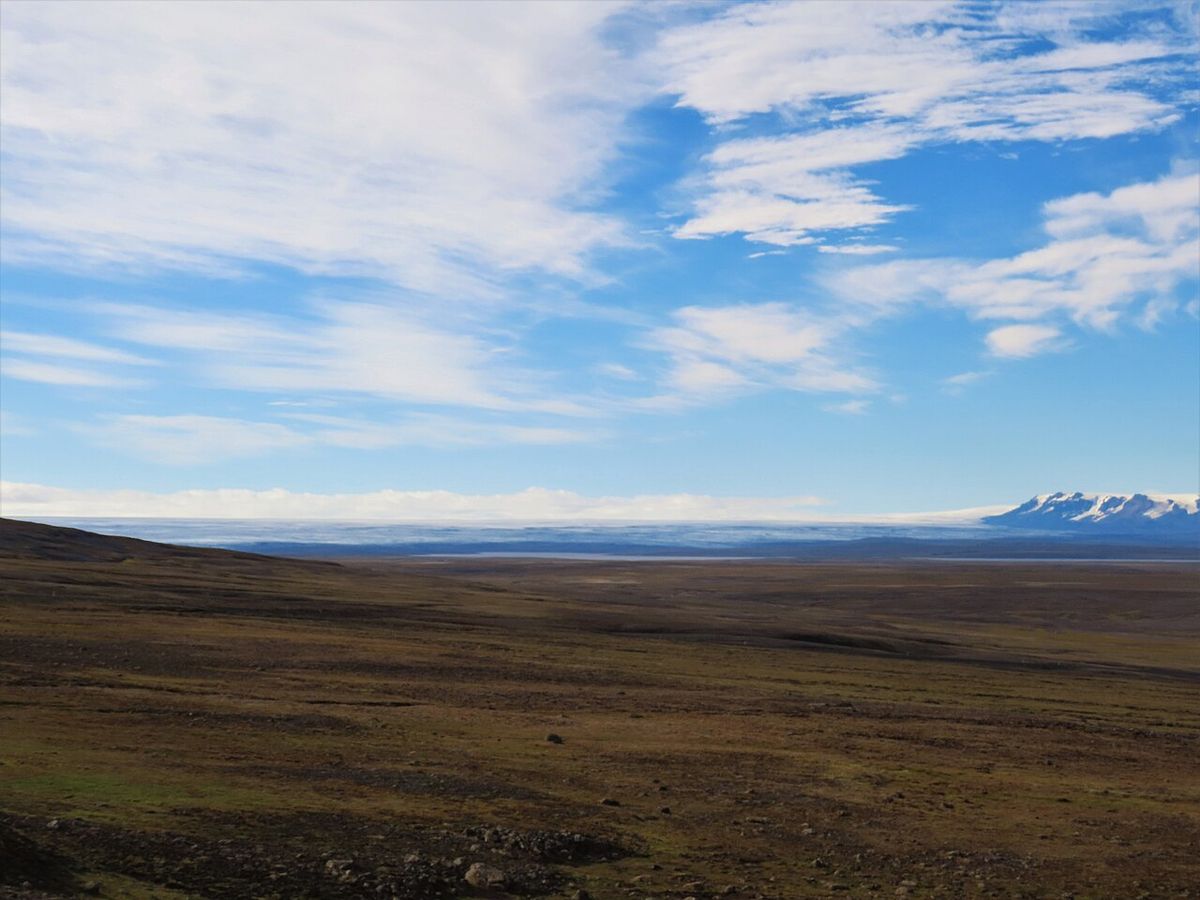
Brúarjökull is one of Iceland's most accessible Highland glaciers (if you have 4WD). This Vatnajökull outlet glacier flows northeast toward the Highlands, creating a massive glacier tongue with dramatic crevasses, ice caves (seasonal), and ice formations. The glacier advances and retreats — jökulhlaups (glacial floods) occasionally burst from beneath. Guided glacier tours operate in summer. The setting is spectacular: glacier ice contrasts with black Highland desert, Herðubreið mountain rises nearby, Askja volcano visible in distance. Access via F910 road (4WD required, summer only, river crossings).
💡 Did You Know?
Brúarjökull occasionally releases jökulhlaups — massive glacial floods bursting from beneath the ice.
Local Legend
The Outlaw's Refuge
Iceland's vast, uninhabited highlands have been associated with outlaws since the saga age. The most famous highland outlaw was Fjalla-Eyvindur (Mountain Eyvindur), who lived as a fugitive in the highlands for over 20 years in the 18th century with his wife Halla. They survived the extreme conditions by living in caves, hunting, and occasionally raiding lowland farms. Their story has become legendary, representing the human capacity to endure against impossible odds. Ruins attributed to their shelters can still be found in the highlands, and their tale has inspired countless Icelandic books, poems, and songs about freedom, love, and survival in the wild heart of Iceland.
Experiences
Tours Near Brúarjökull — Iceland's Most Accessible Highland Glacier
Best-rated Iceland experiences — book with free cancellation


Explore
Hidden Gems Nearby
✦ Glacier Sounds
Stop and listen — glaciers make haunting sounds as ice shifts and meltwater flows beneath the surface.
The creaking, groaning, and rushing sounds remind you that glaciers are living, moving rivers of ice.
✦ Ice Colors
Look carefully at the ice — you'll see shades of white, blue, and even black from volcanic ash layers.
The blue color comes from compressed ice that absorbs red light, and ash layers mark historical eruptions.
✦ Glacier Edge Ecology
The area where the glacier meets rock supports a unique micro-ecosystem of hardy organisms.
Pioneer plants and insects colonizing newly exposed land offer a real-time view of ecological succession.
Help
Frequently Asked Questions
Location
📍 Location
Discover
Explore Nearby
Places from our database within 1.0 km — all data from Sanity
Loading nearby places…
0 places found within 1.0 km
Plan full itinerary →Explore More