
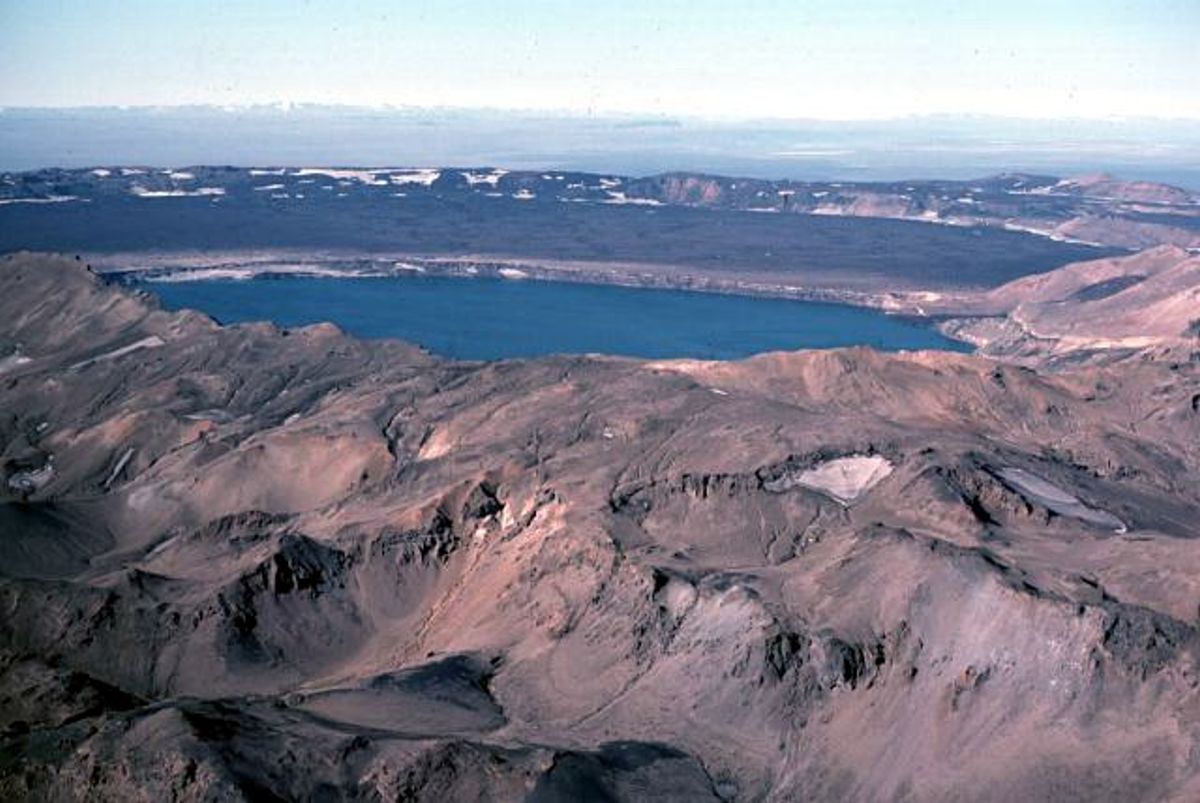
Askja Caldera & Víti Crater Lake
Explore Askja Caldera, a remote highland volcano featuring a massive caldera and the milky-blue Víti Crater Lake.
At a Glance
Visit time
Allow 2-4 hours to explore the caldera and Víti Crater Lake once at the site.
Best season
Summer months (June-September) for best access to the remote highlands.
Access
Accessible by 4x4 vehicles, often requiring guided tours due to the remote, rugged highland terrain.
GPS
65.0467, -16.7259
About
About Askja Caldera & Víti Crater Lake
Explore Askja Caldera, a remote highland volcano featuring a massive caldera and the milky-blue Víti Crater Lake.
Witness the raw power of a remote highland volcano and the ethereal beauty of a geothermal crater lake.
Photos
Photo Gallery
Background
History & Background
Askja Caldera and Víti Crater Lake are prominent geological features, shaped by the powerful volcanic forces characteristic of Iceland's central highlands. This massive caldera, part of the Dyngjufjöll mountain range, stands as a testament to significant past eruptions, creating the dramatic landscape seen today. Its existence as a remote highland volcano underscores its ongoing geological significance. Beyond its natural formation, Askja holds a unique place in human history related to space exploration. The site's rugged and isolated environment, with its vast volcanic plains and craters, was recognized by NASA as an ideal analog for the lunar surface. Consequently, it served as a crucial training ground for astronauts, including those preparing for the Apollo missions, allowing them to practice geological fieldwork and navigation in an extraterrestrial-like setting before venturing to the moon.
Askja Caldera and Víti Crater Lake represent a pinnacle of Iceland's dramatic volcanic landscape, situated deep within the remote central highlands. This prominent geological feature, part of the majestic Dyngjufjöll mountain range, offers an unparalleled experience for adventurers seeking the raw power and ethereal beauty of the earth. At its heart lies a massive caldera, the vast depression left by ancient eruptions, a testament to the colossal forces at play beneath Iceland's surface. Within this immense caldera, the captivating Víti Crater Lake beckons with its distinctive milky-blue geothermal waters, a truly unique sight that contrasts vividly with the surrounding dark volcanic rock. The lake's warmth and mineral content contribute to its striking hue, making it a photographic marvel. Beyond its natural splendor, Askja holds a fascinating chapter in human history. Its rugged, lunar-like terrain provided an ideal training ground for NASA astronauts. Before their historic missions to the moon, these explorers honed their geological observation and movement skills in an environment that closely mimicked the lunar surface. This unique connection to space exploration adds another layer of intrigue to an already extraordinary destination. Visiting Askja Caldera and Víti Crater Lake is not merely a trip; it's an immersion into a landscape that feels both ancient and futuristic, a place where the planet's geological might is on full display and where the dreams of reaching for the stars once took root. The journey to this remote highland volcano is an adventure in itself, rewarding visitors with breathtaking vistas and a profound sense of connection to both Earth's powerful forces and humanity's pioneering spirit.
Folklore
Story & Folklore
Imagine standing on the edge of the world, where the earth breathes with immense power. Askja Caldera, a colossal highland volcano, dominates the remote central highlands of Iceland, nestled within the majestic Dyngjufjöll mountain range. Below, the milky-blue waters of Víti Crater Lake shimmer, a geothermal jewel contrasting with the stark volcanic landscape. This isn't just a scenic wonder; its otherworldly terrain once echoed with the footsteps of astronauts, preparing for voyages to the moon. They walked these desolate, rugged plains, honing their skills in an environment that mirrored the lunar surface. To visit Askja is to step into a landscape of profound geological drama and human ambition, where the raw forces of nature meet the dreams of space exploration, leaving an indelible mark on the soul.
💡 Did You Know?
The remote and rugged landscape of Askja Caldera and Víti Crater Lake served as a critical training site for NASA astronauts preparing for lunar missions.
Local Legend
No specific local legend is provided in the research.
Based on the available research, no specific local legend or myth for Askja Caldera & Víti Crater Lake is known. The focus is on its geological significance and its role as a NASA astronaut training site.
Explore
Hidden Gems Nearby
✦ Best Time of Day
Visit this attraction during golden hour (the hour after sunrise or before sunset) for the most beautiful light.
Iceland's low-angle sunlight creates long shadows and warm colors that transform ordinary scenes into extraordinary ones.
✦ Local Knowledge
Ask locals for their favorite nearby spots — Icelanders are friendly and love sharing recommendations.
The best experiences often come from local tips about lesser-known viewpoints, cafés, or hidden natural features.
✦ Weather Changes
Don't leave if the weather is bad — wait 15 minutes and it often changes dramatically.
Iceland's rapidly changing weather can transform a gray scene into a spectacular display of light and clouds in minutes.
Help
Frequently Asked Questions
Location
📍 Location
Discover
Explore Nearby
Places from our database within 1.0 km — all data from Sanity
Loading nearby places…
0 places found within 1.0 km
Plan full itinerary →Explore More