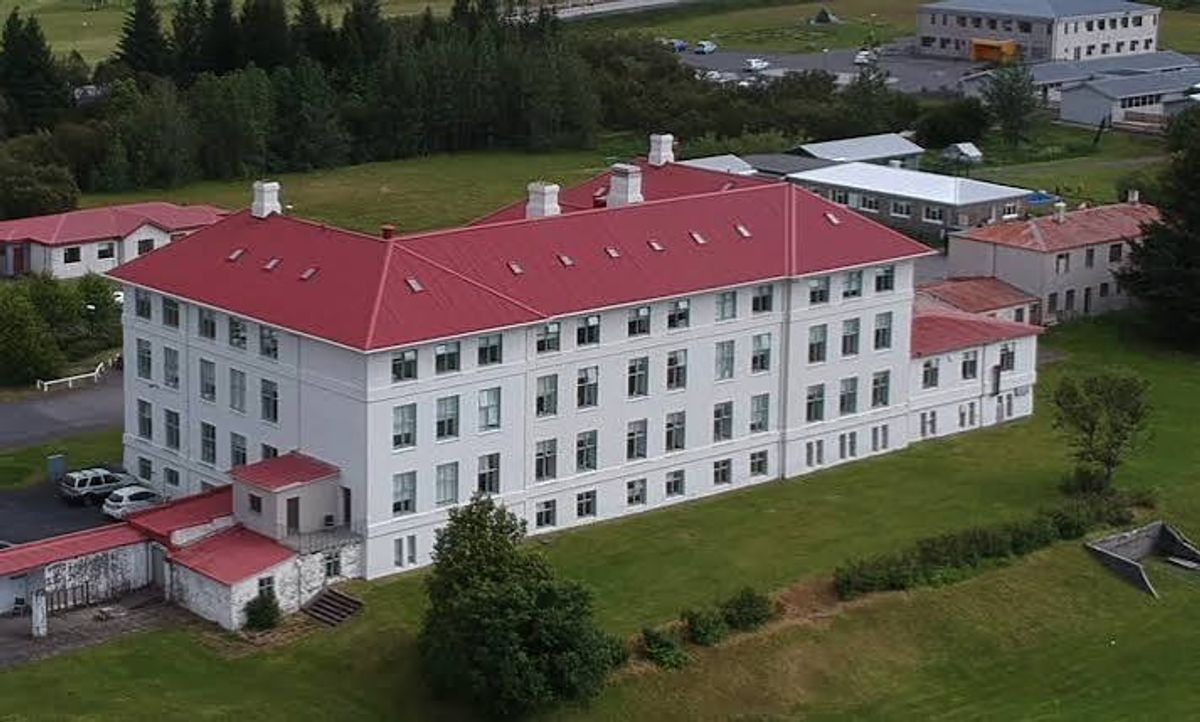
Vífilsstaðir
Historic Vífilsstaðir opened as Iceland’s major tuberculosis sanatorium in 1910, later serving respiratory, addiction-treatment and geriatric patients.
About
About Vífilsstaðir
Historic Vífilsstaðir opened as Iceland’s major tuberculosis sanatorium in 1910, later serving respiratory, addiction-treatment and geriatric patients.
Walk through a place that tells the human story of Iceland’s fight against tuberculosis and the transformation of healthcare over more than a century.
Photos
Photo Gallery
Background
History & Background
Vífilsstaðir was created during Iceland’s early organised campaign against tuberculosis. Icelandic Oddfellows helped establish a nationwide movement in 1906 to support a dedicated sanatorium, and the cornerstone was laid on 31 May 1909. Architect Rögnvaldur Ólafsson designed the main building, which was completed rapidly and opened to tuberculosis patients on 5 September 1910. The sanatorium became an important institution in the national struggle against a disease once widely feared as the “white death”. In 1916 the Icelandic treasury took over the institution; at that time roughly 70 patients were living there with about 25 employees. In 1935 Vífilsstaðir became part of the unified State Hospitals system alongside institutions including Landspítali and Kleppur. As tuberculosis treatment changed and the disease declined, Vífilsstaðir’s role evolved. From around 1970 respiratory patients were admitted, and from 1976 until 2002 a treatment unit for alcohol addiction connected to Kleppur Hospital operated at the site. Landspítali’s operations at Vífilsstaðir ended in 2002. Hrafnista began operating nursing-home services there in 2004, and Landspítali returned on 20 November 2013 when a geriatric ward was transferred from Landakot. The site remains closely connected with elder care and preserves physical and cultural traces of the tuberculosis era.
Vífilsstaðir, in Garðabær just outside Reykjavík, is a landmark in Iceland’s medical and social history. The imposing main building was created specifically for the treatment of tuberculosis at a time when the disease was among the greatest public-health threats facing Iceland. Icelandic Oddfellows were central to the campaign for a sanatorium, helping mobilise a nationwide fundraising and organisational effort. The cornerstone was laid in 1909, and Vífilsstaðir opened for tuberculosis patients on 5 September 1910. The building was designed by Rögnvaldur Ólafsson, a pioneering Icelandic architect, and represented an ambitious new scale of Icelandic institutional architecture. Before modern antibiotics transformed tuberculosis treatment, sanatorium care relied heavily on rest, nutrition, fresh air and controlled exercise. The landscape was therefore part of daily life: patients who were strong enough were encouraged to walk outdoors, including in the area toward Vífilsstaðavatn and the surrounding hills. This gives today’s walking paths an unusually tangible connection to the people who spent months or years here seeking recovery. Vífilsstaðir did not become obsolete when tuberculosis declined. Instead, its role followed changes in Icelandic medicine. From around 1970 the hospital increasingly received patients with respiratory illnesses. Between 1976 and 2002, an alcohol-treatment unit associated with Kleppur Hospital also operated here. Landspítali ended its activities at Vífilsstaðir in 2002, Hrafnista began nursing-home operations in 2004, and Landspítali returned in 2013 with a geriatric ward transferred from Landakot. For visitors, Vífilsstaðir is therefore much more than an attractive historic building. It is a place where architecture, landscape and personal histories reveal Iceland’s battle with tuberculosis and the evolution of the country’s healthcare system across more than a century.
Folklore
Story & Folklore
At the beginning of the 20th century, tuberculosis cast a long shadow over Iceland. The disease struck families across the country and often killed young adults. A national movement formed to fight it, with Icelandic Oddfellows playing an important role in raising support for a dedicated sanatorium. The cornerstone at Vífilsstaðir was laid in 1909 and the hospital received its first tuberculosis patients on 5 September 1910. In the years before effective antibiotic treatment, life at a sanatorium centred on rest, nourishing food, fresh air and carefully managed activity. Patients who were well enough were encouraged to spend time outdoors and walk in the landscape around Vífilsstaðir. As tuberculosis ceased to dominate Icelandic healthcare, the buildings found new roles. Respiratory medicine became important from around 1970, an alcohol-treatment unit operated from 1976 to 2002, and the complex later became associated with nursing and geriatric care. Vífilsstaðir therefore tells more than the story of one disease: it charts a century of changing medicine and social care in Iceland.
💡 Did You Know?
When Vífilsstaðir was founded, tuberculosis was so devastating in Iceland that contemporary accounts described it as the “white death”; the sanatorium became a major national response to the disease.
Explore
Hidden Gems Nearby
✦ The sanatorium walking landscape
The paths and open landscape around Vífilsstaðir and toward Vífilsstaðavatn are closely connected to the sanatorium era, when fresh air and carefully managed outdoor activity formed part of daily treatment.
Walking here adds a human dimension to the medical history: the landscape visitors enjoy today was once part of patients’ routines and recovery.
Help
Frequently Asked Questions
Location
📍 Location
Discover
Explore Nearby
Places from our database within 1.0 km — all data from Sanity
Loading nearby places…
0 places found within 1.0 km
Plan full itinerary →Explore More