Viðgelmir
Explore Viðgelmir, Iceland's largest lava tube, where ancient volcanic artistry meets Viking history.
At a Glance
Visit time
Guided tours typically last 1-2 hours, offering ample time to explore the main passages.
Best season
All year, with guided tours available daily. Winter offers the chance to see beautiful ice formations.
Access
Located in the Hallmundarhraun lava field, approximately 2 km southeast of Fljótstunga farm in Hvítársíða, Borgarfjörður. Guided tours are mandatory and typically depart from a visitor center.
GPS
64.7531, -20.8019
About
About Viðgelmir
Explore Viðgelmir, Iceland's largest lava tube, where ancient volcanic artistry meets Viking history.
Witness the breathtaking scale and intricate beauty of one of the world's largest and most accessible lava caves.
Background
History & Background
Viðgelmir was forged around 900 AD during a massive volcanic eruption that created the extensive Hallmundarhraun lava field, covering about 200 square kilometers. The lava tube formed when the outer layer of a flowing lava river cooled and hardened, while the molten lava beneath drained away, leaving an open tunnel. Early Viking settlers named it "Víðgelmir," meaning "big snake" or "big worm," reflecting their interpretation of its grand, winding form. The cave also holds a fascinating human history. Evidence of human habitation, believed to date back to the Viking Age, has been discovered within its depths, with artifacts now preserved in the National Museum of Iceland. It is thought that outlaws, a common punishment in medieval Iceland, may have utilized the cave as a dwelling, adding a layer of intrigue to its past. The cave has been protected by an iron gate since 1991 and officially designated a protected site since 1993, safeguarding its delicate formations for future generations.
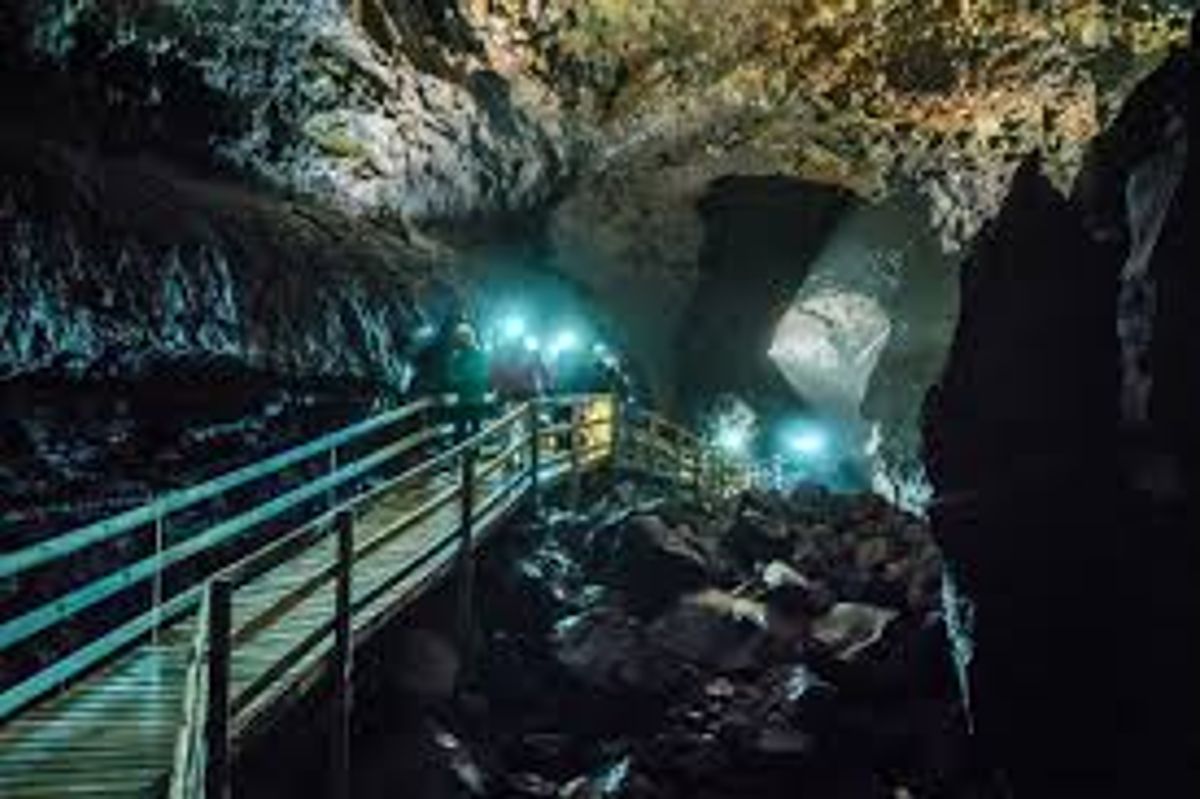
Viðgelmir, nestled within the vast Hallmundarhraun lava field in West Iceland, stands as the nation's largest lava tube by volume and one of the world's most impressive. Formed around 900 AD during a colossal volcanic eruption, this subterranean marvel stretches 1,585 meters, boasting passages up to 15.8 meters high and 16.5 meters wide. Its name, "big snake" or "big worm," reflects the awe it inspired in early Viking settlers. The cave is a geological wonderland, featuring intricate lava stalactites, stalagmites, and, in winter, delicate ice formations. Beyond its natural beauty, Viðgelmir holds significant historical weight. Archaeological finds, now housed in the National Museum, suggest human habitation dating back to the Viking Age, possibly by outlaws seeking refuge. Since 1991, an iron gate has protected its delicate features, and it has been a protected site since 1993. Today, Viðgelmir is remarkably accessible, with paved walkways, installed lighting, and handrails making guided tours suitable for all ages and skill levels, offering a unique journey into Iceland's fiery past.
Folklore
Story & Folklore
Imagine standing at the threshold of a forgotten world, where the earth itself has sculpted a magnificent cathedral of stone. Around 900 AD, a torrent of molten rock surged through the Hallmundarhraun lava field, its outer crust hardening as the liquid heart drained away, leaving behind Viðgelmir. Early Viking settlers, venturing into its colossal chambers, might have envisioned a colossal serpent or worm carving its path, giving the cave its evocative name. Centuries later, outlaws are believed to have sought refuge in its depths, leaving behind whispers of their struggle. Today, as you step onto its illuminated paths, you walk in the footsteps of ancient explorers and feel the raw, untamed power of Iceland's volcanic heart.
💡 Did You Know?
Viðgelmir, named "big snake" by early settlers, was formed around 900 AD and holds evidence of Viking-age human habitation.
Local Legend
The Troll Hallmundur and the Outlaw's Lair
The Hallmundarhraun lava field, home to Viðgelmir, is named after the formidable troll Hallmundur from Grettis saga. While no direct folklore about Viðgelmir from sagnagrunnur.is was found, the cave's naming as "big snake" by early settlers hints at mythical interpretations of its formation. Additionally, a deep hole nearby, Skeggjahola, is linked to a 1923 discovery of a skeleton, possibly relating to the legendary killing of Skeggi from Ás in Vatnsdal mentioned in Grettis saga.
Explore
Hidden Gems Nearby
✦ Lava Formations Close-Up
Look carefully at the lava formations near Viðgelmir — each tells a story of how it cooled.
Rope lava, pillow lava, and columnar basalt each formed under different conditions, creating a geological textbook in stone.
✦ Moss & Lichens
The moss and lichen growing on the volcanic rock are some of the first life to colonize new lava fields.
Some of these organisms grow less than 1cm per year, meaning the patches you see may be decades or centuries old.
✦ Sunset Colors
The volcanic rock takes on incredible red and gold hues during sunset.
The iron-rich minerals in the lava glow in warm light, creating a photographer's paradise.
Help
Frequently Asked Questions
Location
📍 Location
Discover
Explore Nearby
Places from our database within 1.0 km — all data from Sanity
Loading nearby places…
0 places found within 1.0 km
Plan full itinerary →Explore More