
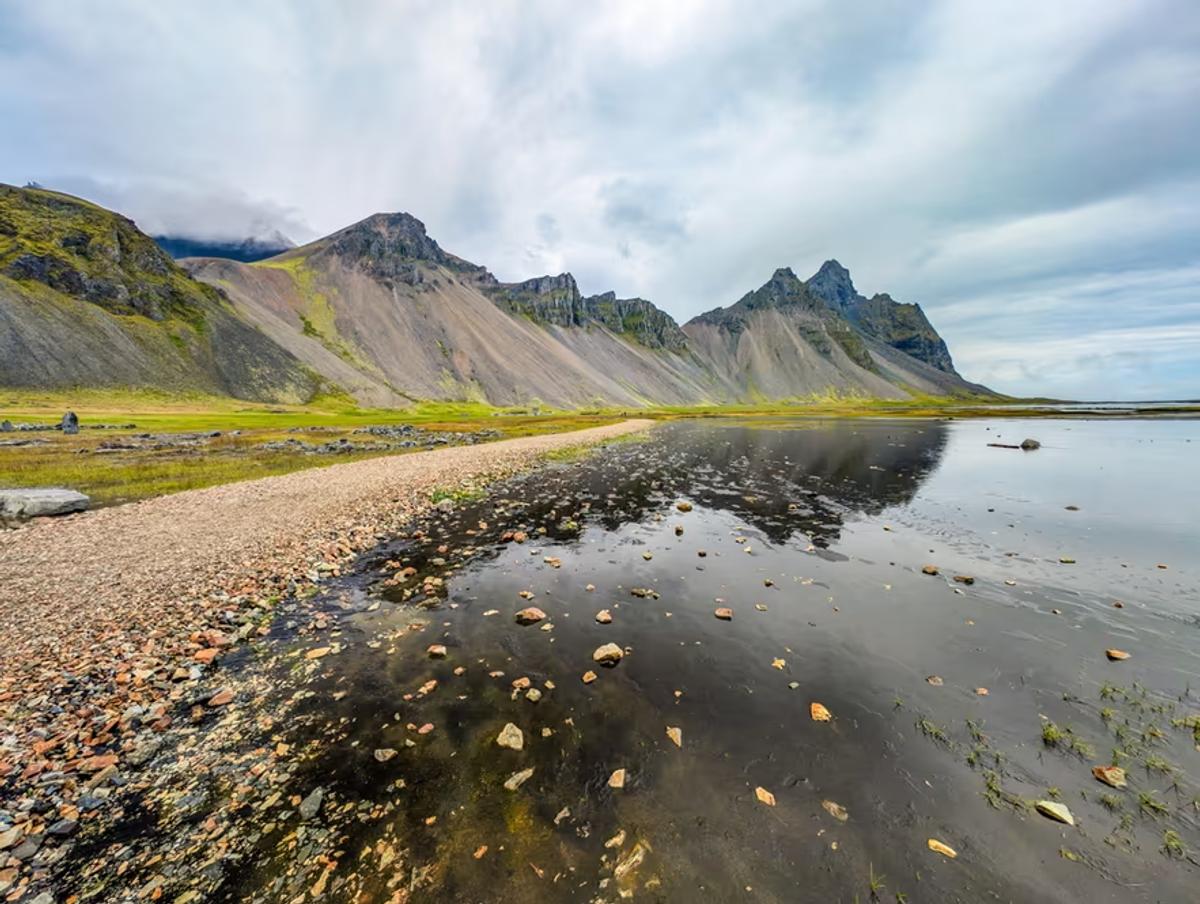
Vestrahorn
Vestrahorn's dramatic gabbro peaks reflect majestically in black sand tidal pools, an iconic Icelandic vista.
について
Vestrahornについて
Vestrahorn's dramatic gabbro peaks reflect majestically in black sand tidal pools, an iconic Icelandic vista.
Capture Iceland's most iconic mountain reflection against black sands, a photographer's dream.
写真
ギャラリー
背景
歴史と背景
Vestrahorn, also known as Horn, has been a significant site in Iceland's landscape for millennia. It stands out not only for its dramatic beauty but also for its unique geological composition. Unlike the majority of Iceland's mountains, which are volcanic in origin, Vestrahorn is formed from intrusive gabbro and granophyre—dense, dark igneous rocks that cooled deep within the Earth's crust. This makes it one of the oldest mountains in Iceland, offering a rare glimpse into the island's ancient geological past. Throughout the years, this prominent mountain and the Stokksnes peninsula have played an important role in Icelandic culture and natural history, likely serving as a landmark for seafarers and a source of inspiration for local folklore. Its imposing presence, combined with the stark beauty of the black sand beaches, has cemented its status as a natural wonder and a highly revered location for both Icelanders and international visitors. Its alternative name, Horn, underscores its distinctive, horn-like peaks.
Vestrahorn, also known as Horn, is a truly remarkable and visually stunning destination located on the Stokksnes peninsula in Southeast Iceland, near the charming town of Höfn in Hornafjörður. This dramatic coastal area is famed for its 454-meter mountain, composed of rare gabbro and granophyre rock, which gives it an unusually angular and almost metallic appearance, distinct from Iceland's more common volcanic peaks. The reflection of its twin peaks in the expansive black sand tidal pools of Stokksnes creates one of Iceland's most signature and photographed images. The landscape, as seen in the image, features a gravel path leading towards the water, with scattered rocks dotting the dark, reflective surface of the tidal pools. The mountain's slopes, a mix of green and brown, rise steeply under a dramatic, often cloudy sky, adding to the moody and majestic atmosphere. Vestrahorn is best photographed at dawn, when the golden light bathes its angular face and the tide pools are still, offering pristine reflections. However, its allure is captivating at any time, with the powerful ocean waves constantly reshaping the distinctive black volcanic sand. Beyond the geological marvel, the area is also home to diverse marine wildlife, including seals and seabirds, making it a place of rich natural beauty. A small Viking Village film set, used for various productions, can also be visited at the base of the mountain, adding a touch of cultural intrigue to this natural wonder.
民話
物語と民話
As you approach the Stokksnes peninsula, the imposing silhouette of Vestrahorn, or Horn, slowly reveals itself. Its sharp, angular peaks, unlike any other in Iceland, rise dramatically from the landscape. The gravel path, visible in the foreground, leads you towards the dark, reflective waters of the tidal pools, where the mountain's grandeur is perfectly mirrored under a vast, often cloudy sky. Scattered rocks on the dark sand add texture to this stark, beautiful scene. The air is often crisp, carrying the scent of the sea, and the silence is profound, broken only by distant waves. This is a place where nature's artistry is on full display, inviting contemplation and breathtaking photographs of its unique geology and ethereal reflections.
ご存知ですか?
Vestrahorn, also known as Horn, is one of Iceland's oldest mountains, uniquely formed from dense, dark gabbro rock rather than volcanic basalt.
探索
近くの隠れた名所
Tidal Patterns
The black sand creates stunning patterns as the waves retreat, especially at low tide.
The interplay of water, sand texture, and reflected sky creates naturally artistic compositions that are constantly changing.
Rock Formations
Explore the rock formations at the edges of the beach — many feature columnar basalt and small caves.
These geological features add variety to your beach visit and often shelter small tidal pools with marine life.
Seabird Watching
Bring binoculars to spot seabirds nesting on nearby cliffs, especially during summer months.
In breeding season (May-August), you can often see puffins, fulmars, and guillemots from the beach.
ヘルプ
よくある質問
場所
場所
Discover
Explore Nearby
Places from our database within 5.0 km — all data from Sanity
Loading nearby places…
0 places found within 5.0 km
Plan full itinerary →もっと探索