
Þingmúli
Þingmúli reveals East Iceland's ancient parliamentary past, volcanic heart, and fossilized trees.
について
Þingmúliについて
Þingmúli reveals East Iceland's ancient parliamentary past, volcanic heart, and fossilized trees.
Þingmúliへレンタカーで
車で訪れる予定ですか?地域に合う車種を比較し、旅行日程に応じた実際のレンタカー料金を確認できます。
ここでリアルタイムの空車を検索
車種は提案であり、リアルタイムの料金や在庫ではありません。GoIceTravelは追加費用なしで紹介料を受け取る場合があります。
写真
ギャラリー
背景
歴史と背景
Þingmúli holds a profound place in Icelandic history, primarily known as the former quarter assembly place (Fjórðungsþingstaður) for East Iceland. This was a crucial administrative and legal center where local affairs were governed, giving its name to the Múlasýsla region. Beyond its role as an assembly site, Þingmúli was also a significant ecclesiastical center, serving as a church site and parsonage until 1890. It is famously associated with Reverend Páll Pálsson (1836–1890), a pioneering figure in the education of the deaf in Iceland. Evidence of its ancient past is still visible today, with the ruins of assembly booths scattered across the field, inviting visitors to imagine the bustling gatherings of centuries past. Place names in the area also suggest that Þingmúli may have once been home to a hof or blótsstaður – a heathen temple or sacrificial site – in ancient times, predating the Christian era. Recognizing its immense cultural value, the assembly booth ruins were officially protected under cultural heritage laws in 1931. The mountain's geological history is equally compelling. Þingmúli is identified as the exposed roots of a vast, ancient central volcano, a testament to Iceland's dynamic geological past. The diverse rock types in the vicinity, including móberg, reveal the long-extinct volcano's powerful activity. Notably, the area has yielded beautifully preserved fossilized tree trunks from the Tertiary period, offering a unique window into prehistoric ecosystems. This blend of human history and deep geological time makes Þingmúli a truly exceptional site in East Iceland.
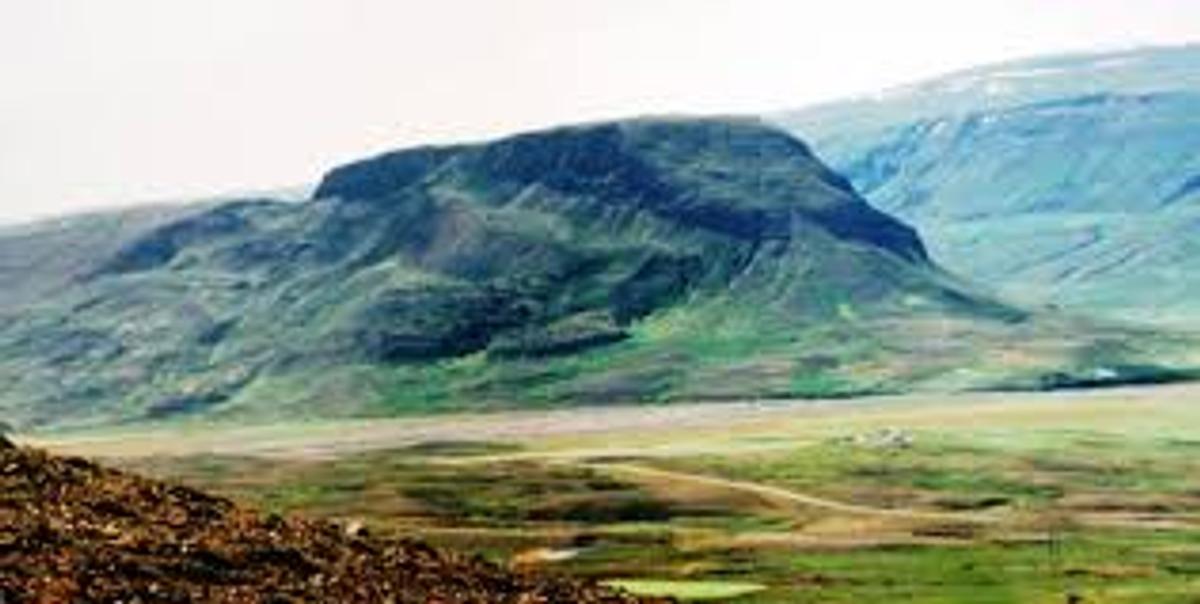
Nestled in the sweeping landscapes of East Iceland, Þingmúli presents itself as a striking, flat-topped mountain, a silent witness to millennia of natural and human history. Visually, its dark, rugged slopes rise from verdant plains, hinting at the deep geological forces that shaped it. More than just a picturesque peak, Þingmúli is a site of immense historical and geological importance, recognized on the natural heritage list of East Iceland alongside Skriðuvatn, Haugahólar, and Vatnaskógar. Historically, Þingmúli was a pivotal location, serving as the quarter assembly place (Fjórðungsþingstaður) for East Iceland – a regional parliament where significant decisions were made. Remnants of these ancient assembly booths can still be seen scattered across the field, offering a tangible link to this bygone era. It was also a church site and a parsonage until 1890, and notably associated with Reverend Páll Pálsson (1836–1890), a pioneer in deaf education in Iceland. Geologically, Þingmúli is a treasure trove. It represents the exposed roots of a massive, ancient central volcano, revealing diverse rock formations in the surrounding mountains. The mountain itself is composed of móberg (palagonite tuff), within which remarkably beautiful and significant fossilized tree trunks from the Tertiary period have been discovered. These fossils provide invaluable insights into the region's ancient flora and climate. The site, including its assembly booth ruins, has been protected under cultural heritage laws since 1931, ensuring its preservation for future generations. Visiting Þingmúli offers a unique opportunity to walk through layers of time, from the Tertiary period's lush forests to the medieval Icelandic assembly grounds, all set against the stunning backdrop of East Iceland's natural beauty.
民話
物語と民話
Imagine a time when the vast, green plains stretching before Þingmúli pulsed with life and purpose. Centuries ago, this imposing mountain, its broad summit a sentinel over the land, was the very heart of East Iceland's governance. Here, at the quarter assembly, laws were debated, disputes settled, and the fabric of Icelandic society woven. As you stand amidst the subtle remnants of old booth ruins, a whisper of ancient voices seems to drift on the breeze, connecting you to generations past. But Þingmúli holds even deeper secrets. Peer closely at its volcanic rock, and you're peering into the roots of a primeval volcano, a geological giant that shaped this landscape eons ago. The discovery of beautifully preserved fossilized tree trunks within its slopes is a testament to an even more distant, lush past, painting a vivid picture of a Tertiary world. Þingmúli is not merely a mountain; it's a living archive, where human history and geological time converge, inviting you to uncover its many layers.
文化
物語と伝説
この地域のアイスランドのサガと民話
場所
場所
もっと探索