
Reynistaðarkirkja
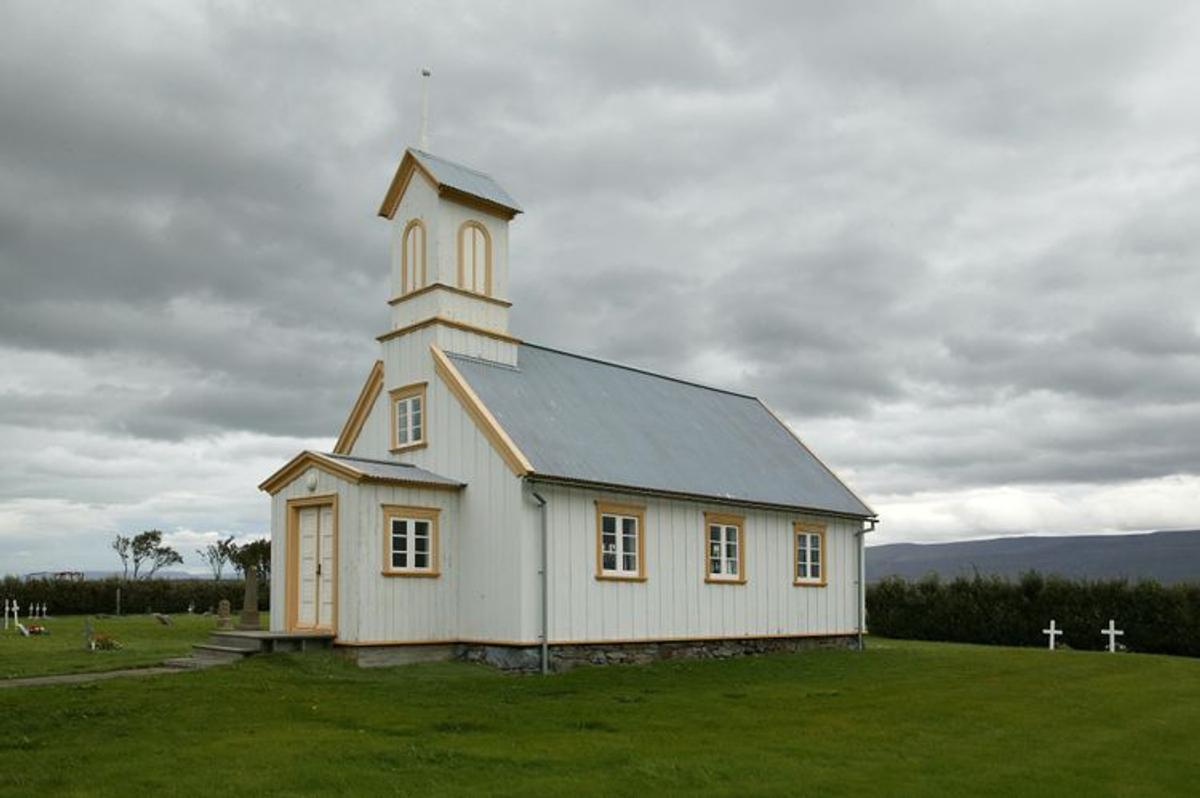
Historic Reynistaðarkirkja, a charming white church with a unique pulpit, nestled in north Iceland.
について
Reynistaðarkirkjaについて
Historic Reynistaðarkirkja, a charming white church with a unique pulpit, nestled in north Iceland.
Discover unique Icelandic church architecture and a rich monastic history in a tranquil setting.
Reynistaðarkirkja近くのツアー
Lake Myvatn and Godafoss Waterfall Day Tour from Akureyri
Imagine Iceland Travel · 8 hours
Diamond Circle Day Tour from Akureyri or Lake Myvatn
Imagine Iceland Travel · 9 hours
Lake Mývatn Shore Excursion from Akureyri Port - Spanish
Iceland Horizon - Saga Travel - GeoIceland · 6 hours
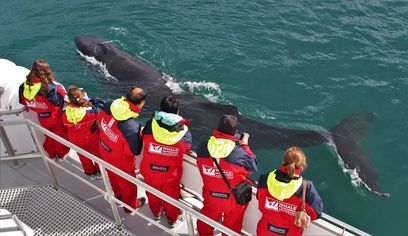
Akureyri Classic Whale Watching
Elding Adventure at Sea · 3 hours
写真
ギャラリー
背景
歴史と背景
Reynistaður holds deep historical roots as a significant settlement, church site, and former Benedictine nunnery located west of the Héraðsvatna river. The nunnery, established in 1295, thrived for centuries before its dissolution in 1552, leaving a lasting spiritual legacy on the region. Prior to its monastic era, Reynistaður gained prominence as a jarl's seat when Jarl Gissur Þorvaldsson purchased the land in 1259 and moved his residence there. The history of a church at Reynistaður dates back at least to 1268, when it is recorded that Jarl Gissur Þorvaldsson died on January 12th and was interred within the church's floor. The current charming white wooden church, visible today, was constructed much later, between 1868 and 1870, embodying the architectural style of its era. A vestibule was added in 1950, further enhancing the structure. One of the most distinctive features of Reynistaðarkirkja is its pulpit, which is positioned directly above the altar – a rare arrangement found in only five other churches across Iceland. Since 1960, the church has functioned as an out-church of Glaumbær, having previously been served by the parish of Sauðárkrókur, reflecting its enduring role in the spiritual life of the community.
Nestled in the verdant landscape west of Héraðsvatna river, Reynistaðarkirkja is a site steeped in history, serving as a church, farm, and former Benedictine nunnery. The present church, a charming white wooden structure with a corrugated light blue-grey metal roof and striking yellow trim around its windows, doors, and eaves, was constructed between 1868 and 1870. Its simple yet elegant design, featuring a small, distinctive steeple with two arched openings, beautifully complements the rugged Icelandic environment. The vestibule, a later addition, was built in 1950. Historically, Reynistaður was a significant location, notably serving as the seat of Jarl Gissur Þorvaldsson, who acquired the land in 1259. Records indicate a church existed here as early as 1268, the year Jarl Gissur passed away and was reputedly buried in its floor. Adding to its unique character, Reynistaðarkirkja boasts a pulpit positioned directly above the altar, a rare architectural feature found in only five other Icelandic churches. The surrounding graveyard, dotted with modest white crosses and headstones, offers a peaceful space for reflection. Visitors will appreciate the tranquil atmosphere and the opportunity to delve into Iceland's rich religious and cultural past. While the church itself is a testament to Icelandic craftsmanship, its historical context, from its monastic roots to its connection with a powerful jarl, truly makes it a compelling stop. It has served as an out-church from Glaumbær since 1960, having previously been served from Sauðárkrókur.
民話
物語と民話
Under a sky often filled with dramatic clouds, Reynistaðarkirkja stands as a quiet sentinel to centuries of Icelandic history. Imagine the whispers of Benedictine nuns who once walked these grounds, their monastery thriving here from 1295 until 1552. The air, cool and crisp, carries echoes of Jarl Gissur Þorvaldsson, a powerful figure who made Reynistaður his seat in 1259 and is said to be buried within the very floor of a previous church on this site. The current white wooden structure, with its cheerful yellow trim and modest steeple, was lovingly built between 1868 and 1870, replacing older iterations. It's a place where time seems to slow, allowing visitors to connect with the profound spiritual and historical layers embedded in this tranquil corner of north Iceland. The simple white crosses in the surrounding graveyard remind us of countless lives lived under this same expansive sky, each a part of Reynistaðarkirkja's enduring legacy.
ご存知ですか?
Reynistaðarkirkja is one of only six churches in Iceland where the pulpit is uniquely situated directly above the altar.
文化
物語と伝説
この地域のアイスランドのサガと民話
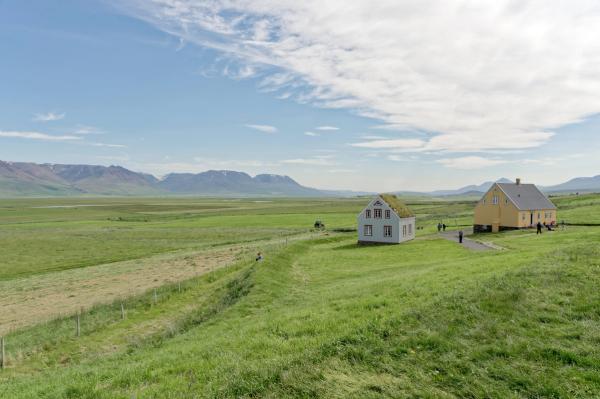
Glaumbær
Glaumbær is a historic location in Iceland mentioned in "Grettis saga", one of the ancient Íslendingasögur (Sagas of Icelanders). These medieval narratives preserve the history of Iceland's Viking Age settlement.
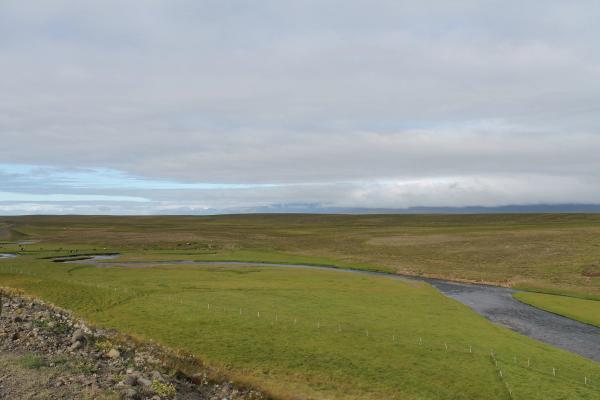
Sæmundarhlíð
Sæmundarhlíð is a historic location in Iceland mentioned in "Njáls saga, Vatnsdæla saga", one of the ancient Íslendingasögur (Sagas of Icelanders). These medieval narratives preserve the history of Iceland's Viking Age settlement.
探索
近くの隠れた名所
Pulpit above the Altar
Discover the church's unique architectural feature: its pulpit is positioned directly over the altar. This rare design is found in only five other churches across all of Iceland.
It's a testament to a distinct historical liturgical practice and architectural style.
Historic Graveyard
Wander through the peaceful graveyard surrounding the church, adorned with simple white crosses and headstones, offering a contemplative space amidst the stunning Icelandic scenery.
It provides a tangible connection to the lives of past generations who lived and worshipped here.
Vestibule of 1950
Notice the church's vestibule (forkirkjan), a more recent addition from 1950, which subtly blends with the older structure while adding to its functional design.
It showcases the ongoing care and evolution of this historic church over time.
ヘルプ
よくある質問
場所
場所
Discover
Explore Nearby
Places from our database within 5.0 km — all data from Sanity
Loading nearby places…
0 places found within 5.0 km
Plan full itinerary →もっと探索