
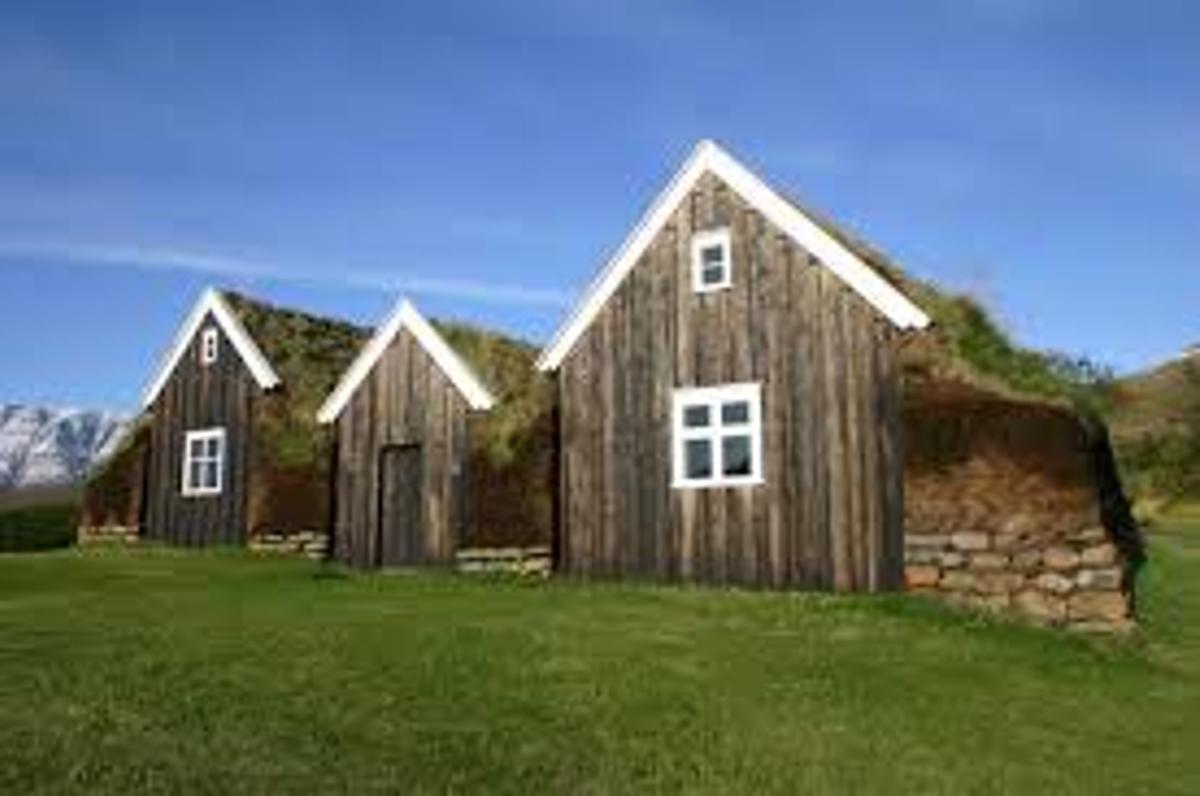
Nýibær
Nýibær offers a captivating glimpse into 19th-century Icelandic farm life through its beautifully preserved turf houses.
について
Nýibærについて
Nýibær offers a captivating glimpse into 19th-century Icelandic farm life through its beautifully preserved turf houses.
Witness a beautifully preserved 19th-century Icelandic turf farm, offering unique insight into local heritage.
Nýibær近くのツアー
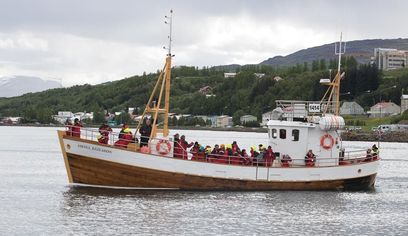
Whale Watching Tour w/ Transfer from Akureyri
Keli sea tours ehf · 4 hours
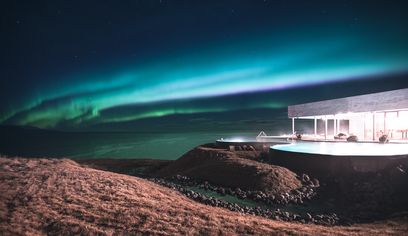
Northern Lights & GeoSea Geothermal Baths Tour (From Akureyri)
Imagine Iceland Travel · 5 hours

Northern Lights Photography tour from Akureyri
Iceland Horizon - Saga Travel - GeoIceland · 3 hours
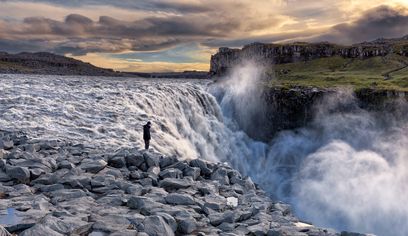
Dettifoss Waterfall, Ásbyrgi and Lake Mývatn - Shore Excursion from Húsavík
BusTravel Iceland · 5 hours 30 minutes
写真
ギャラリー
背景
歴史と背景
The history of turf houses in Iceland stretches back over a millennium, with their design evolving from Viking longhouses brought by the first settlers. These structures were perfectly adapted to Iceland's environment, where timber was scarce but turf and stone were abundant. The thick layers of turf provided exceptional insulation against the cold and wind, while the internal wooden framework, often made from driftwood or imported timber, gave structural integrity. Nýibær stands as a remarkably well-preserved example of a medium-sized 19th-century North Icelandic gable-end turf farm (norðlensk gerð burstabæja). It was constructed in 1860, ingeniously utilizing timber from older structures, showcasing the resourcefulness of the era. The farm complex is not merely the three prominent gable-end houses seen from the front but a sophisticated arrangement of seven interconnected houses, ingeniously linked by passages and arranged in three rows. The front section distinctly features a hall (skáli) to the north, a central main entrance, and a living room (stofa) to the south, all with gables clad in traditional clapboard (slagþil). Behind these main living areas, the complex includes crucial functional spaces such as a cooking shed (hlóðaeldhús), pantry (búr), and firewood storage. Each element of Nýibær reflects the changes in farming methods, social structures, and daily life over centuries, offering profound insight into traditional Icelandic culture and heritage. By maintaining these buildings, Nýibær ensures that future generations can appreciate the clever solutions their ancestors devised for survival and prosperity in a challenging landscape, serving as a vital link to the agricultural past that sustained Icelandic communities for so long.
Nýibær, nestled amidst the stunning landscapes of Hólar í Hjaltadal in North Iceland, is a poignant open-air museum dedicated to preserving and sharing the unique heritage of Icelandic turf houses. This historically significant site showcases a perfectly preserved example of a medium-sized 19th-century North Icelandic gable-end turf farm (norðlensk gerð burstabæja). Constructed in 1860, notably using timber salvaged from older structures, Nýibær is a marvel of traditional architecture. As seen in the accompanying image, the front features three distinct gable-end houses: a hall (skáli) to the north, a central main entrance, and a living room (stofa) to the south. Their sturdy wooden gables are clad with clapboard (slagþil), a traditional method where planks are layered to create a protective, dark facade, beautifully contrasted by bright white windows. These structures are crowned with thick, insulating turf roofs, vibrant green in the summer sun, blending seamlessly with the surrounding environment. Beyond these visible front houses, Nýibær is a complex of seven interconnected structures arranged in three rows, linked by passages. This intricate design maximized space and insulation. Visitors can explore the various functional spaces, including a cooking shed (hlóðaeldhús), pantry (búr), and firewood storage located behind the main gables. A visit here offers a tangible connection to the past, providing context for the broader story of Iceland's settlement, its agricultural history, and the enduring spirit of its people. It's an essential stop for anyone wishing to understand the clever solutions and resilient lifestyle that sustained Icelandic communities for centuries.
民話
物語と民話
Imagine stepping back to 1860, witnessing the ingenuity required for survival in Iceland's rugged north. Nýibær, a remarkably preserved 19th-century turf farm, stands testament to this era. The three prominent gable-end houses, with their dark clapboard-clad facades, bright white windows, and vibrant green turf roofs, seem to emerge organically from the earth, just as they appear in the image. But there's more than meets the eye; this complex is a network of seven interconnected houses, all working in harmony. As you approach, the quiet hum of the wind over the grassy roofs whispers tales of families who lived within these walls. You can almost picture the daily life unfolding: meals prepared in the cooking shed, supplies stored in the pantry, and the warmth of community in the living room. A visit here is not just seeing old buildings; it's feeling the spirit of resilience and the deep connection to the land that shaped generations of Icelanders.
ご存知ですか?
Nýibær, built in 1860 from repurposed timber, is not just three visible houses but a complex of seven interconnected structures, each with a unique purpose!
文化
物語と伝説
この地域のアイスランドのサガと民話
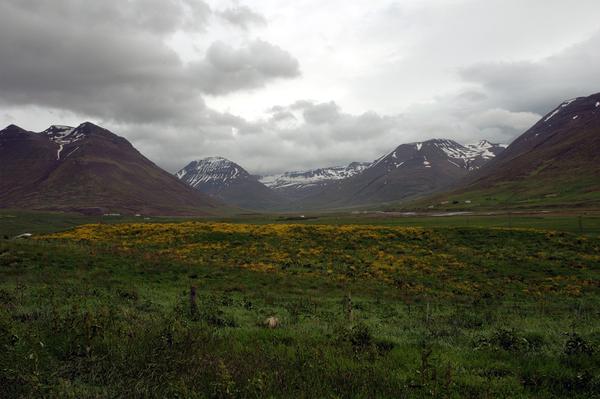
Hjaltadalur
Hjaltadalur is a historic location in Iceland mentioned in "Laxdæla saga, Grettis saga", one of the ancient Íslendingasögur (Sagas of Icelanders). These medieval narratives preserve the history of Iceland's Viking Age settlement.
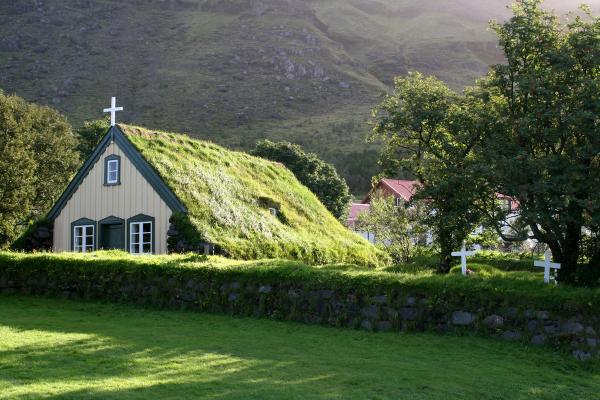
Hof
Hof is a historic location in Iceland mentioned in "Laxdæla saga", one of the ancient Íslendingasögur (Sagas of Icelanders). These medieval narratives preserve the history of Iceland's Viking Age settlement.
探索
近くの隠れた名所
Traditional Handcrafts Display
Often, such museums feature small displays of traditional Icelandic handcrafts, from wool spinning tools to carved wooden items, offering a deeper look into daily life.
These artifacts provide tangible connections to the skills and artistry of past generations.
Historical Farm Implements
Look for a collection of old farm tools and equipment used for haymaking, sheep herding, and other agricultural tasks that sustained families living in turf houses.
These implements illustrate the hard work and ingenuity required for farming in Iceland's challenging environment.
The 'Hidden' Doorway
One of the turf houses might feature a less obvious, smaller doorway, sometimes used for specific purposes or as an emergency exit, reflecting practical design elements.
It's a subtle architectural detail that speaks volumes about the practicalities of turf house living.
ヘルプ
よくある質問
場所
場所
Discover
Explore Nearby
Places from our database within 5.0 km — all data from Sanity
Loading nearby places…
0 places found within 5.0 km
Plan full itinerary →もっと探索