About
About Miðdalskirkja
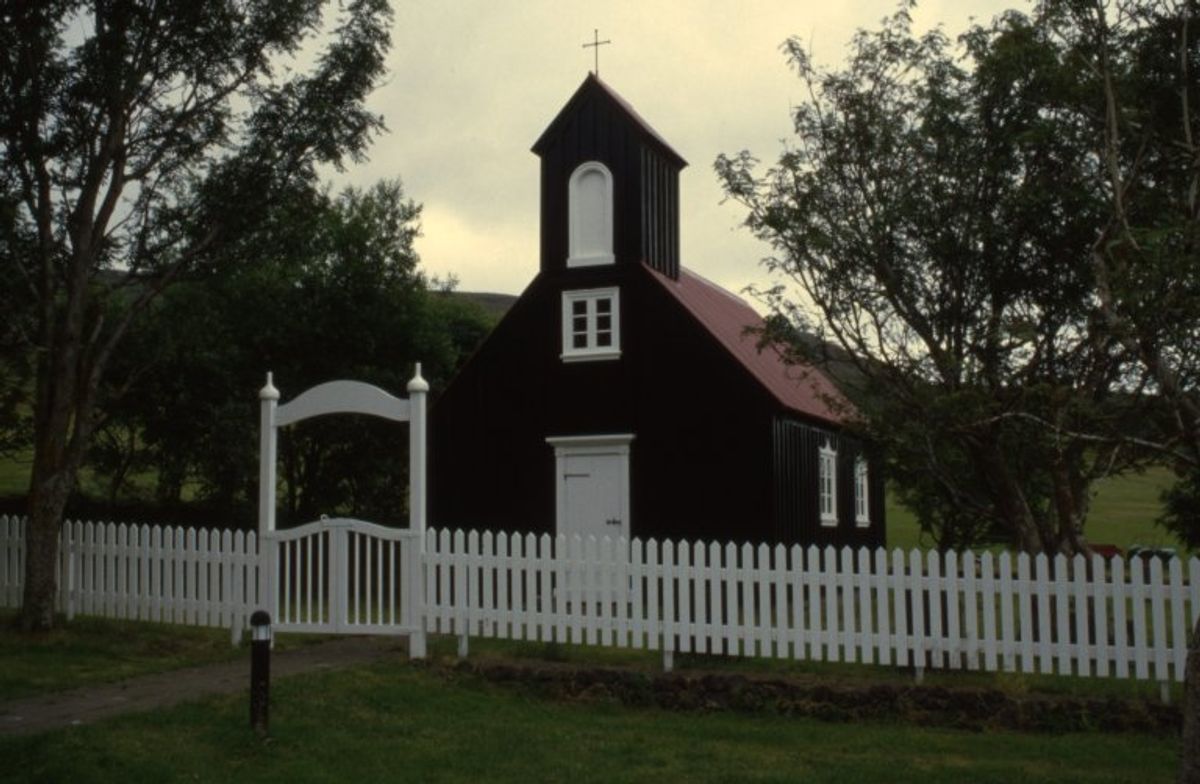
Protected 1869 timber church with a dark exterior and red roof.
Discover a picturesque 19th-century black church, rich in local history and serene beauty.
Photos
Photo Gallery
Background
History & Background
Miðdalskirkja, located in the Mosfell parish within the Árnes deanery, boasts a history stretching back to its consecration in 1869. This small, iron-clad timber church, capable of seating 50 people, was a significant undertaking for the local community. The construction was overseen by master builder Guðmundur Þórðarson, with Halldór Bjarnason playing a pivotal role as the primary artisan. The church's design, featuring a tower on its ridge, reflects the architectural styles prevalent in rural Iceland during the late 19th century. The church is home to several notable historical artifacts. Its main altar painting is a lithographed image of Christ, "Komið til mín" (Come to me), set within an elegant oak frame. Even older is the pulpit, crafted in 1837, which likely served an earlier church on this site before being incorporated into the current structure. On the north side of the choir, an ancient altarpiece depicting the Last Supper is displayed, believed to be the work of Ófeig Jónsson from Heiðarbær in Þingvallasveit, who is also credited with creating the pulpit. Beyond its physical structure and artifacts, Miðdalskirkja is linked to notable historical figures, such as Kolbeinn Þorsteinsson (1731-1783), who served as priest in Miðdal from 1765 to 1783 and is known for the "Gilsbakkaþula" poem. Recognizing its profound historical and cultural value, Miðdalskirkja was officially designated a protected site on January 1, 1990, ensuring its preservation for future generations to appreciate.
Miðdalskirkja was consecrated in 1869 and preserves the scale and construction of a small rural Icelandic church of the period. Older furnishings include a pulpit made before the present building. The church was formally protected in 1990. Visitors should respect services, the cemetery and any limits on interior access.
Folklore
Story & Folklore
As the clouds drift across the South Icelandic sky, a path leads you to the unassuming yet profound beauty of Miðdalskirkja. The stark contrast of its black timber walls against the vibrant red roof and pristine white trim, all encircled by a quaint white picket fence, evokes a sense of timeless tranquility. Imagine the local community gathering here over a century ago, their voices echoing the hymns that still resonate within these sacred walls. This small church, consecrated in 1869, has witnessed generations of Icelandic life, from solemn ceremonies to joyous celebrations. Stepping through its white gate, you're not just entering a building; you're stepping into a living chapter of Iceland's spiritual heritage, where every detail, from the historic pulpit to the ancient altarpiece, whispers tales of faith and resilience in this rugged, beautiful land.
💡 Did You Know?
Miðdalskirkja, built in 1869, stands as a testament to Iceland's deep Christian roots, established democratically at the Alþingi in 1000 AD.
Explore
Hidden Gems Nearby
✦ The 1837 Pulpit
Discover the beautifully crafted wooden pulpit, which predates the current church building, showcasing intricate artistry from 1837.
It offers a rare glimpse into earlier craftsmanship and the continuous spiritual history of the site.
✦ The Last Supper Altarpiece
On the north side of the choir, admire an older altarpiece depicting the Last Supper, attributed to Ófeig Jónsson of Heiðarbær.
This painting is a significant piece of Icelandic religious art, offering a historical perspective on local artists.
✦ The 'Come to Me' Altar Painting
The main altar features a lithographed image of Christ with the words 'Komið til mín' (Come to me) in an elegant oak frame.
It's the central devotional piece of the church, reflecting 19th-century religious iconography.
Help
Frequently Asked Questions
Location
📍 Location
Discover
Explore Nearby
Places from our database within 1.0 km — all data from Sanity
Loading nearby places…
0 places found within 1.0 km
Plan full itinerary →Explore More