Kristrúnarborg
Discover Kristrúnarborg, a 19th-century dry-stone sheep shelter built by Kristrún Sveinsdóttir, showcasing Icelandic resilience.
About
About Kristrúnarborg
Discover Kristrúnarborg, a 19th-century dry-stone sheep shelter built by Kristrún Sveinsdóttir, showcasing Icelandic resilience.
Witness a symbol of Icelandic ingenuity and resilience, a 19th-century sheep shelter built to defy harsh nature.
Photos
Photo Gallery
Background
History & Background
Kristrúnarborg is a historically significant sheep shelter, or 'fjárborg,' built around 1870 by Kristrún Sveinsdóttir from the farm Óttarsstaðir. Its construction reflects the vital need for robust shelters to protect livestock, particularly sheep, which were a cornerstone of the Icelandic economy and often grazed outdoors through the challenging winter months. The practice of building such dry-stone structures is an ancient one in Iceland, demonstrating a continuous tradition of adapting to the harsh natural environment. This particular structure stands out due to its known builder and specific date, offering a personal connection to a period of significant change in Icelandic society. It showcases the individual effort and ingenuity that went into sustaining life and livelihoods in rural Iceland. The choice of dark, readily available volcanic stones, meticulously stacked without mortar, speaks to both the materials at hand and the skilled craftsmanship passed down through generations. Recognizing its cultural and historical value, Kristrúnarborg was officially protected under Icelandic cultural heritage laws in 1964. Today, it serves as a powerful reminder of the resourcefulness and resilience of Icelandic people, embodying a continuous thread of adaptation and survival that stretches back to the island's earliest Norse settlers, even though the structure itself dates from the 19th century.
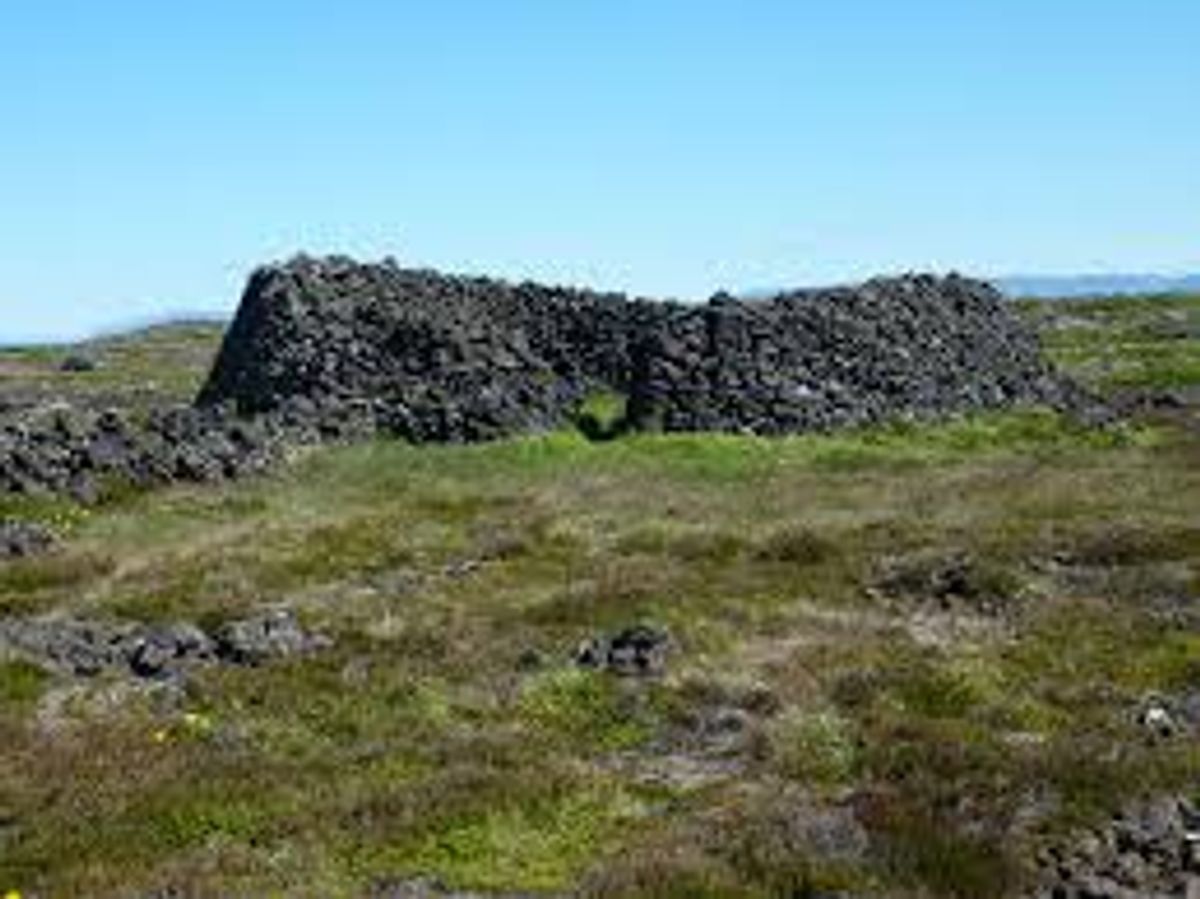
Kristrúnarborg, located within the Capital Region, offers a fascinating glimpse into 19th-century Icelandic rural life and the enduring spirit of its people. This distinctive dry-stone structure, clearly visible in the landscape with its dark, volcanic rock walls forming a semi-circular enclosure, was meticulously constructed around 1870 by Kristrún Sveinsdóttir from the nearby farm of Óttarsstaðir. Its primary purpose was to provide essential shelter for sheep, which traditionally grazed outdoors throughout the harsh Icelandic winters. The design of Kristrúnarborg, a simple yet highly effective fjárborg (sheep shelter), demonstrates the practical ingenuity required to thrive in Iceland's challenging environment. The thick, unmortared stone walls offered robust protection against the relentless winds and cold, creating a vital refuge for livestock. Today, this structure is not only a historical artifact but also a protected cultural heritage site, designated in 1964, ensuring its preservation for future generations. Visitors to Kristrúnarborg can appreciate the craftsmanship of its construction and reflect on the demanding lives of those who built and relied upon such shelters. While not a Viking-age structure itself, it embodies the continuous thread of resilience, resourcefulness, and a deep connection to the land that has characterized Icelandic life since the time of the Norse settlers. It serves as a tangible link to the practical challenges and solutions of Iceland's past, set against a backdrop that has remained largely unchanged for centuries. The site invites contemplation on human adaptability and the quiet strength of individuals like Kristrún who shaped their world with their own hands.
Folklore
Story & Folklore
Imagine the biting winds sweeping across the plains, the kind that chill to the bone. It was in such a landscape, around 1870, that Kristrún Sveinsdóttir from Óttarsstaðir envisioned a sanctuary for her flock. With her own hands, she meticulously gathered the dark, volcanic stones scattered across the land, stacking them one by one, without mortar, to form the sturdy walls of what would become Kristrúnarborg. This humble sheep shelter, with its horseshoe shape and low entrance, was more than just a wall; it was a promise of survival against the unforgiving Icelandic winter, a testament to her strength and foresight. Each stone whispers tales of a time when life here demanded resilience, ingenuity, and a deep connection to the land—qualities that have defined Icelanders since the first Viking settlers arrived.
💡 Did You Know?
Kristrúnarborg, built by a woman named Kristrún Sveinsdóttir, highlights the crucial role individuals played in shaping Iceland's agricultural landscape.
Culture
Stories & Legends
Icelandic sagas and folklore from this area
Location
📍 Location
Discover
Explore Nearby
Places from our database within 1.0 km — all data from Sanity
Loading nearby places…
0 places found within 1.0 km
Plan full itinerary →Explore More