Hlíðargarður
Discover Hlíðargarður, Kópavogur's unique symmetrical park, echoing European palace garden grandeur.
About
About Hlíðargarður
Discover Hlíðargarður, Kópavogur's unique symmetrical park, echoing European palace garden grandeur.
Experience Kópavogur's unique symmetrical garden, a tranquil oasis inspired by European palace designs.
Photos
Photo Gallery
Background
History & Background
Hlíðargarður holds a special place in the history of Kópavogur as the very first planned outdoor recreational area in the municipality, and notably, its only true ornamental garden. Its design philosophy broke away from typical Icelandic naturalistic landscapes, drawing inspiration instead from the formal and symmetrical styles characteristic of European palace gardens. This deliberate choice makes Hlíðargarður a unique architectural and horticultural statement within Iceland. The garden was conceived with a strong emphasis on symmetry, a fundamental principle where a central axis divides the space, and both halves are mirror images of each other. This formal structure, combined with the planting of a protective shelterbelt around its perimeter, transformed the area into a 'sheltered haven,' as described in historical accounts. This thoughtful planning provided not just aesthetic beauty but also a practical, comfortable space for public enjoyment. Recognizing its historical and aesthetic value, Hlíðargarður underwent a comprehensive renovation between 2003 and 2004. Crucially, this renewal project meticulously preserved all the main aspects of the original layout, further underscoring and reinforcing the garden's inherent formality. This commitment ensures that visitors today can still experience the garden largely as it was originally envisioned, a testament to its enduring design and significance.
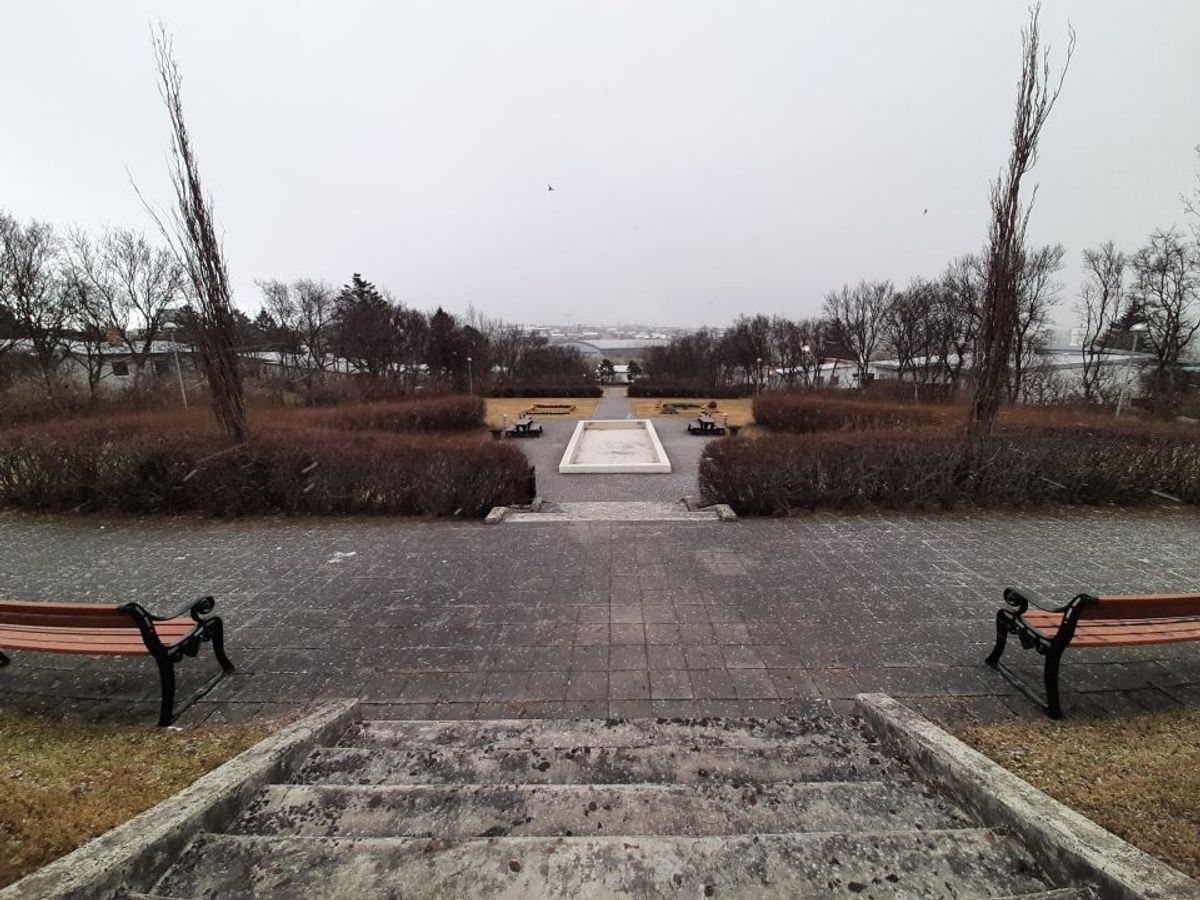
Hlíðargarður stands as a unique and historically significant landmark in Kópavogur, distinguishing itself as the town's first meticulously planned outdoor recreational area and its sole true ornamental garden. Conceived in the grand style of European palace gardens, its most striking feature is its perfect symmetry. A central axis runs through the entire design, with both sides mirroring each other flawlessly, creating a sense of balance and formal elegance rarely found in Icelandic landscapes. Visitors ascending the sturdy concrete steps, as seen in the image, are immediately greeted by this striking layout. The paved pathways lead towards a central, rectangular feature, flanked by neatly trimmed bushes and framed by tall, slender trees, which, in winter, present a stark, sculptural beauty against the often-grey Icelandic sky. Benches, visible along the paths, invite quiet contemplation, offering a peaceful spot to admire the structured beauty or gaze out towards the distant views of Kópavogur. Originally established with a surrounding shelterbelt of trees and bushes, the garden has evolved into a sheltered haven, providing a welcome respite from the elements. A significant renovation between 2003 and 2004 ensured that all core elements of the original design were preserved, further enhancing the garden's formal character and maintaining its historical integrity. Whether cloaked in winter's quiet embrace or vibrant with summer's bloom, Hlíðargarður offers a compelling glimpse into a different facet of Icelandic design and a tranquil escape within the bustling capital region. It's an ideal spot for a leisurely stroll, photography, or simply enjoying a moment of peace.
Folklore
Story & Folklore
The soft fall of snowflakes kissed the grey paving stones as I ascended the worn steps into Hlíðargarður. Despite the muted winter palette—bare, sculptural trees reaching skyward, rust-colored bushes lining the paths—the garden's inherent grandeur was undeniable. Its perfect symmetry, a stark contrast to Iceland's wilder landscapes, felt like a whispered secret from a bygone era. Benches, dusted with white, invited contemplation, offering a quiet moment amidst the structured beauty. I pictured the garden in summer, ablaze with color, but even now, under a quiet winter sky, its formal elegance held a profound charm. The distant outlines of Kópavogur peeked over the low-lying hedges, a gentle reminder of the town cradling this tranquil, thoughtfully designed space. It wasn't just a park; it was a testament to careful planning and a quiet sanctuary in the heart of the capital region.
💡 Did You Know?
Hlíðargarður is Kópavogur's very first planned outdoor recreational area and its only true ornamental garden, meticulously designed with a rare symmetrical layout.
Culture
Stories & Legends
Icelandic sagas and folklore from this area
Gufunes
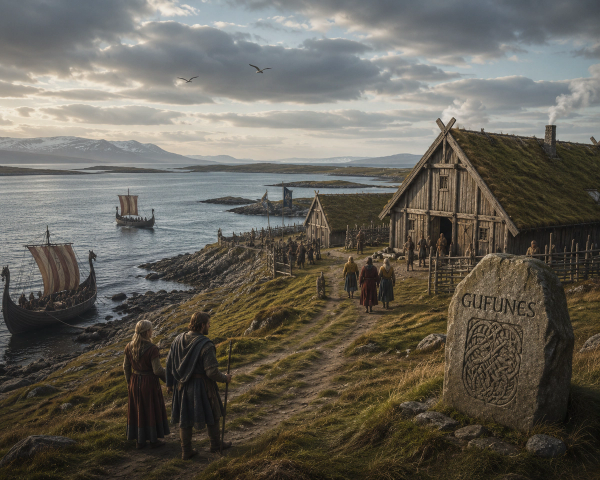
Gufunes is a historic location in Iceland mentioned in "Egils saga", one of the ancient Íslendingasögur (Sagas of Icelanders). These medieval narratives preserve the history of Iceland's Viking Age settlement.

Reykjavík
Reykjavík is a historic location in Iceland mentioned in "Harðar saga og Hólmverja", one of the ancient Íslendingasögur (Sagas of Icelanders). These medieval narratives preserve the history of Iceland's Viking Age settlement.

Skuggabaldur – The Shadow Creature
Skuggabaldur: A phantom dog guarding forgotten paths.
Höfði House – Reykjavík's Haunted Mansion
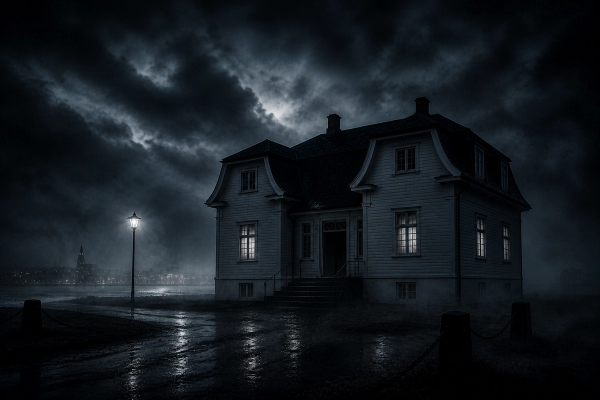
Höfði House: Reykjavík's historic mansion with a chilling paranormal past.
Location
📍 Location
Discover
Explore Nearby
Places from our database within 1.0 km — all data from Sanity
Loading nearby places…
0 places found within 1.0 km
Plan full itinerary →Explore More