Galtastaðir fram
Well-preserved 19th-century turf farm in Hróarstunga, notable for its fjósbaðstofa and traditional East Iceland building history.
About
About Galtastaðir fram
Well-preserved 19th-century turf farm in Hróarstunga, notable for its fjósbaðstofa and traditional East Iceland building history.
See one of East Iceland’s best-preserved turf farms and an unusual example of traditional fjósbaðstofa construction.
Photos
Photo Gallery
Background
History & Background
Galtastaðir fram is a historically significant, well-preserved turf house located in Hróarstunga, Múlaþing, East Iceland. Dating back to the 19th century, it exhibits a unique architectural style known as 'Galtastaðir-type,' which is distinct from the more common Southern or Northern Icelandic turf house designs, drawing instead from older, ancient building traditions. A notable innovation at Galtastaðir fram is the 'fjósbaðstofa,' built in 1882 by carpenter Jón Magnússon. This ingenious structure combined a cowshed on the ground floor with a bathhouse directly above, utilizing the natural warmth from the livestock for heating. This design highlights the resourcefulness of Icelanders in adapting to their environment. Historically, the land may have supported two farmsteads, with two bathhouses standing behind the current structures. Since 1976, Galtastaðir fram has been under the care of the National Museum of Iceland, which has undertaken extensive restoration efforts. It serves as a particularly interesting example of the living conditions of ordinary people and the evolution of housing from turf to timber by the mid-20th century, making it a unique heritage site in Iceland.
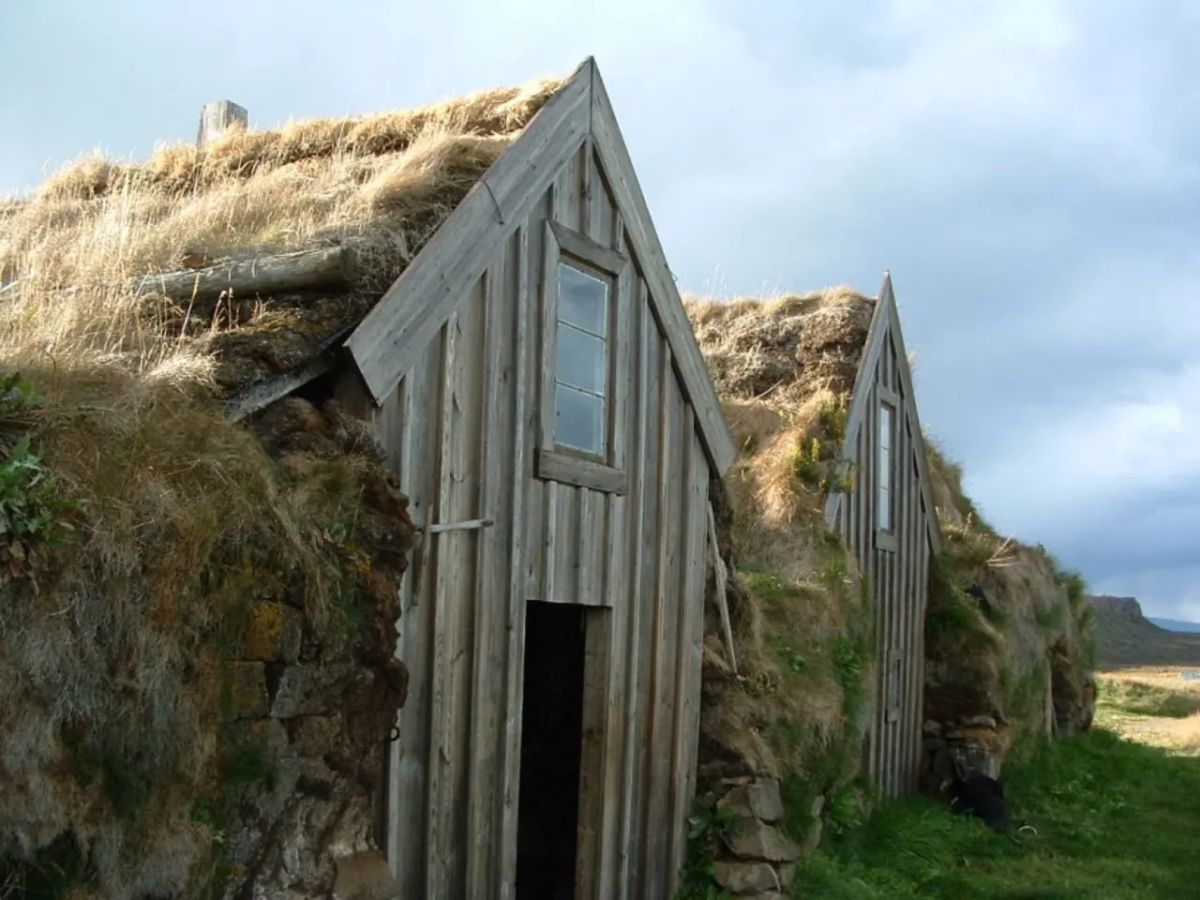
Nestled in the serene Hróarstunga region of Múlaþing, East Iceland, Galtastaðir fram is an exceptionally preserved 19th-century turf farm that offers a profound journey into Iceland's architectural and cultural heritage. This site is renowned for its unique 'Galtastaðir-type' turf houses, which deviate from typical Southern or Northern Icelandic designs, boasting ancient roots. The most striking feature is the 'fjósbaðstofa,' a clever 1882 construction by Jón Magnússon, where the lower level served as a cowshed, and the warmth generated by the animals naturally heated the bathhouse situated directly above. Visually, the farm is a marvel of integration with its environment. The sturdy turf walls and thick, grass-covered roofs, visible in the image, seem to emerge directly from the landscape, providing natural insulation against the harsh Icelandic climate. The weathered wooden gables and small windows add to the rustic charm, reflecting a life lived in close harmony with nature. Managed by the National Museum of Iceland since 1976, Galtastaðir fram represents a significant example of common folk's living conditions and the transition from turf to timber housing by the mid-20th century. This evolution of settlement is particularly unique in Iceland. The turf house has been meticulously restored, and ongoing renovations are being carried out on other structures, ensuring its continued preservation. Visitors can explore these fascinating buildings, experiencing the 'isolation' and strong sense of place when viewing the farm from its yard, a testament to the ingenuity and resilience of early Icelandic settlers.
Folklore
Story & Folklore
Galtastaðir fram preserves a distinctive chapter of everyday rural life in East Iceland. Its turf construction and fjósbaðstofa show how farm families adapted buildings to a cold climate by using local materials and the warmth of livestock.
💡 Did You Know?
Galtastaðir fram boasts a unique 'Galtastaðir-type' turf house, featuring a rare 'fjósbaðstofa' where the warmth of cows below heated the bathhouse above.
Culture
Stories & Legends
Icelandic sagas and folklore from this area
Hallfreðarstaðir
Hallfreðarstaðir is a historic location in Iceland mentioned in "Hrafnkels saga Freysgoða", one of the ancient Íslendingasögur (Sagas of Icelanders). These medieval narratives preserve the history of Iceland's Viking Age settlement.
Lagarfjót
Lagarfjót: Home to a legendary worm and ancient tales of the East.
Straumur
Straumur is a historic location in Iceland mentioned in "Droplaugarsona saga", one of the ancient Íslendingasögur (Sagas of Icelanders). These medieval narratives preserve the history of Iceland's Viking Age settlement.
Þinghöfði
Þinghöfði: Where ancient assemblies were held and laws were forged.
Explore
Hidden Gems Nearby
✦ The Fjósbaðstofa (Cow Shed-Bathhouse)
Discover the ingenious 'fjósbaðstofa,' a unique structure where the warmth from cows in the lower level heated the bathhouse above. This innovative design showcases remarkable Icelandic ingenuity.
It's a rare and fascinating example of sustainable heating and traditional architecture.
✦ Evolution of Housing Display
Observe the subtle transition from traditional turf housing to mid-20th-century timber structures on the farm. This offers a unique insight into changing living conditions for common folk in Iceland.
It provides a rare glimpse into the architectural and social evolution of Icelandic rural life.
✦ The Outbuildings Awaiting Restoration
Beyond the main turf house, you'll find other outbuildings awaiting restoration. These offer a raw, untouched perspective on the farm's full historical scope and the ongoing preservation efforts.
They provide a sense of the farm's broader historical context and the continuous work to preserve it.
Help
Frequently Asked Questions
Location
📍 Location
Discover
Explore Nearby
Places from our database within 1.0 km — all data from Sanity
Loading nearby places…
0 places found within 1.0 km
Plan full itinerary →Explore More