
Búðarvogur
Discover the rugged beauty and ancient fishing hut ruins of Búðarvogur, where history meets the wild Westfjords coast.
概要
訪問時間
1-2 klukkustundir til að skoða rústirnar og njóta umhverfisins.
最適な季節:
Sumar (maí-september) fyrir betra veður og aðgengi.
アクセス
Aðgengi er með bíl að ákveðnu marki, síðan þarf að ganga meðfram sjónum. Vakin er athygli á að vegir á Vestfjörðum geta verið krefjandi og aðgengi að ströndinni sjálfri er um ójafnt landsvæði.
GPS
65.7341, -21.3468
について
Búðarvogurについて
Discover the rugged beauty and ancient fishing hut ruins of Búðarvogur, where history meets the wild Westfjords coast.
Experience untouched nature, dramatic coastal scenery, and a tangible link to Iceland's early settlement history.
Búðarvogur近くのツアー
BIRD WATCHING - puffins and more
Westfjords Adventures · 7 hours
CROWN JEWEL; KJARAN'S AVENUE & DYNJANDI - jeep tour
Westfjords Adventures · 9 hours
Hornstrandir Panorama
Borea Adventures · 10 hours
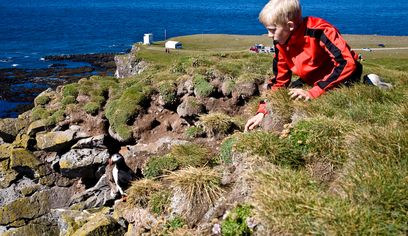
GRAND WEST - Látrabjarg, Rauðasandur & more
Westfjords Adventures · 6 hours
写真
ギャラリー
背景
歴史と背景
Búðarvogur carries a deep historical resonance, particularly concerning Iceland's settlement era. According to local accounts, the first settler, or 'landnámsmaður,' named Bjarni, came ashore at this very location. This significant event led to the nearby cape and fjord being named Bjarnarnes, perpetuating his legacy in the landscape itself. Adding to its historical charm are the visible ruins of ancient fishing huts, known as 'verbúðir,' found at Búðarvogur. These stone foundations are tangible evidence of past human activity, indicating that this rugged coastal area once supported a community of fishermen and seasonal workers, utilizing the rich marine resources of the North Atlantic. These ruins offer a unique glimpse into the challenging lives of early Icelanders. Geologically, the Westfjords region, where Búðarvogur is situated, is one of Iceland's oldest areas. Its dramatic landscape of plateaus, deep fjords, and valleys was extensively shaped by glacial activity during the Ice Age, with the oldest geological layers of Iceland found within its mountains. This ancient geological foundation underpins the raw and powerful natural environment seen at Búðarvogur.
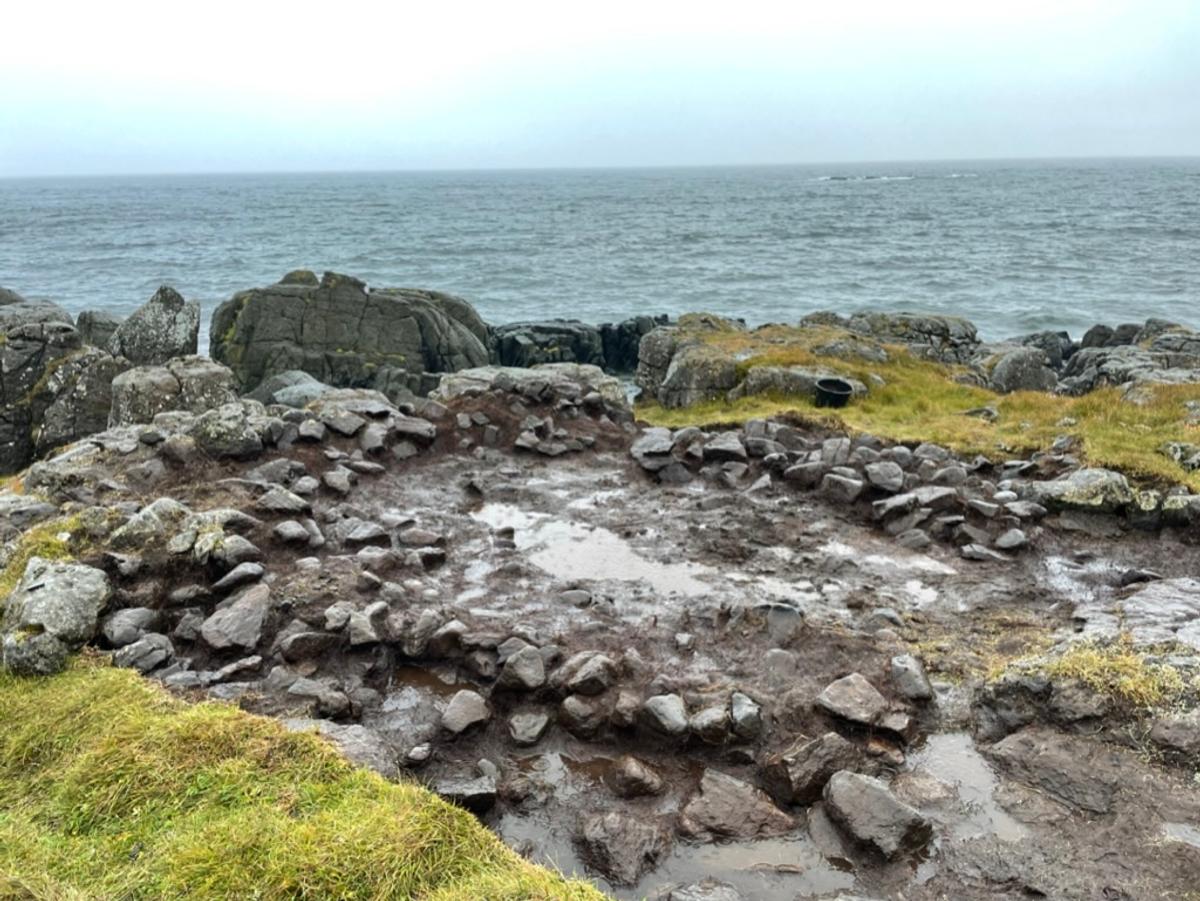
Búðarvogur, located in the remote and stunning Westfjords of Iceland, offers a truly authentic encounter with the country's dramatic coastal scenery and rich history. While many Icelandic beaches are famed for their black volcanic sand, Búðarvogur presents a rugged, rocky shoreline, as depicted in the image, interspersed with dark, earthy patches and sparse green grass leading to the powerful Atlantic. It's a place where the raw force of the sea meets the tranquility of untouched nature. Historically, Búðarvogur holds significant importance. It is said that the settler Bjarni came ashore here, leading to the naming of the nearby Bjarnarnes (Bjarni's Cape) and fjord. Visitors can still see the visible ruins of ancient fishing huts, known as 'verbúðir,' which hint at a long history of human settlement and maritime activity in this isolated region. These stone foundations, clearly visible in the foreground of the image, are a direct link to the lives of early Icelanders. The Westfjords themselves are a geological marvel, home to some of Iceland's oldest geological layers, characterized by deep fjords and valleys carved by glacial activity. Exploring Búðarvogur means stepping back in time, both geologically and historically, and experiencing the profound sense of isolation and natural beauty that defines this unique part of Iceland. Always approach the coastal areas with caution due to the powerful waves.
民話
物語と民話
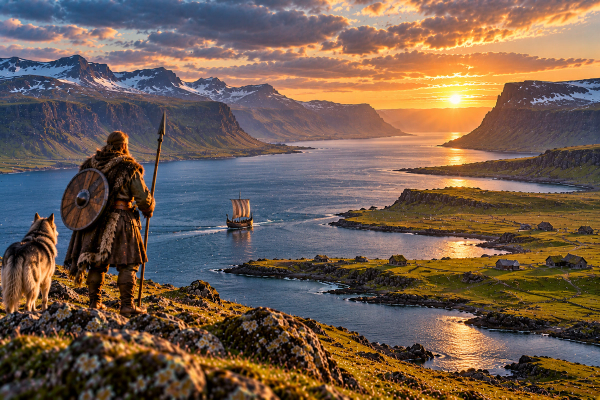
The biting wind whips strands of hair across your face as you stand amidst the ancient stones of Búðarvogur. The air is thick with the scent of salt and the roar of the ocean, a constant, powerful presence. Looking down at the muddy, rocky foundations, you can almost hear the echoes of lives lived here centuries ago – the shouts of fishermen mending nets, the crackle of fires in the 'verbúðir,' ancient fishing huts whose remnants you now explore. This isn't just a scenic beach; it's a living page from Iceland's sagas, a place where the landnámsmaður Bjarni reputedly first set foot, shaping the very name of the surrounding cape. The ruggedness seen in the image, with its dark, weathered stones and the vast, grey sea stretching to the horizon, speaks volumes of the resilience of those who once called this wild coast home.
ご存知ですか?
Búðarvogur is believed to be the landing spot of the settler Bjarni, after whom the nearby Bjarnarnes cape and fjord are named.
文化
物語と伝説
この地域のアイスランドのサガと民話
探索
近くの隠れた名所
Forna verbúðarrústirnar
Sýnilegar steingrundir við Búðarvog eru leifar af 'verbúðum,' sögulegum fiskihúsum sem einu sinni hýstu árstíðabundna verkamenn. Þær bjóða upp á áþreifanlega tengingu við sjósóknarsögu Íslands.
Þessar rústir veita beina tengingu við líf fyrstu íslensku landnámsmanna og fiskimanna.
Þorkelshaugur
Þessi einkennandi steinhrúga á nærliggjandi klettum markar goðsagnakenndan grafreit. Sagt er að hér séu grafnir tveir fjárhirðar sem börðust til dauða vegna deilu um landeign.
Þetta er áhrifarík áminning um dramatíska staðbundna goðsögu og fyrstu deilur um land.
Bjarnarnes
Víðara nes sem umlykur Búðarvog, nefnt eftir landnámsmanninum Bjarna, býður upp á víðáttumikið útsýni yfir stórbrotna strandlengjuna og dýpri tilfinningu fyrir ósnortinni náttúru svæðisins.
Kannaðu svæðið þar sem einn af fyrstu landnámsmönnum Íslands er sagður hafa komið að landi og njóttu stórbrotinnar Vestfjarðamyndar.
ヘルプ
よくある質問
場所
場所
Discover
Explore Nearby
Places from our database within 5.0 km — all data from Sanity
Loading nearby places…
0 places found within 5.0 km
Plan full itinerary →もっと探索