Bænhús í Furufirði
A remote, weathered chapel in Hornstrandir, a testament to resilience and faith amidst raw Icelandic nature.
At a Glance
Visit time
Allocate at least 3-4 hours for the boat trip and exploration, including travel time from Ísafjörður.
Best season
Summer (July-August) for boat access and milder weather.
Access
Accessible primarily by boat from Ísafjörður, followed by a hike. Requires prior planning and often a guide. No roads lead directly to the chapel.
GPS
66.2652, -22.2409
About
About Bænhús í Furufirði
A remote, weathered chapel in Hornstrandir, a testament to resilience and faith amidst raw Icelandic nature.
Witness a powerful symbol of human resilience and faith in one of Iceland's most remote and beautiful regions.
Photos
Photo Gallery
Background
History & Background
The history of Bænhús í Furufirði is deeply intertwined with the lives of the resilient communities that once inhabited the remote Hornstrandir peninsula. Construction of this small chapel in Furufjörður was completed in the summer of 1899. The project was overseen by Benedikt Hermannsson, a farmer from Reykjarfjörður, who played a pivotal role in its creation. Benedikt Hermannsson not only managed the construction but also personally donated and carved the entire frame of the chapel from driftwood, a precious and readily available building material in this treeless region. Further demonstrating community spirit and external aid, Norwegian whalers operating a station at Meleyri in Veiðileysufjörður generously provided the panel cladding for the building. The chapel was officially consecrated on June 2, 1902, becoming a vital spiritual center for the scattered population north of Skorarheiði. For many years, it was served by clergy from Stað in Grunnavík. However, as the area gradually depopulated and the Staður parish was abolished, pastoral duties shifted, with services eventually being provided from Ísafjörður or Bolungarvík, reflecting the chapel's enduring, albeit increasingly isolated, role.
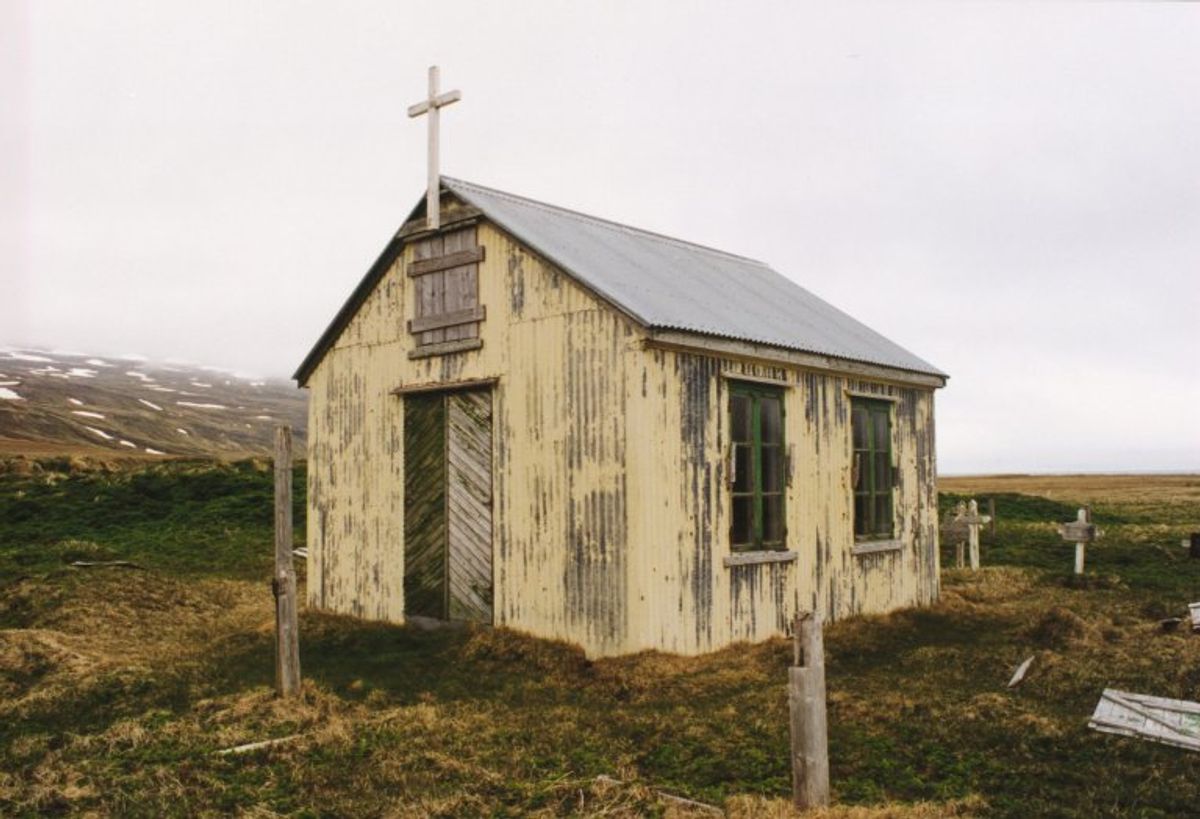
Bænhús í Furufirði is a profoundly moving site located in the remote and stunning Hornstrandir Nature Reserve in Iceland's Westfjords. This small, unassuming chapel, completed in 1899 and consecrated in 1902, is a remarkable testament to the resourcefulness and deep faith of the isolated communities that once thrived here. Visually, the chapel immediately captivates with its rustic charm; its corrugated metal exterior, once painted a bright yellow, now displays a beautiful patina of peeling paint, revealing the underlying grey metal and creating a textured, almost artistic facade. A simple wooden cross proudly adorns its gable, overlooking a small, windswept cemetery where wooden grave markers blend into the grassy landscape. The chapel's construction itself is a story of community effort and ingenuity. Farmer Benedikt Hermannsson not only oversaw the project but also generously provided and carved the building's frame from local driftwood, a precious resource in this treeless land. The panel cladding, essential for insulation against the harsh Arctic elements, was a donation from Norwegian whalers who operated a station in the nearby Veiðileysufjörður. For decades, the chapel served the spiritual needs of the scattered population north of Skorarheiði, with services initially provided from Stað in Grunnavík, and later from Ísafjörður or Bolungarvík as the region became depopulated. Today, visiting Bænhús í Furufirði offers a unique opportunity to step back in time, to reflect on the lives of those who lived in such a challenging environment, and to appreciate the raw, untamed beauty of Hornstrandir. It's a place that inspires contemplation and provides a tangible link to Iceland's rich cultural and religious heritage.
Folklore
Story & Folklore
The biting wind whips across Furufjörður, carrying whispers of a time when this small chapel, with its faded yellow walls and steadfast cross, was the heart of a vibrant community. Imagine the long journey to service, the faces of farmers and fishermen gathered within its humble walls, seeking solace and connection in this remote corner of Hornstrandir. Each splinter of its weathered wood, each streak of rust on its corrugated roof, tells a silent story of harsh winters endured, of lives lived in harmony with the wild, untamed land. It's a place where time seems to stand still, allowing visitors to feel the echoes of a resilient past, a deep spiritual connection to the land, and the enduring spirit of those who once called this remote fjord home.
💡 Did You Know?
The chapel's frame was carved from driftwood by farmer Benedikt Hermannsson, while its panel cladding was a gift from Norwegian whalers operating nearby in 1899.
Explore
Hidden Gems Nearby
✦ The Hornstrandir Wilderness
Beyond the chapel, explore the untouched beauty of the Hornstrandir Nature Reserve. It's a pristine wilderness, home to Arctic foxes and dramatic cliffs.
Offers unparalleled hiking and wildlife viewing in one of Europe's last true wildernesses.
✦ Abandoned Farmsteads
Around Furufjörður, discover remnants of the abandoned farmsteads that once formed the community served by the chapel, providing a deeper historical context.
Provides a poignant glimpse into the harsh realities of life and the resilience of past inhabitants.
✦ Coastal Views
Take in the breathtaking coastal vistas from the fjord, where the raw power of the Arctic Ocean meets rugged cliffs and green hillsides.
Offers stunning photographic opportunities and a sense of profound isolation and natural grandeur.
Help
Frequently Asked Questions
Location
📍 Location
Discover
Explore Nearby
Places from our database within 1.0 km — all data from Sanity
Loading nearby places…
0 places found within 1.0 km
Plan full itinerary →Explore More