Arnardrangur
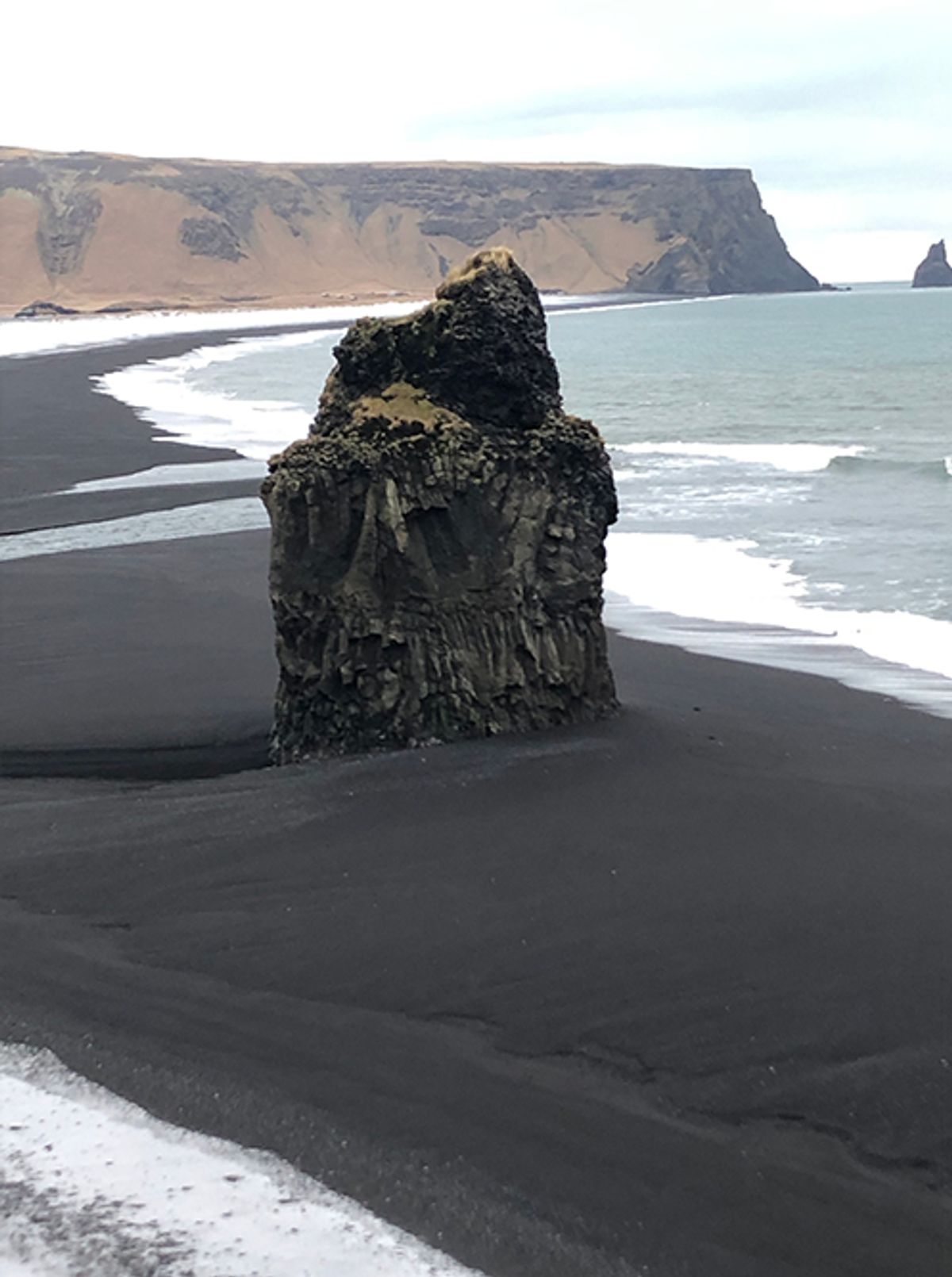
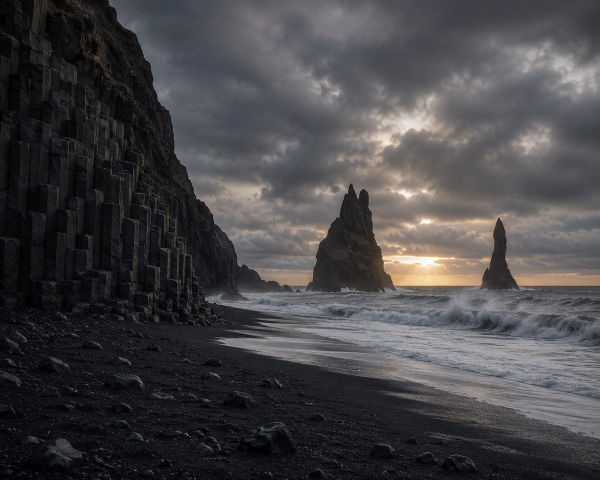
Arnardrangur: A majestic sea stack emerging from Iceland's black volcanic sands, a testament to raw nature.
At a Glance
Visit time
30-60 minutes to appreciate the view and surroundings.
Best season
Morning or late afternoon for photography; summer for birdwatching.
Access
Accessible via a paved road to the Dyrhólaey area, followed by a short walk on black sand. Parking available.
GPS
63.4047, -19.0998
About
About Arnardrangur
Arnardrangur: A majestic sea stack emerging from Iceland's black volcanic sands, a testament to raw nature.
Experience the awe-inspiring geological formations and pristine black sand beaches of Iceland's south coast.
Background
History & Background
The geological history of Arnardrangur is deeply intertwined with Iceland's volcanic activity. Like many of the dramatic sea stacks and cliffs along the south coast, Arnardrangur is primarily composed of basalt, a dark, fine-grained volcanic rock. Its distinctive columnar structure, clearly visible in the image, is a result of basaltic lava cooling slowly and contracting, forming hexagonal or polygonal columns. This process, known as columnar jointing, creates the impressive, almost artificial-looking patterns seen in the stack, indicating its ancient fiery birth from the earth's depths. Arnardrangur is not just a natural wonder but also a protected site. It falls under the umbrella of the Dyrhólaey nature reserve, which was established in 1978. The original protection decree specifically mentions Arnardrangur at Útfallið, alongside Dyrhólaey itself and other stacks and skerries off the coast. This designation highlights its ecological and geological significance, aiming to preserve its unique landscape and the diverse bird species that often nest on such inaccessible rock formations. The area's protection ensures that these remarkable natural sculptures remain pristine for future generations to admire.
Arnardrangur, meaning 'Eagle Rock,' is a prominent sea stack located on the dramatic south coast of Iceland, near the famous Dyrhólaey peninsula. This impressive geological formation is a testament to Iceland's volcanic origins and the powerful forces of nature that continue to shape its landscape. The stack itself is composed of dark, columnar basalt, a distinctive feature formed when lava cools and contracts, creating polygonal columns. From the image, these vertical striations are clearly visible, showcasing the intricate natural architecture. It stands majestically on a vast expanse of black volcanic sand, a hallmark of many Icelandic beaches, which derives its color from eroded basaltic rocks. The powerful waves of the North Atlantic Ocean constantly crash against the shore, creating a dynamic and often wild coastal scene. Visiting Arnardrangur offers a chance to immerse oneself in Iceland's raw, untamed beauty. The contrast between the dark stack, the black sand, and the frothy white waves against the backdrop of distant, rugged cliffs (like those seen in the image) creates a truly unforgettable panorama. While Arnardrangur is a powerful focal point, it is also an integral part of the larger Dyrhólaey nature reserve. This area was protected in 1978, not only for its stunning geological features but also for its significant birdlife, making it a popular spot for birdwatching, especially during nesting season. Visitors should always exercise caution near the coastline due to the unpredictable and powerful 'sneaker waves' common in Iceland. The sheer scale and geological wonder of Arnardrangur make it a must-see for anyone exploring the south-icelandic coast.
Folklore
Story & Folklore
The biting Icelandic wind whips around you, carrying the salty spray of the Atlantic. Before you, Arnardrangur, the 'Eagle Rock,' stands defiant, a dark, jagged monument sculpted by millennia of volcanic fury and relentless ocean waves. Its columnar basalt structure, visible even from a distance, tells tales of ancient eruptions and slow, powerful cooling. The black volcanic sand stretches endlessly, a stark, mesmerizing canvas where the white foam of crashing waves creates ephemeral lace patterns. You feel small yet invigorated, a witness to earth's primal forces. The distant cliffs of Dyrhólaey loom, adding to the grandeur, while the sheer isolation of this place whispers of sagas and untamed wilderness. It's not just a rock; it's a living sculpture, constantly reshaped, eternally beautiful.
💡 Did You Know?
Arnardrangur is protected under the Dyrhólaey nature reserve, established in 1978, safeguarding its unique geology and rich birdlife.
Local Legend
The Troll and the Eagle Rock
Local folklore suggests Arnardrangur was once a mischievous troll who, caught off guard by the first rays of dawn while trying to steal eggs from an eagle's nest, was instantly turned to stone. Now, he stands forever as a silent sentinel, guarding the wild coastline and reminding all of nature's power.
Culture
Stories & Legends
Icelandic sagas and folklore from this area
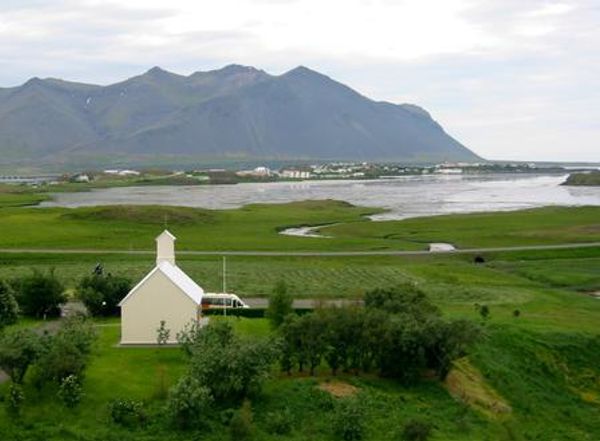
Dyrhólmar
Dyrhólmar is a historic location in Iceland mentioned in "Grettis saga", one of the ancient Íslendingasögur (Sagas of Icelanders). These medieval narratives preserve the history of Iceland's Viking Age settlement.
Reynisdrangar – Trolls Turned to Stone
The Reynisdrangar sea stacks off the coast of Iceland are said to be petrified trolls caught by the rising sun.
Explore
Hidden Gems Nearby
✦ Dyrhólaey Arch Viewpoint
Just a short distance from Arnardrangur, the Dyrhólaey arch offers a spectacular natural rock formation that you can often walk across. The views from the top of the Dyrhólaey cliffs are breathtaking.
Offers panoramic views of the black sand beaches, the arch, and the surrounding coastline, often with puffins in summer.
✦ Solheimafjara Beach (Plane Wreck)
A short drive east, this remote black sand beach is home to the famous wreckage of a US Navy plane, DC-3, offering a stark and dramatic photo opportunity.
Combines the unique black sand with a haunting piece of modern history, creating a surreal landscape.
✦ Reynisfjara Beach Basalt Columns
To the east of Dyrhólaey, Reynisfjara is renowned for its magnificent basalt columns and the Reynisdrangar sea stacks, which are similar in formation to Arnardrangur.
Witness more stunning columnar basalt formations and learn about the troll legends associated with the Reynisdrangar stacks.
Help
Frequently Asked Questions
Location
📍 Location
Discover
Explore Nearby
Places from our database within 1.0 km — all data from Sanity
Loading nearby places…
0 places found within 1.0 km
Plan full itinerary →Explore More