
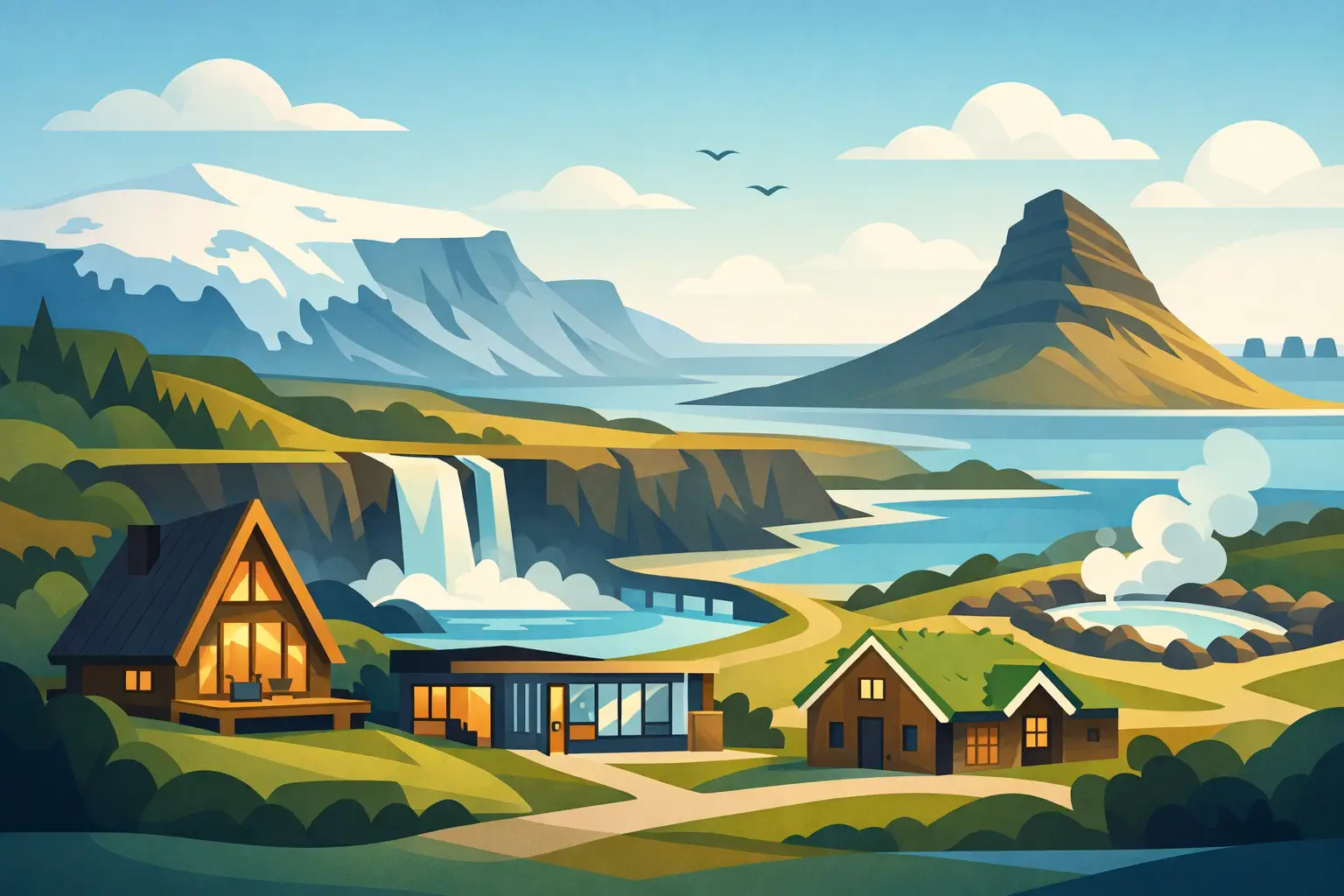
Where to Stay in South Iceland
Wondering where to stay in South Iceland? Find the best base for waterfalls, black sand beaches, glacier lagoons, road trips, and more.
You can feel the difference in South Iceland by the second day of a trip. The distances look manageable on a map, then you realize one stretch of road includes waterfalls, black sand beaches, glacier views, lava fields, and a detour that eats half your afternoon. That is why deciding where to stay in South Iceland matters so much. The right base can turn a rushed checklist into a trip that actually feels good.
For most travelers, South Iceland is not one destination. It is a chain of stops running east from the edge of Reykjavik through Hveragerdi, Selfoss, Hella, Hvolsvollur, Vik, Kirkjubaejarklaustur, and all the way toward Hofn and Jokulsarlon. Each area gives you a different version of the south coast, and the best pick depends on how you are traveling, how many nights you have, and whether you care more about convenience, scenery, or being close to major sights.
Where to stay in South Iceland by travel style
If you want the easiest first-time itinerary, split your stay between the Selfoss or Hella area and Vik. That gives you one base for the Golden Circle and nearby south coast highlights, then a second base closer to Reynisfjara, Dyrholaey, glacier hikes, and longer drives east.
If you are doing a one-night dash from Reykjavik, stay in Vik or nearby if availability allows. It puts you closer to the dramatic scenery many travelers picture when they think of Iceland. The trade-off is a longer first drive and fewer dining and shopping options than larger towns farther west.
If you are road-tripping the full Ring Road, treat South Iceland as a progression rather than one hotel stop. Staying one night in the Selfoss, Hella, or Hvolsvollur area and another near Vik or Kirkjubaejarklaustur usually makes the route far more comfortable.
If you want a quieter, more scenic stop before Jokulsarlon, look east of Vik. The landscape becomes bigger and more remote, and that remoteness is exactly the appeal. It also means you need to be more organized about fuel, meals, and check-in timing.
Best areas to stay in South Iceland
Selfoss and Hveragerdi
Selfoss is one of the most practical bases in the region. You get more services, supermarkets, restaurants, gas stations, and easier access from Reykjavik or Keflavik after a flight. For travelers who want to keep logistics simple, this is a strong start.
It is also well placed for the Golden Circle, especially if you want to combine Thingvellir, Gullfoss, and Geysir with a south coast route. Hveragerdi, just nearby, feels smaller and more relaxed, with geothermal character and quick access to hot springs and short scenic drives.
The downside is that this area is not the most dramatic part of South Iceland visually. You are choosing convenience over waking up beside sea cliffs or black sand beaches. For some travelers, that is the right call. For others, it feels a bit too far west for the experience they want.
Hella and Hvolsvollur
For many trips, this is the sweet spot. Hella and Hvolsvollur sit far enough east that you are properly on the south coast, but they still offer practical services and shorter driving days than staying deeper into the region from night one.
This area works especially well for visiting Seljalandsfoss, Skogafoss, Gljufrabui, and even day-tripping into Thorsmork with the right transport setup. It is also a smart base for travelers who want countryside hotels, guesthouses, and a quieter atmosphere without feeling isolated.
Hvolsvollur tends to appeal to travelers who want a functional overnight stop with easy road access. Hella often works well for couples and self-drive visitors looking for hotels with a little more space around them. Neither town is a destination in the same way Vik is, but both make the route smoother.
Vik
If your idea of Iceland includes black sand, sea stacks, moody skies, and dramatic coastal views, Vik is the obvious answer. It is the most popular base on the south coast for good reason. You are close to Reynisfjara, Dyrholaey, Solheimasandur, Katla ice cave departures in season, and several excellent scenic viewpoints.
Vik is also one of the easiest places in the eastern part of South Iceland to use as an overnight hub. It has restaurants, fuel, grocery options, and enough accommodation variety to suit many budgets, though prices can climb fast in peak season.
That popularity brings trade-offs. Vik books up early, and the town can feel busy compared with more rural stays. If you want solitude, look just outside town. If you want the most efficient stop for iconic south coast sightseeing, Vik is hard to beat.
Kirkjubaejarklaustur
Kirkjubaejarklaustur is usually too much town name and not enough town size for travelers expecting a bustling hub, but it can be an excellent overnight choice. It breaks up the drive between Vik and Jokulsarlon and puts you closer to places like Fjadrargljufur canyon, Skaftafell, and glacier landscapes farther east.
This area works best for travelers who already know they want more than the standard waterfall-beach itinerary. If you are planning glacier hiking, longer photography stops, or a slower Ring Road pace, sleeping here makes a lot of sense.
The key thing to know is that options are more limited. You may pay more for fewer amenities, and dining can be sparse outside normal hours. Still, for the right itinerary, the location is worth it.
Near Jokulsarlon and Hofn
Some travelers think of this as East Iceland, others still group it into a wider South Iceland route. Either way, if glacier lagoon visits are a priority, staying near Jokulsarlon or pushing on toward Hofn can transform your experience. You can arrive early or stay late, which matters because the lagoon and Diamond Beach often feel best when crowds thin and the light improves.
Hofn is the more service-friendly option, with restaurants, fuel, and a proper town feel. Stays closer to Jokulsarlon are more about access and scenery than convenience. If you are chasing ice caves in winter or want dawn at the lagoon, this area is worth the extra planning.
How many nights do you need?
Two nights is the minimum for seeing South Iceland without turning the trip into one long drive. With two nights, a west-east split works well - one night around Selfoss, Hella, or Hvolsvollur, and one around Vik.
Three nights gives you breathing room. You can add a stay near Kirkjubaejarklaustur or Hofn, spend more time at Skaftafell or Jokulsarlon, and stop rushing every viewpoint. This is the point where South Iceland starts to feel like a region rather than a highway between attractions.
If you only have one night, choose your base based on your must-sees. Want Golden Circle plus waterfalls? Stay farther west. Want black sand beaches and dramatic coast? Go for Vik.
What type of accommodation should you book?
Hotels are the easiest choice for most first-time visitors, especially if you are arriving late, traveling in shoulder season, or do not want to think about shared facilities. Guesthouses can offer better value and often feel more personal, which suits travelers who want local atmosphere without spending luxury rates.
Cabins and countryside stays are a great match for couples and self-drive travelers who want more privacy and a stronger sense of place. They are also excellent for northern lights season, assuming the weather cooperates. Just remember that remote stays can mean gravel roads, limited food nearby, and stricter arrival timing.
Apartments work best when you want flexibility, plan to cook, or are traveling as a small group. In high-demand areas like Vik, though, any category can sell out early, so the real decision is often made by availability.
When location matters more than price
South Iceland is one of those regions where a cheaper room can cost you time, energy, and flexibility. Saving money by staying too far from the sights you care about may mean extra hours behind the wheel, less time outdoors, and fewer chances to adapt to Iceland’s weather.
That is especially true in winter. Short daylight hours, wind, and changing road conditions can make an ambitious driving plan feel a lot less smart by midafternoon. In summer, the challenge shifts - long light makes it tempting to overpack your days, and a well-placed hotel helps keep the trip enjoyable.
For most travelers, the best strategy is simple: book the most convenient base your budget comfortably allows, then build your sightseeing around realistic driving times. That approach usually delivers a better trip than chasing the lowest nightly rate.
If you are still deciding where to stay in South Iceland, think less about finding the single best town and more about matching your hotel stop to your route. The south coast rewards travelers who give themselves room to pause, look around, and stay a little closer to what they came to see.