
South Coast Tour from Reykjavik: What to Expect
Plan the best South Coast tour from Reykjavik with tips on stops, timing, weather, tour types, and how to choose the right Iceland day trip.
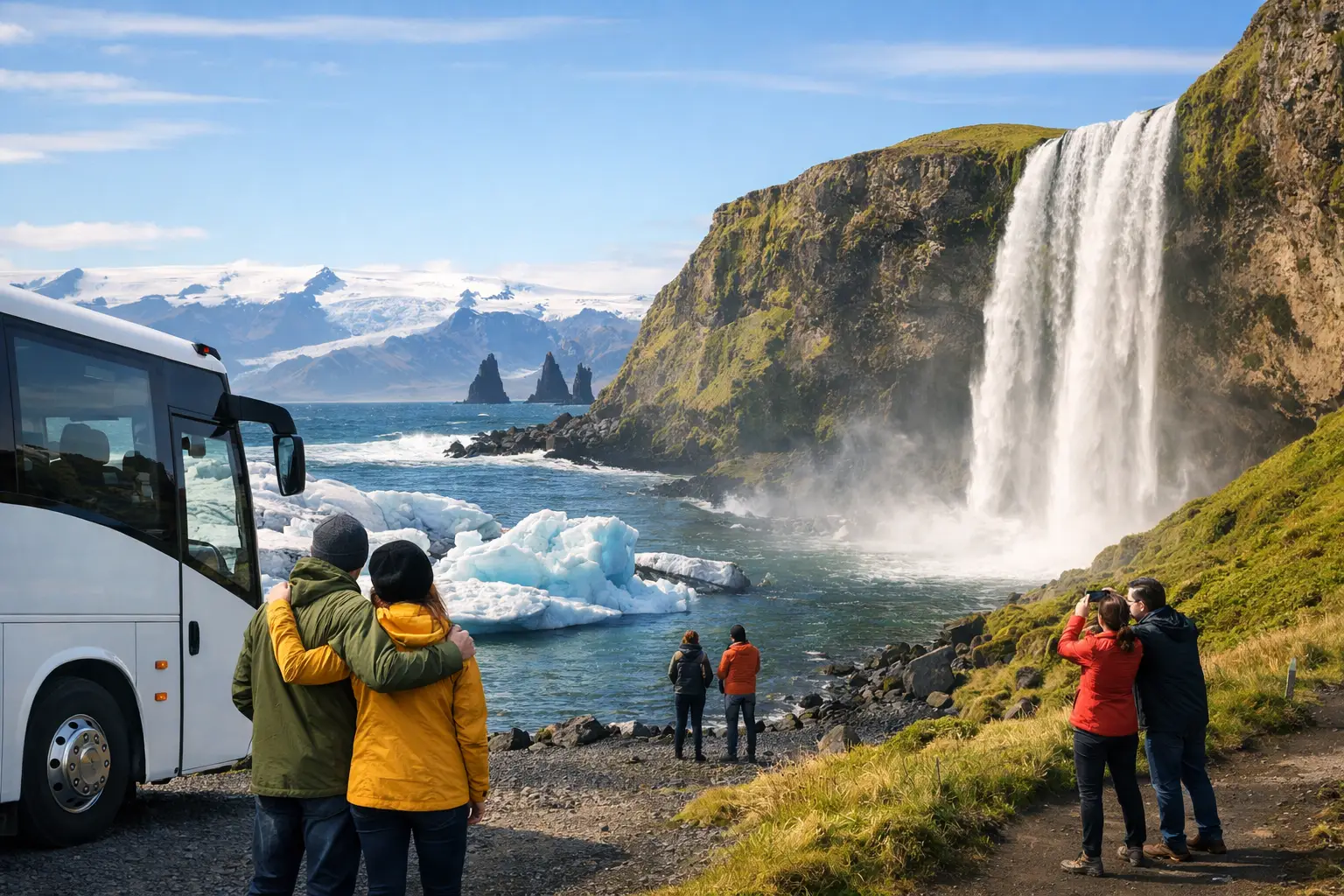
If you only have one full day to chase Iceland’s biggest scenery, a South Coast tour from Reykjavik is usually the trip that delivers fastest. In a single long but rewarding day, you can stand behind a waterfall, walk a black sand beach, pass volcano country, and see why this stretch of Iceland lands on so many first-time itineraries.
The appeal is simple. You leave the capital without needing to figure out winter driving, route planning, gas stops, or changing weather conditions. That matters more than many travelers expect. Iceland’s South Coast looks straightforward on a map, but road conditions, wind, and daylight hours can turn a self-drive day into a stressful one. A guided tour keeps the day focused on the scenery instead of the logistics.
Why a South Coast tour from Reykjavik is so popular
This route packs an unusual amount of variety into one corridor. Within a few hours of Reykjavik, the landscape shifts from mossy lava fields to farmlands, sea cliffs, glaciers, and wide volcanic beaches. For US travelers used to driving long distances between major sights, Iceland’s South Coast feels efficient. The views change constantly, and the stops come quickly enough that the long day rarely feels repetitive.
It also works for different travel styles. Couples book it for the classic Iceland experience. Small groups like it because nobody has to stay sober to drive or navigate. Solo travelers often choose it for the ease of seeing top sites without renting a car. Even travelers planning a Ring Road trip sometimes use a South Coast day tour at the start of their visit to get oriented before going farther.
The trade-off is pace. A day trip from Reykjavik covers a lot of ground, so you will not get unlimited time at each stop. If your goal is slow hiking, photography at golden hour, or adding the glacier lagoon, an overnight plan may fit better. But if you want a high-impact day with strong value, this route is hard to beat.
What you’ll usually see on the route
Most tours follow a similar backbone, though the exact order and stop length can vary with weather and operator style.
Seljalandsfoss and Skogafoss
These are usually the first big waterfall moments of the day, and they feel completely different from each other. Seljalandsfoss is known for the path that loops behind the falling water when conditions allow. It is one of those stops where waterproof layers stop being optional. Even in summer, the spray can soak you in minutes.
Skogafoss is broader, louder, and more direct. You walk up to it and feel the force immediately. On sunny days, the mist often throws a rainbow across the falls, which is part of why this stop consistently lives up to the photos. If your tour allows enough time, the staircase beside the waterfall gives you a higher view over the coastline.
Reynisfjara black sand beach
This is the South Coast stop people tend to remember most clearly. The black sand, basalt columns, sea stacks, and crashing Atlantic surf create a dramatic scene that barely looks real in person. It is also a place where safety warnings matter. Sneaker waves are powerful and unpredictable, and visitors should stay well back from the waterline.
A good guide makes a difference here. Reynisfjara is more impressive when you understand the geology, the folklore around the sea stacks, and why this beach can turn dangerous so quickly. It is beautiful, but it is not a casual beach walk.
Vik and nearby viewpoints
Many tours pause near Vik, Iceland’s southernmost village, for a meal break, supplies, or a viewpoint over the coast. Depending on the itinerary, you may get a look at the church on the hill, the cliffs near Dyrholaey, or broad views across the black sand plains.
This part of the day often feels like a reset point. You’ve already seen major landmarks, but the scenery keeps changing. In winter, the low light around Vik can be especially striking.
Glaciers, volcanoes, and the wider landscape
Even when a glacier hike is not included, many South Coast tours feature views of Eyjafjallajokull, Myrdalsjokull, or Solheimajokull along the route. That matters because the drive itself is part of the experience. You are not just traveling between stops. You are moving through one of Iceland’s most geologically active and visually varied regions.
Some itineraries add Solheimajokull glacier, Kvernufoss, or Dyrholaey if conditions and timing line up. Others keep the schedule tighter and focus on the biggest headline sites. Neither approach is automatically better. It depends on whether you want a classic overview or a day with a few less-crowded moments.
How long the day really is
This is not a casual half-day outing. A South Coast tour from Reykjavik is typically a full-day commitment, often around 10 to 14 hours depending on the season, road conditions, and how far east the tour goes. Pickup can start early in the morning, and return times are not always exact because Icelandic weather has a vote.
That sounds intense, but it is usually manageable if you plan for it. Dress in layers, bring snacks, charge your phone, and assume the day will be active even if there is plenty of time on the bus. Good tours balance scenic driving with enough stops to keep energy up.
If you are traveling with young kids, older relatives, or anyone who dislikes long bus days, think carefully about pacing. The South Coast is absolutely family-friendly, but not every traveler enjoys a long day on the road. For some groups, splitting the route over two days creates a better experience.
Choosing the right tour style
Not every South Coast trip is built for the same traveler. Standard bus tours are usually the best value and make sense for most first-time visitors. They cover the core stops, remove the stress of driving, and are easy to book around a short Iceland itinerary.
Small-group tours cost more, but they often feel more personal. You may get a bit more flexibility, easier boarding, and a guide who has more room to adapt the day. That can be worth it if you want a less crowded feel without paying for a private experience.
Private tours are the premium option. They work especially well for couples, families, or small groups who want a customized pace, extra comfort, or the option to shape the day around specific interests. If your budget allows it, private touring is the easiest way to turn a popular route into something that feels more exclusive.
Then there are combo experiences. Some South Coast itineraries add glacier hiking, ice cave visits in season, or a stop that goes beyond the standard route. These can be excellent, but they naturally cut time somewhere else. If your priority is seeing the classic landmarks, a simpler sightseeing tour may actually be the better fit.
What to wear and bring
This is where many first-time Iceland visitors either get it right or regret their outfit by the second stop. Waterproof outer layers are the big one. Not water-resistant. Waterproof. Between waterfall spray, coastal wind, and fast-changing weather, proper gear changes the whole day.
Wear sturdy shoes with grip, especially in colder months when paths can be wet or icy. Gloves, a hat, and a warm mid-layer are smart year-round. Yes, even in summer. Iceland does not care what month your vacation photos say.
You do not need expedition gear for a standard tour, but you do want practical clothing. Bring a refillable water bottle, a phone battery pack, and room on your camera roll. If you are prone to motion sickness, prepare for that too. The roads are generally good, but it is still a long day with changing conditions.
Is it better to tour or self-drive?
It depends on what kind of traveler you are. Self-driving gives you freedom, especially in summer, and it can make sense if you want to linger at one location or build your own South Iceland itinerary. But freedom only helps if you are comfortable reading the weather, handling Icelandic roads, and making real-time decisions.
A guided trip is often the smarter call for first-time visitors, winter travelers, or anyone trying to maximize limited vacation time. You can relax, enjoy the views, and let someone else handle the route. That convenience is a real part of the value, not just a nice extra.
For travelers comparing options on GoIce Travel, the sweet spot is usually choosing a tour that matches your energy level, group size, and season instead of defaulting to the cheapest ticket. The right fit makes the whole day feel smoother.
When to go
South Coast tours run year-round, and each season changes the experience. Summer gives you greener landscapes, longer daylight, and easier walking conditions. It is ideal for first-time visitors who want broad views and a less weather-sensitive day.
Winter brings snow, icy textures, moodier skies, and the chance that the landscape looks even more dramatic. It also brings shorter daylight and more variable conditions. That does not make winter worse. It just means expectations need to match reality. A winter South Coast day can be unforgettable, but flexibility matters.
Shoulder seasons are often an excellent middle ground. You may get fewer crowds, strong contrast in the scenery, and a little more breathing room than peak summer.
The best South Coast day is usually the one that fits your trip, your budget, and your tolerance for weather surprises. Book it with realistic expectations, dress for the elements, and leave room to be impressed. Iceland usually takes care of the rest.