
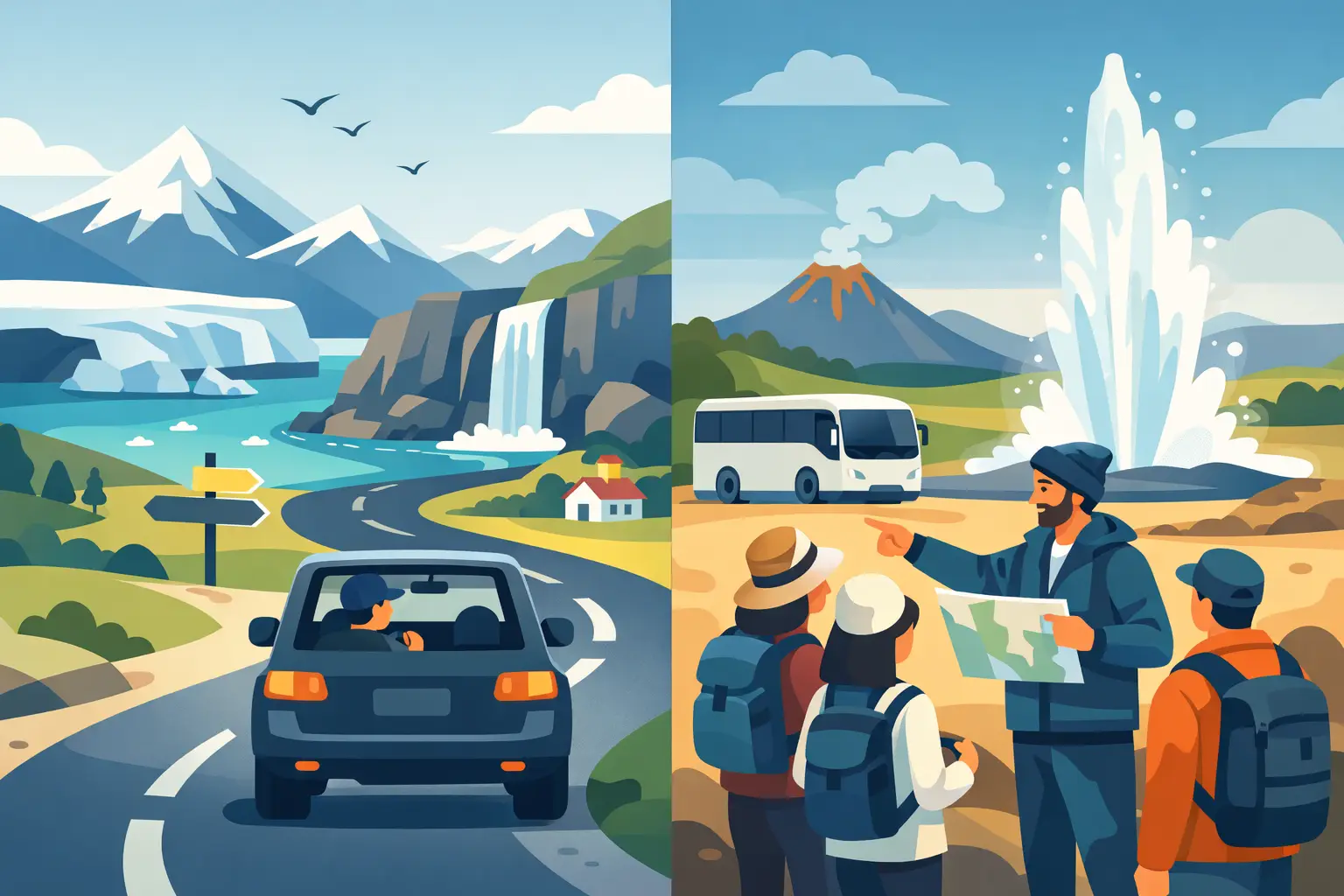
Self Drive or Guided Iceland? What Fits Best
Choosing self drive or guided Iceland travel? Compare cost, flexibility, weather, driving stress, and comfort to pick the right trip style.
You land at Keflavik, look at the lava fields outside the window, and the big trip question gets real fast: self drive or guided Iceland? It sounds like a simple choice, but it changes almost everything - your pace, your budget, your stress level, and how much of the country you can comfortably see.
For some travelers, driving Iceland is half the fun. For others, the best version of the trip is letting someone else handle road conditions, timing, and logistics while they focus on waterfalls, glaciers, and hot springs. The right answer depends less on what looks adventurous online and more on how you actually like to travel.
Self drive or guided Iceland: the real difference
A self-drive trip gives you control. You choose when to leave Reykjavik, where to stop, how long to stay at Skogafoss, and whether that roadside hot dog stand deserves a detour. It is ideal for travelers who want freedom, enjoy road trips, and do not mind making decisions every day.
A guided trip gives you structure. Transportation, route planning, and often key experiences are handled for you. That usually means less friction and fewer moving parts, especially in a destination where weather can flip quickly and distances often look shorter on a map than they feel on the road.
Neither option is automatically better. Iceland is one of those places where the season, your confidence behind the wheel, and your tolerance for uncertainty matter just as much as price.
When self-drive Iceland makes more sense
If your dream trip involves pulling over whenever the light gets dramatic, a self-drive itinerary is hard to beat. Iceland rewards curiosity. You may leave the Golden Circle with a plan to reach your hotel before dark and end up spending an extra hour at a small canyon, black-sand overlook, or geothermal pool you did not expect.
This style works especially well in summer. Roads are generally easier, daylight is long, and first-time visitors can cover classic routes like the South Coast, Snæfellsnes Peninsula, or parts of North Iceland without the pressure of winter driving. Couples and small groups also tend to like the value equation. Once the rental car is booked, splitting fuel and parking can make independent travel feel efficient.
Self-drive is also a strong fit for travelers who want mixed pacing. Maybe you want one big sightseeing day followed by a slower day with a countryside stay, a local pool, and dinner without a fixed return time. That kind of flexibility is where driving yourself starts to feel worth it.
The trade-off is that freedom comes with responsibility. You need to watch forecasts, check road conditions, manage fuel stops in rural areas, and stay realistic about daily distances. Iceland is not a place to build an overpacked itinerary and hope it works out on the fly.
Best traveler types for self-drive
Independent travelers usually do best here, especially those comfortable with navigation and changing plans. It also suits return visitors who have already seen Reykjavik and the major highlights and now want more room to roam.
If you are traveling in July, want to photograph landscapes at odd hours, or care more about flexibility than being looked after, self-drive can be the stronger option.
When guided Iceland is the smarter choice
A guided trip often wins on ease. If this is your first Iceland visit and you want to see the big highlights without spending weeks planning, guided travel can save a lot of effort. It removes the pressure of driving in unfamiliar conditions and usually helps you avoid common mistakes like trying to fit too much into one day.
Guided travel is particularly appealing in winter. Snow, ice, wind, limited daylight, and fast-changing road conditions can make even confident drivers rethink their plans. On a guided tour, the transport is handled by someone with local road experience, and that peace of mind is not a small thing when the weather turns.
It is also a great option for solo travelers who do not want to rent a car alone, for visitors who want to add specialist experiences like glacier hiking or ice cave tours, and for anyone who prefers having context instead of just scenery. A strong guide can turn a beautiful stop into a memorable story with geology, folklore, and local detail you might otherwise miss.
Guided does not always mean rigid
Some travelers hear “guided” and imagine being herded from bus to bus with no breathing room. That can happen on large group day tours, but Iceland has a much wider range than that. There are small-group tours, private guides, multi-day packages, and hybrid trips where you use Reykjavik as a base and join day tours for the major sights.
That means guided travel can still feel personal. If you want a simpler trip without giving up quality experiences, the guided route is often more flexible than people expect.
Cost: which one is actually cheaper?
This is where things get a little messy. Travelers often assume self-drive is always the budget option, but Iceland has enough variables to make that unreliable.
A self-drive trip can be cost-effective if you are traveling as a couple or group, booking early, and staying organized. But your total cost includes the rental car, insurance, fuel, parking in some areas, and often higher accommodation rates if you are trying to stay close to major routes. Add the stress cost of a last-minute weather adjustment, and cheap can become less cheap.
Guided tours can look expensive upfront because many costs are bundled together. But they may save money on transportation logistics, reduce booking errors, and help solo travelers avoid paying for a car they do not really need. For short trips, especially 3 to 5 days based around Reykjavik, guided day tours can be surprisingly practical.
The better question is not “Which is cheaper?” but “Which gives me better value for the way I travel?” If you love independent movement, the car is part of the value. If you hate driving on unfamiliar roads, it is just another expense.
Weather changes the answer
If you are deciding between self drive or guided Iceland, start with your season. Summer gives you more margin for error. Winter removes a lot of that margin.
From late spring through early fall, self-drive is accessible for many travelers, especially on popular routes with good road infrastructure. You still need common sense and regular checks on conditions, but the overall experience is more forgiving.
Winter is different. Even if roads are open, wind can be exhausting, visibility can disappear quickly, and short daylight hours limit how much ground you should plan to cover. A guided trip can make winter travel feel exciting instead of tense. And if seeing the Northern Lights is high on your list, having local operators adjust around conditions can work in your favor.
Should you still self-drive in winter? Sometimes, yes. Travelers with solid winter driving experience, conservative itineraries, and enough flexibility can still have a great trip. But this is one of those cases where honesty beats ambition.
The hybrid option most travelers overlook
You do not have to choose one style for the entire trip. For many US travelers, the smartest Iceland plan is a hybrid.
That might mean spending a couple of nights in Reykjavik and joining guided tours to the Golden Circle, South Coast, or Northern Lights, then renting a car for a few days once you are comfortable. Or it could mean doing a self-drive summer itinerary but booking guided add-ons for activities that require expertise, like glacier walks, snowmobiling, snorkeling, or ice caves.
This approach gives you independence where it helps and professional support where it matters. It also cuts down on overplanning. You do not need to force a full road trip if what you really want is a smooth first visit with a few unforgettable excursions.
For travelers using a planning platform like GoIce Travel, this mix is often the most efficient way to build a trip - accommodations, transportation, and tours can work together instead of competing for your attention.
How to decide without overthinking it
Ask yourself four plain questions. Do I enjoy driving for several hours in changing conditions? Am I traveling in winter or shoulder season? Do I want total flexibility, or do I want fewer decisions? Am I the kind of traveler who relaxes more when logistics are already handled?
If your answers lean toward freedom, summer travel, and spontaneous stops, self-drive is probably your better match. If they lean toward winter, convenience, and lower mental load, guided travel is likely the smarter call.
And if you still feel stuck, that usually points to the hybrid route. It is often the best fit for first-time visitors who want both confidence and freedom without committing too hard in either direction.
Iceland tends to reward realistic planning more than bold planning. Choose the trip style that lets you stay present when the glacier lagoon goes quiet, the waterfall spray hits your jacket, or the sky starts to shift green above the road.