
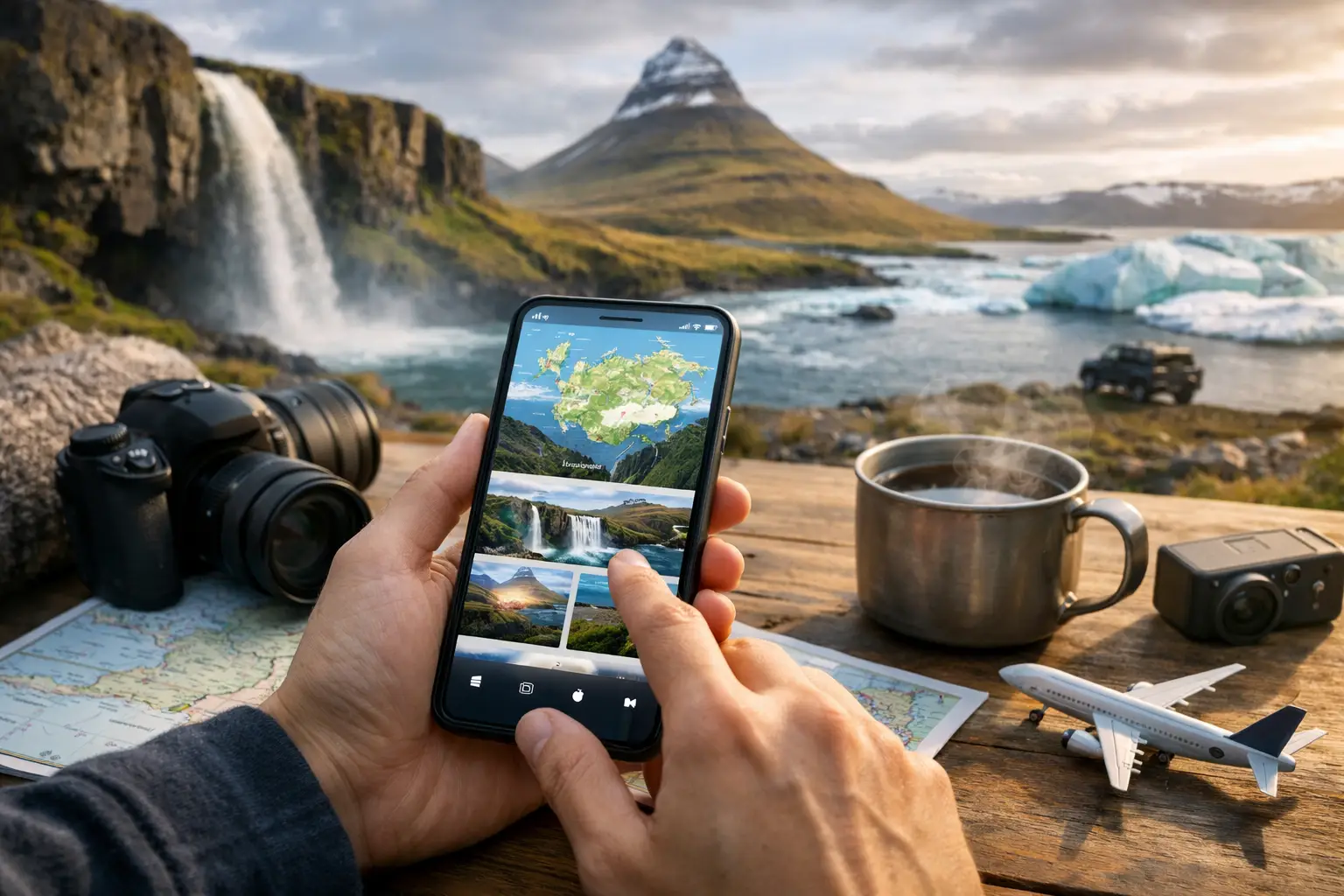
Iceland Travel App Review for Smart Trip Planning
This Iceland travel app review covers offline maps, weather, bookings, and trip tools so you can plan Iceland with more confidence and less guesswork.
You feel the difference between a useful Iceland app and a forgettable one the moment your signal drops outside Vik, the wind picks up, and you need to know whether that next stop is worth the detour. That is where an honest Iceland travel app review matters. Iceland is easy to dream about, but on-the-ground planning gets real fast when weather, daylight, road conditions, and distances start shaping your day.
For most US travelers, the best Iceland app is not the one with the flashiest design. It is the one that helps you make better decisions quickly. That means offline maps that actually work, route ideas that match your trip style, reliable booking access, and practical tools that save time once you land. If an app can help you go from inspiration to itinerary without bouncing across six different sites, it has real value.
What makes an Iceland travel app worth downloading
Iceland is not a destination where generic travel apps always hold up. Distances look short on a map, but weather can slow you down, road conditions change, and many of the best places sit outside major towns. An app built specifically for Iceland should reflect that reality.
The strongest apps usually combine trip planning with real travel utility. You want to browse attractions, tours, and regional highlights before your trip, but once you are in Iceland, the priorities shift. Suddenly you care more about offline access, nearby hot springs, hiking routes, booking confirmations, and whether your next stop makes sense before dark.
That is why a single-purpose app can feel limiting. An app that only lists attractions may inspire you, but it does not help much when you need to pivot. An app that only stores bookings is convenient, but it will not help you discover what to do on a free afternoon in North Iceland. The most useful option sits in the middle - part guide, part planner, part practical travel tool.
Iceland travel app review: the features that matter most
Offline maps are near the top of the list because they solve a real problem. Even if you plan to buy a local SIM or use roaming, there will be stretches where coverage is weak or inconsistent. Good offline maps let you keep your bearings, save key stops, and avoid the stress of guessing whether you passed the turn for a waterfall, trailhead, or guesthouse.
Local discovery is another feature that matters more in Iceland than in many destinations. Travelers often come with a shortlist that includes the Golden Circle, South Coast, Blue Lagoon, and maybe a northern lights tour. But the trip usually gets better when you can layer in smaller stops - a geothermal bath, a canyon viewpoint, a folklore site, or a scenic road break that does not require hours of extra planning.
Booking access also matters, especially for first-time visitors who want vetted options in one place. Tours in Iceland can sell out during peak periods, and some activities work best when booked around weather windows. If an app lets you compare and reserve experiences, airport transfers, stays, or transport without leaving the ecosystem, that cuts friction. It is not just convenient. It reduces the risk of fragmented planning and missed timing.
Weather-aware tools are where specialized Iceland apps can really separate themselves. A standard travel app might tell you what is nearby. A better Iceland app helps you judge whether today is the right day to do it. Aurora forecasts, seasonal guidance, and practical route context are not extras here. They are part of smart trip planning.
Where many Iceland apps fall short
A lot of travel apps look useful before departure and become less helpful once your trip starts. Some are too broad, trying to cover every destination in the world with the same interface and generic recommendations. Others are so content-heavy that they feel like a blog inside an app, with little support for booking or real-time decision-making.
Another common issue is weak regional depth. Iceland may look compact, but each area has different strengths. Snæfellsnes is not the same kind of trip as the Eastfjords. Reykjanes is different from the North. If an app does not surface these regional differences clearly, travelers end up with a flat version of Iceland instead of a trip that matches their interests.
Then there is the offline problem. Some apps claim offline access, but only store partial map tiles or limited saved items. That is frustrating when you are driving, hiking, or trying to pull up practical details on the move. An Iceland app needs to assume that convenience matters most when connectivity is least reliable.
How a strong Iceland app should support different travel styles
Not every traveler needs the same thing from an app, so the best review is not just about features. It is about fit.
For first-time visitors, a strong app should simplify the basics. It should make iconic routes easy to understand, show how major attractions connect, and help answer practical questions around timing, transport, and booking. If you only have five to seven days, you do not want to waste time stitching together disconnected information.
For road-trippers, navigation support and regional coverage become more important. You want to see what is along your route, identify worthwhile detours, and keep key stops accessible offline. You also need tools that support flexibility, because Iceland road trips often change shape as weather and energy levels shift.
For couples or premium travelers, the app should go beyond low-friction planning and help surface quality. That means strong accommodation options, private tours, premium lagoons, and smoother booking pathways. Convenience matters, but so does confidence that the options feel curated rather than random.
For active travelers, hike routes, hot springs, and adventure categories make a big difference. Iceland attracts travelers who want more than a checklist. If an app can help you discover a glacier hike, snorkeling trip, scenic trail, or geothermal soak that fits your region and schedule, it becomes part of the experience rather than just an administrative tool.
What a useful Iceland travel app review should say honestly
The right app will not replace common sense, and it will not remove every layer of uncertainty from an Iceland trip. Weather can still force changes. Roads can still close. A beautiful stop can still take longer than expected. The value of a good app is not perfect control. It is better visibility.
That trade-off matters. Travelers sometimes expect one app to do everything, from live navigation to weather forecasting to bookings to personalized itineraries. In practice, even a very good Iceland app is strongest when it solves the most important parts of the journey in one place and reduces the need to juggle multiple tools.
The best apps also respect traveler momentum. You should be able to go from browsing a destination to saving it, understanding where it fits in your route, and booking the experience if needed. If that path feels clunky, the app may still be informative, but it is not doing enough to support action.
An app with strong local focus has a clear advantage here. Iceland rewards specificity. Regional context, practical travel guidance, and destination-based planning are more useful than broad generic suggestions. That is one reason platforms built around Iceland itself tend to be more helpful than all-purpose travel apps.
The best use case: planning before you go, confidence while you are there
A travel app should work in two phases. Before departure, it should help you organize your trip, compare options, and build a realistic plan. Once you are in Iceland, it should shift into support mode - helping you stay flexible, access key trip information, and discover what makes sense nearby.
That is where an Iceland-focused platform can stand out. If the app combines offline maps, attraction discovery, hot springs, hike routes, tour access, and practical planning tools in one place, it is solving a real traveler problem. It is especially valuable for people who do not want to manage bookings, inspiration, transport research, and route planning across a dozen tabs.
For that reason, an app tied to a broader Iceland planning ecosystem can be more useful than an isolated mobile tool. If your tours, accommodations, rental car options, airport transfer details, and regional guides all connect, trip planning feels more efficient from the start. GoIce Travel fits that model well because it is built around Iceland specifically, rather than treating the country like just another destination category.
The smartest move is to choose an app that helps you act faster, not just read more. In Iceland, the trip often rewards the travelers who can adapt quickly, spot the worthwhile stop before they pass it, and make confident decisions without overthinking every mile. A good app will not create the magic for you, but it can make it a lot easier to find.