
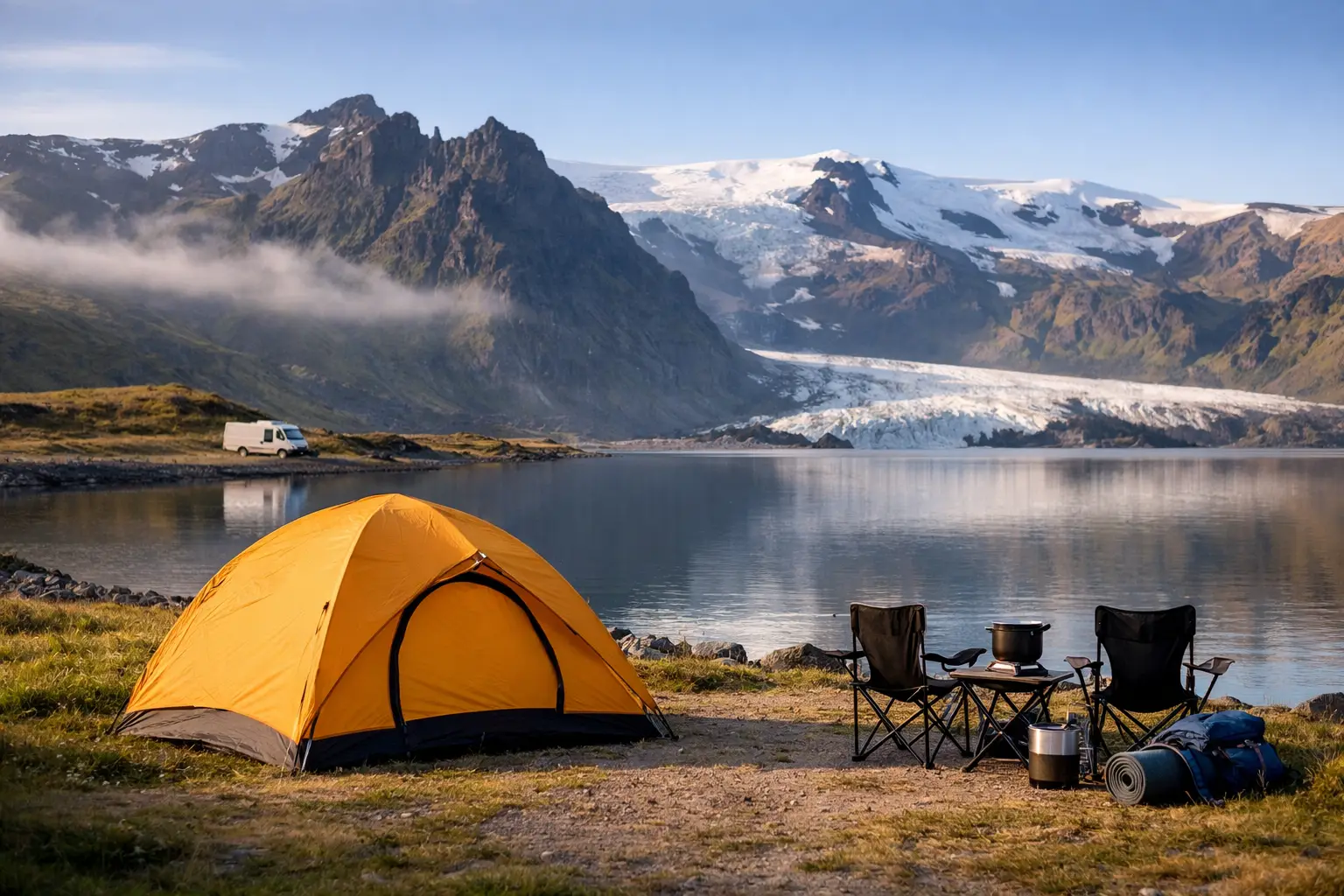
Can You Camp in Iceland? Yes - Here’s How
Can you camp in Iceland? Yes - but rules, weather, and where you stay matter. Learn campground laws, costs, gear, and smart planning tips.
You pull off the Ring Road, see a waterfall in the distance, and think: can you camp in Iceland wherever the view looks good? That’s the moment many first-time visitors get wrong. Camping in Iceland is absolutely possible, and for a lot of travelers it’s one of the best ways to keep costs down and stay close to the landscapes you came to see. But Iceland is not a free-for-all camping destination, and the rules matter.
If you plan it right, camping gives you flexibility, long summer evenings outdoors, and easy access to places that feel much farther from civilization than they really are. If you plan it badly, you end up wet, cold, or parked somewhere you are not allowed to stay. The difference usually comes down to understanding how camping works in Iceland before you land.
Can you camp in Iceland legally?
Yes, you can camp in Iceland, but in most cases you should use designated campgrounds. That is the short answer, and it is the one most travelers need.
Iceland used to have a stronger image of wild freedom, especially among road-trippers and van travelers. Today, the country is much stricter about overnight stays because of environmental pressure, private land rights, and the sheer number of visitors. Random overnight camping in a campervan, motorhome, or car is generally not allowed outside registered campsites unless you have explicit permission from the landowner. For most travelers, that means campground camping is the rule, not the exception.
Tent camping has a little more nuance, but not as much as people assume. In very limited situations, hikers with small tents may be able to camp for one night on uncultivated land if there is no nearby campsite and the area is not protected or privately restricted. In practice, if you are doing a standard Iceland road trip, you should not build your trip around that exception. It is safer, easier, and more respectful to use official campsites.
Why campground camping is the smart move
Even if Iceland allowed more casual wild camping, most travelers would still be better off in campgrounds. The weather changes fast. Wind can turn a calm evening into a gear-testing night in a hurry, and rain has a way of finding weak tents, bad zippers, and anyone who forgot a second dry layer.
Campgrounds give you practical support that matters more in Iceland than in milder destinations. Many offer toilets, showers, dishwashing areas, and shelter from the elements in shared kitchens or common rooms. Some are basic, especially in rural areas, while others feel almost like outdoor hostels. That range is part of the trade-off. You get flexibility and lower costs, but you should not expect every campground to be polished or full-service.
For travelers doing a self-drive trip, campground networks also make route planning much easier. Instead of guessing where you can stop, you can build a daily driving plan around legitimate overnight options.
When camping in Iceland makes the most sense
The main camping season runs in summer, roughly from late May through early September, though exact opening dates vary by location and weather. This is when camping is easiest, campgrounds are open in the greatest numbers, and road conditions are generally friendlier.
Summer also solves one big camping problem: daylight. You get long, bright evenings that make setup easier and give you more room for sightseeing without racing the clock. That is a huge advantage if you are driving the South Coast, circling the Ring Road, or linking together waterfalls, black sand beaches, glacier stops, and geothermal pools in one day.
Outside summer, camping becomes much more situational. Some campgrounds close, temperatures drop, and wind becomes a much bigger factor. Winter camping in Iceland is not impossible, but it is rarely the best choice for casual visitors. If your trip is focused on Northern Lights, ice caves, or winter road travel, a guesthouse or hotel often gives you a much better margin for comfort and safety.
Tent, campervan, or motorhome?
This choice shapes your whole trip.
Tent camping is the cheapest path in many cases, and it can feel the most immersive. You hear the weather, wake up close to nature, and keep your transportation separate from your sleeping setup. But Iceland is hard on cheap gear. If you choose a tent, bring equipment that can handle strong wind and sustained rain, not just a pleasant weekend at a US campground.
Campervans are a popular middle ground because they combine transport and sleeping space. For many US travelers, this is the easiest way to camp in Iceland without committing to full outdoor roughing it. You stay mobile, avoid daily hotel check-ins, and gain some shelter from the weather. The catch is that campervans are not a legal loophole for free parking overnight. You still need to stay in proper campsites in most cases.
Motorhomes offer more comfort, more storage, and usually a more stable bad-weather experience. They also cost more, use more fuel, and can feel less nimble on narrower roads or in strong crosswinds. If you want comfort without constant unpacking, they can be worth it. If you want simple, flexible travel, a smaller campervan may be a better fit.
What campgrounds are really like
Expect variety. A campground near Reykjavik or along the most visited stretch of the South Coast may have better facilities, more travelers, and a more organized feel. A smaller rural site may be quieter, cheaper, and much more basic.
Some campgrounds let you reserve ahead, while others operate on a first-come basis. In peak summer, popular areas can fill up, especially when weather conditions push lots of travelers onto the same route. That does not mean camping becomes impossible, but it does mean you should not treat every region as if space is guaranteed.
Payment systems vary too. You may pay at a reception desk, through a machine, with an attendant making rounds, or by app in some places. That flexibility is convenient, but it rewards travelers who stay organized.
Costs and trade-offs
Camping in Iceland is usually cheaper than hotels, but it is not free and it is not always ultra-budget travel. You will still pay nightly campground fees, and showers may be included or charged separately depending on the site. Add fuel, food, rental costs, and gear, and the savings can narrow.
Still, camping often works well for travelers who want freedom more than luxury. You can stop closer to hiking areas, spread your budget across a longer trip, and spend more on the experiences that make Iceland memorable - glacier tours, hot springs, whale watching, or a guided adventure day.
That is where practical planning matters. If your trip includes long days on the road and early starts, camping can be excellent. If you know you want consistent sleep, private bathrooms, and warm indoor evenings, a hotel-and-guesthouse mix may be the better call.
Weather is the real decision-maker
People worry about camping rules, but weather is what shapes the experience most. Wind is often a bigger problem than cold. A decent temperature can still feel miserable if your tent is rattling all night or you are cooking in sideways rain.
That does not mean camping is a bad idea. It means you should treat Iceland like a serious outdoor destination, not a casual scenic backdrop. Check forecasts often, secure gear carefully, and stay flexible with your route. Conditions in one region can change quickly enough that your best overnight plan is the one that adapts.
If you are road-tripping with a campervan, this is one of the strongest arguments for keeping your itinerary realistic. Packing too much into each day makes you more likely to drive tired, arrive late, and make poor decisions when the weather turns.
Can you camp in Iceland with kids or as a first-timer?
Yes, and plenty of travelers do. But first-timers should be honest about their comfort level.
If you are new to camping, Iceland is not the ideal place to test bargain gear or wing it without a system. The camping itself is manageable, but the combination of cold, wind, long driving days, and changing conditions can wear people down fast. Families and first-time campers often do best with a campervan, a simple route, and a backup plan for at least a night or two indoors.
For couples and independent travelers, camping can be one of the most rewarding ways to see the country. You get those quiet late-night views, quick starts to scenic stops before the crowds build, and a stronger sense of movement through the landscape. That is hard to match with fixed hotel bookings every night.
Smart planning before you go
The best Iceland camping trips are built around realism. Know your route, know which campgrounds are open during your travel dates, and know what level of comfort you actually need. If you are mixing camping with tours, plan your overnight stops so you are not backtracking unnecessarily.
This is also where using Iceland-specific planning tools helps. A platform like GoIce Travel can make it easier to connect your self-drive route with camp-friendly regions, local activities, and the practical parts of the trip that often get overlooked until too late.
Camping works best when it supports the trip you want rather than becoming the whole challenge of the trip itself.
So, can you camp in Iceland? Absolutely. Just treat it less like wild improvisation and more like smart adventure. If you do, you will get one of the best versions of Iceland - flexible, scenic, and close to the landscapes that made you book the flight in the first place.