
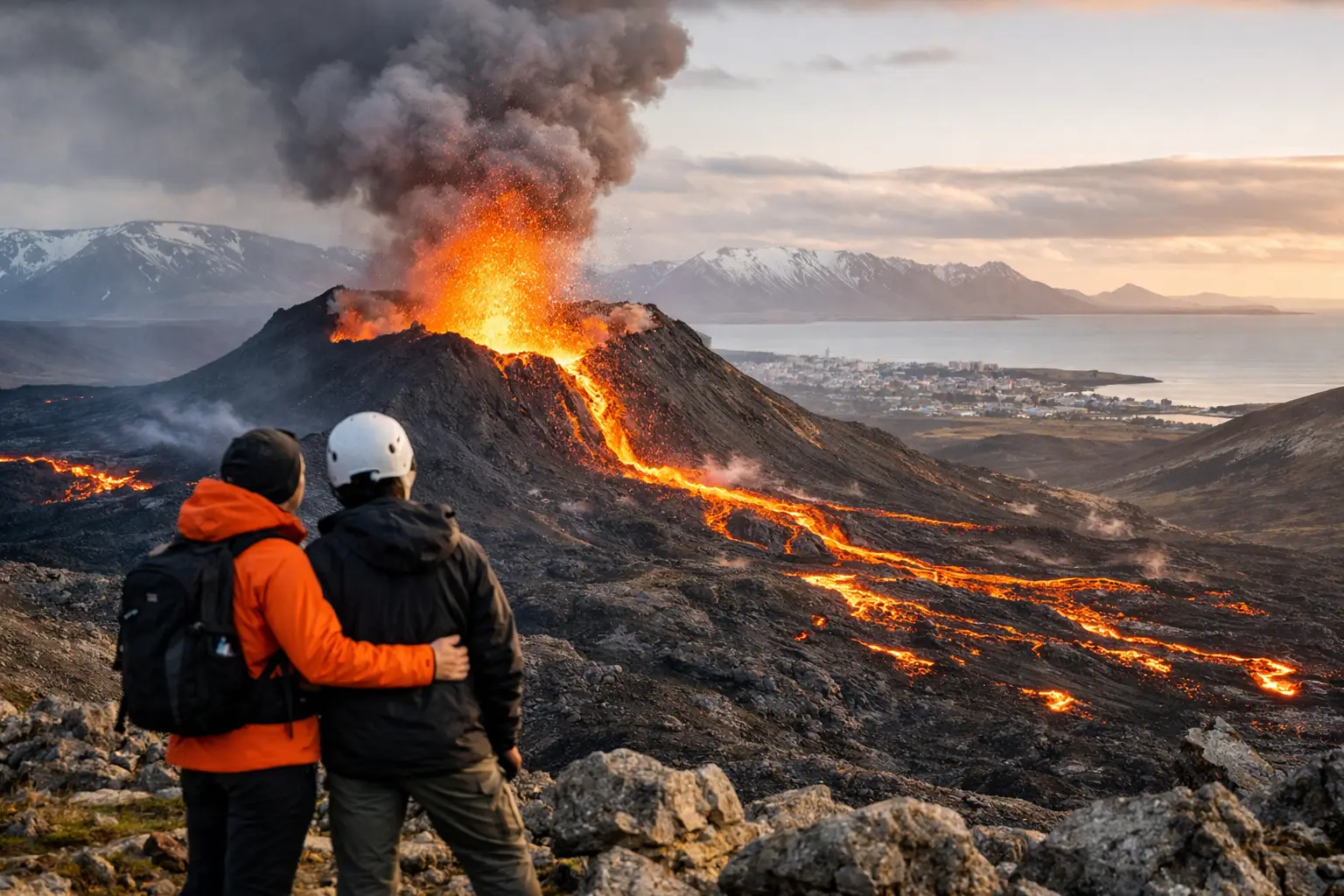
Best Volcano Tours From Reykjavik
Compare volcano tours from Reykjavik, including hike, helicopter, and combo options, with tips on timing, difficulty, cost, and safety.
The ground doesn’t always sit still in Iceland. That’s part of the appeal. If you’re staying in the capital and want a real shot at seeing fresh lava fields, steaming landscapes, or eruption sites shaped in recent years, volcano tours from Reykjavik are one of the smartest day-trip choices you can make.
The big advantage is simple: you can leave the city in the morning and be standing on a raw volcanic landscape not long after. For first-time visitors, that means less planning friction and more time actually experiencing Iceland’s geology up close. For travelers with limited time, it’s one of the few adventures that feels genuinely dramatic without requiring a full multi-day commitment.
Why volcano tours from Reykjavik are worth it
Iceland has no shortage of headline attractions, but volcano tours offer something different from a scenic stop-and-go bus route. They put you in direct contact with the forces that built the island. You’re not just looking at a waterfall or black-sand beach. You’re walking through a place that may have changed very recently.
That immediacy matters. The Reykjanes Peninsula, the main region for most volcano day trips from the capital, has become one of Iceland’s most talked-about areas because of its eruptions and active volcanic systems. Depending on current conditions, your tour may focus on recent eruption sites, cooled lava fields, geothermal zones, crater landscapes, or panoramic viewpoints where guides explain what’s happening beneath the surface.
There’s also a practical reason these tours perform so well for travelers. You don’t need to rent a car, monitor road conditions all day, or figure out which hiking trail is currently safe and accessible. A well-run tour handles transport, timing, and local decision-making for you.
The main types of volcano tours
Not every volcano experience is the same, and that’s where travelers sometimes book too quickly. The right option depends on how active the region is during your trip, how much hiking you want, and whether you care more about seeing terrain up close or covering more ground.
Hiking tours to eruption sites
These are usually the most popular volcano tours from Reykjavik because they deliver the strongest on-the-ground experience. You’ll typically drive to the Reykjanes Peninsula and continue on foot with a guide toward a recent eruption area or volcanic hiking route.
This style of tour works best for travelers who want a physical, immersive day. You may be walking over uneven terrain, in windy conditions, and for longer than expected if trail access has changed. The reward is scale. Cooled lava fields, new craters, and stark black landscapes feel very different when you’re standing in them rather than viewing them from a parking lot.
The trade-off is effort. Some hiking volcano tours are moderate and manageable for active beginners, while others can feel tougher in bad weather. If you’re not comfortable on rocky ground or you’re traveling with anyone who has mobility limitations, this may not be the best fit.
Sightseeing tours with volcanic stops
If you want the story of Iceland’s volcanic activity without committing to a demanding hike, sightseeing-based tours are often the better choice. These usually combine volcanic points of interest with geothermal areas, coastal scenery, and landmarks on the Reykjanes Peninsula.
You’ll still get the geology, but in a more accessible format. This is a strong option for couples, multigenerational groups, or travelers visiting Iceland on a short stopover who want a high-impact day without turning it into a full outdoor challenge.
Helicopter volcano tours
This is the premium option, and for some travelers it’s the one that makes the most sense. A helicopter tour gives you an aerial look at eruption fissures, lava fields, craters, and the wider volcanic systems in a way ground tours simply can’t match.
If current activity is visible and flight conditions cooperate, the experience can be extraordinary. You also avoid the physical strain of hiking. The downside is cost, and availability can be tighter, especially during periods of strong demand or changing weather. For travelers celebrating something special or trying to fit Iceland’s biggest geological drama into a short itinerary, it can absolutely be worth considering.
What you can actually expect to see
A common misconception is that booking a volcano tour means guaranteed flowing lava. That’s not how Iceland works. Volcanic activity is unpredictable, and safety restrictions can change fast.
What you can expect instead is a guided experience built around the best and safest available access at the time of travel. That may mean a hike to a recent eruption site with visible steam and newly hardened lava formations. It may mean crater viewpoints, fissure systems, geothermal vents, and landscapes still marked by very recent geological events. If an eruption is active and authorities allow access, some tours adapt accordingly, but no responsible operator should promise active lava as a certainty.
That uncertainty is not a drawback so much as part of the reality. Iceland is dynamic. The best tours are led by guides who understand how to interpret that landscape so the experience still feels significant, even when nature doesn’t perform on schedule.
Best time to book a volcano tour
There isn’t one perfect season, but there are better fits depending on your travel style.
Summer usually offers the easiest hiking conditions, longer daylight hours, and more straightforward logistics. If your priority is walking to eruption sites or covering more terrain, this is often the smoothest time to go.
Winter can still work, but expectations need adjusting. Weather shifts faster, trails may be more difficult, and tours can be affected by wind, ice, or visibility. On the other hand, winter travel from Reykjavik often means fewer crowds on certain days and a more dramatic atmosphere if conditions line up.
Shoulder seasons can be excellent because you may get a good balance of access and lower visitor volume. The real key is booking with flexibility and understanding that Icelandic weather always has the final say.
How to choose the right tour for your trip
Start with your energy level, not just your wishlist. It’s easy to be ambitious on a booking page and realize halfway through a windy lava-field hike that you would have preferred a scenic driving tour.
If you’re active, packed with proper outdoor layers, and want the strongest adventure factor, choose a hiking-based volcano tour. If you’re more interested in photography, geology, and a comfortable day trip, a sightseeing tour may be the better call. If your budget allows and you want maximum impact in minimal time, helicopter tours stand out.
It also helps to look at total trip structure. If your Iceland itinerary already includes glacier hiking, long driving days, or multiple outdoor excursions, a lower-effort volcano tour can be the smarter addition. If you’re staying mainly in Reykjavik and want one bold adventure, this is a good place to go bigger.
What to wear and bring
Conditions on volcanic terrain can feel harsher than they look in photos. Wear waterproof outer layers, sturdy hiking shoes or boots, and warm layers you can adjust throughout the day. Even in summer, wind on the Reykjanes Peninsula can be surprisingly strong.
Bring water, snacks, and a fully charged phone. If your tour involves hiking, trekking poles can help on uneven sections, though not everyone needs them. Sunglasses are useful on bright days, and gloves are worth packing year-round. The main mistake travelers make is dressing for Reykjavik city weather instead of exposed trail conditions.
Safety matters more than spectacle
Volcanic areas are not places to improvise. Gas levels, unstable ground, trail closures, and rapid changes in access are all real considerations. That’s one reason guided volcano tours from Reykjavik are such a strong option for visitors who want the experience without the guesswork.
A reputable operator follows local authority guidance and adjusts plans when needed. That may mean rerouting, shortening a stop, or canceling in unsafe conditions. It can be disappointing in the moment, but it’s exactly what you want from a professional tour.
This is also why independent travelers should be cautious about chasing social media clips. Conditions may have changed since those images were posted. In Iceland, current information beats viral footage every time.
Are volcano tours good for first-time visitors?
Yes, especially if you want an experience that feels uniquely Icelandic without requiring complex logistics. For many first-time travelers, a volcano day trip delivers the right mix of drama, convenience, and story value. You’ll see a side of the country that explains why Iceland looks and feels the way it does.
It’s also one of the easier adventure products to combine with a city stay. You can base yourself in Reykjavik, keep your hotel, restaurant plans, and other tours simple, and still add a serious geological experience to your itinerary. That convenience is a big reason these tours continue to be such a strong fit for US travelers planning shorter Iceland trips.
If you’re comparing options, the best booking choice is usually the one that matches your pace, not the most extreme headline. A well-matched tour will feel exciting, manageable, and memorable for the right reasons. That’s exactly where a locally informed platform like GoIce Travel can make the search easier.
If Iceland gives you a chance to stand on a landscape that was recently reshaped by fire, take it - few day trips from Reykjavik feel this immediate, this raw, or this unforgettable.